

How to Spot the Signs of School Refusal in Young Children
Last Updated: November 1, 2026
Quick Summary
Signs of school refusal in young children include morning tears, stomachaches, headaches, and pleading to stay home that repeat on school days and ease on weekends. Watch for physical complaints with no fever, distress at drop-off, and repeated absences you know about, since school refusal is fear-based rather than truancy or occasional reluctance.
- Occasional reluctance fades, truancy hides school from parents, but school refusal brings visible fear and known absences.
- Symptoms that appear on school mornings and fade by mid-morning at home are a strong signal.
- Keep a daily log for two to three weeks recording symptoms, timing, attendance, and mood at drop-off.
- Acknowledge the feeling without debating it, keep routines consistent, and avoid long goodbyes.
- Seek professional help if your child misses weeks of school or shows panic, nightmares, or talk of self-harm.
Table of Contents
- What School Refusal Looks Like in Young Children
- School Refusal Symptoms in Children: What to Watch For
- Separation Anxiety and School Refusal in Preschool and Early Elementary
- Tracking Symptoms and Attendance: A Simple Log for Parents
- How to Help a Child Who Refuses to Go to School
- Building a Morning Routine for School Anxiety
- When to Seek Professional Help for School Refusal
- Building Confidence and Courage at Home With Bravo Bear
- Frequently Asked Questions
What School Refusal Looks Like in Young Children
School refusal is a pattern of intense distress and avoidance tied to going to school, not simple misbehavior. In young children, it often shows up as morning tears, stomachaches, and pleading to stay home. Many parents feel torn between pushing a crying child out the door and giving in to another day at home. The signs below help you tell the difference between a rough morning and a real pattern.
School Refusal vs. Truancy vs. Occasional Reluctance
These three look similar on the surface but come from different places. Occasional reluctance is normal and fades. Truancy usually involves older kids hiding school from parents. School refusal is different: the child is genuinely fearful, stays home with a parent's knowledge, and feels real distress about attending.
- Occasional reluctance: a few grumpy mornings, no pattern
- Truancy: sneaking away, often without parent awareness
- School refusal: visible fear, physical complaints, and repeated absences parents know about
School Refusal Symptoms in Children: What to Watch For
Watch for a cluster of symptoms that repeat on school days and ease on weekends. According to the American Academy of Pediatrics guidance on school avoidance, ongoing refusal to attend school is a signal worth taking seriously rather than punishing. The clearest sign is a pattern, not a single bad day.
Physical Complaints That Show Up on School Mornings
The body often speaks first. A child may report a stomachache, headache, or nausea right before school, then feel fine by mid-morning at home. These symptoms are real to the child, not invented. Watch for complaints that:
- Appear on school mornings and fade on weekends
- Repeat at the same time each day
- Come with no fever or other clear illness
Emotional and Behavioral Signs at Home and at School
Emotional distress can be loud or quiet. Some children cry, cling, or throw tantrums. Others go quiet, withdraw, or beg to stay home. At school, teachers may notice tearfulness, frequent nurse's office visits, or requests to call home. Any of these recurring is worth tracking.
Separation Anxiety and School Refusal in Preschool and Early Elementary
For young children, fear of school is often really fear of leaving a parent.
The distinction that matters is developmental fit versus impairment. Some separation distress is expected at every age, but its shape changes as children grow. Knowing what is typical at each stage helps you judge whether what you are seeing is a phase or a pattern that needs a plan.
What Separation Distress Looks Like at Each Age
- Ages 2 to 3 (preschool entry): Clinging, crying at drop-off, and distress that peaks in the first minutes after you leave are common. Most children settle within a short window once engaged in an activity. A red flag is distress that does not ease during the day or that escalates over weeks rather than fading.
- Ages 4 to 5 (pre-K and kindergarten): Children this age can verbalize worry, often about a parent's safety or about being forgotten at pickup. Repeated questions about who will pick them up, tearful goodbyes that last longer each week, and refusal to enter the building are worth tracking.
- Ages 6 to 8 (early elementary): Separation worry may show up less as tears and more as somatic complaints, phone-call requests to the office, or a child who manages the school day but falls apart at bedtime and refuses the next morning. This age group is also where worry about a parent's health or a pet's safety tends to surface.
Typical Versus Concerning: A Practical Test
Three questions can help separate developmentally normal separation distress from impairing school refusal:
- Does it fade? Typical distress eases within minutes to a few weeks as the routine becomes familiar. Concerning distress holds steady or worsens across weeks.
- Does it cost the child something? Typical worry may make drop-off hard but does not keep a child out of class. Concerning refusal produces repeated absences, tardiness, or missed instruction.
- Does it spread? Typical separation distress stays tied to goodbyes. Concerning refusal expands to bedtime, sleepovers, babysitters, and any separation from the caregiver, and can bring nightmares or sleep disruption.
The Anxiety and Depression Association of America notes that early, gentle intervention helps children return to school more smoothly than waiting it out. That matters most in these early years, when avoidance is easiest to practice and hardest to unlearn. For a deeper look at the fear driving the behavior, our guide on how to help children overcome fear walks through the emotional side step by step.
Tracking Symptoms and Attendance: A Simple Log for Parents
Patterns are easier to spot on paper than in your head. A short daily log for two to three weeks turns vague worry into clear evidence you can share with a teacher or doctor, and it is the single most useful thing a parent can bring to a first conversation about school refusal.
What to Record and Why
| What to Track | Why It Matters | How to Record |
|---|---|---|
| Morning symptoms | Shows if complaints follow a pattern | Stomachache, headache, nausea, none |
| Timing of symptoms | Distinguishes school-triggered from all-day illness | Note when symptoms start and when they ease |
| Attendance | Reveals absences and tardiness trends | Attended, late, stayed home, left early |
| Mood at drop-off | Captures emotional distress | Calm, tearful, tantrum, withdrawn |
| School reports | Tracks nurse visits or call-home requests | Note time and reason |
| What happened after staying home | Tests whether home actually resolves the distress | Better by mid-morning, fine all day, still unwell |
| Better days | Spots what reduces anxiety | Weekend, holiday, half-day, substitute teacher |
How to Keep the Log Without It Becoming a Chore
A log only works if it is fast enough to survive a hard morning. Keep it to a single page or a notes app entry, and fill it in at the same time each day, ideally right after drop-off or right after the decision to stay home. Two or three lines per day is enough. The goal is a record, not a diary.
- Record the decision first (attended, late, stayed home), then the symptoms.
- Note the time symptoms eased, not just that they did. Symptoms that lift shortly after the school bell are a strong signal.
- Add a one-word trigger note when you notice one: test day, substitute teacher, fire drill, a fight with a friend.
Reading the Pattern: What Counts as a Signal
After two to three weeks, look for these patterns rather than any single entry:
- School-day clustering: symptoms that appear on school mornings and fade on weekends and holidays.
- Timing consistency: complaints that start at the same point in the routine each day, such as right after breakfast or in the car.
- Attendance drift: a rising number of late arrivals or early pickups, even if full absences are few.
Sharing the Log With School Staff
You are not solving this alone. Loop in your child's teacher, the school counselor, and the nurse early, and share the log so they can watch for the same signs. A short, simple message works: "We're working on morning anxiety. I'm keeping a two-week log of symptoms and attendance. Can you note how drop-off goes and flag any nurse visits or call-home requests?" Ask them to record the time and reason for any nurse visit so you can compare it against your morning notes.
How to Help a Child Who Refuses to Go to School
The goal is a calm, steady return to school, not a power struggle. A common mistake is alternating between forcing and giving in, which teaches a child that distress controls the outcome. Instead, stay warm but firm, and keep the plan consistent. For a deeper look at the fear driving the behavior, our guide on how to help children overcome fear walks through the emotional side step by step.
A Step-by-Step Response for the First Difficult Mornings
- Acknowledge the feeling without debating it: "I know mornings feel scary."
- Keep the routine the same every day, even on hard days.
- Move toward school gently but consistently.
- Praise brave steps, not just full attendance.
- Avoid long goodbyes, which feed anxiety.
- Note what helped so you can repeat it.
Watch out: Letting a child stay home every time distress spikes can accidentally reward the fear and make the next morning harder.
Coordinating With Teachers and School Support Staff
You are not solving this alone. Loop in your child's teacher, the school counselor, and the nurse early. Share your log so they can watch for the same signs. A short, simple message works: "We're working on morning anxiety. Can you note how drop-off goes and flag any nurse visits?" Consistent support between home and school helps a child feel safe in both places.
Building a Morning Routine for School Anxiety
A predictable morning lowers the anxiety load before it builds. A steady bedtime routine can reduce next-day distress, and our article on the best bedtime routine for anxious children covers how to build one.
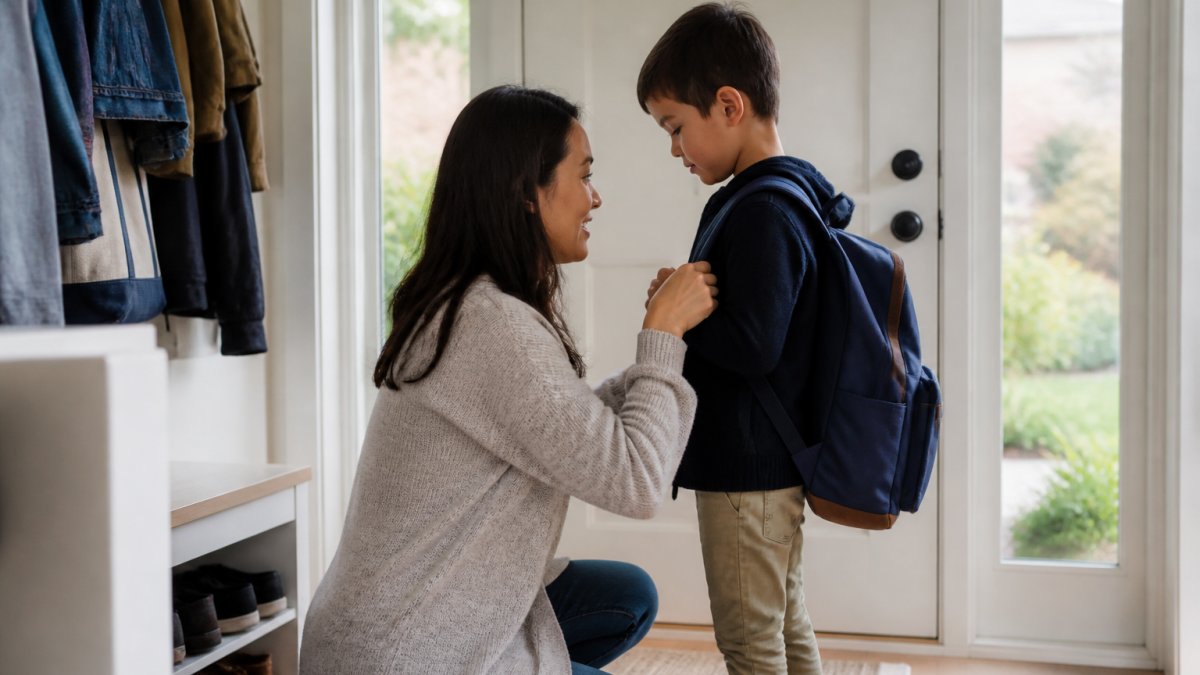
Self-soothing skills matter here too. If your child needs help with this, our guide on how to teach self-soothing to preschoolers offers practical steps.
When to Seek Professional Help for School Refusal
Some patterns need more than a routine. Reach out to a pediatrician or child therapist if your child misses many days, shows escalating distress, or talks about feeling unsafe. The Substance Abuse and Mental Health Services Administration offers resources for finding support. Seek help sooner if you see:
- Weeks of missed school
- Panic, nightmares, or sleep difficulties
- Withdrawal from friends and activities
Building Confidence and Courage at Home With Bravo Bear
Confidence is built in small, brave moments, and stories can help. Bravo Bear's edu-tainment series is designed to help children grow with kindness, confidence, and courage through memorable lessons. For concrete steps, see our guide on how to build confidence in young children. Parents who want to nurture courage at home can also explore our confidence and courage gifts for kids.
Frequently Asked Questions
What are the early signs of school refusal in young children?
Early signs often show up before the school day even starts. Watch for stomachaches, headaches, or nausea that appear on school mornings and ease on weekends. You may also see tearfulness, tantrums, clinginess at drop-off, sleep difficulties, or repeated requests to call home. A child might visit the nurse's office often or ask to leave class. Keep a simple log of symptoms and absences for a couple of weeks so you can spot the pattern and share clear details with your child's teacher or pediatrician.
How can I tell the difference between school refusal and normal separation anxiety?
Some separation anxiety is typical in young children, especially around preschool and kindergarten. The difference is duration and impact. Normal reluctance usually fades within a few minutes of arrival, and your child settles in. School refusal is persistent distress that leads to missed classes, tardiness, or repeated requests to go home over weeks. If separation anxiety and school refusal seem to overlap and your child is missing school regularly, talk with your pediatrician and school counselor about next steps.
What should parents do when a child refuses to go to school?
Stay calm and consistent. Acknowledge your child's feelings without letting them decide whether school happens. Keep the morning routine predictable, get to school on time, and hand off to a trusted adult quickly. Avoid lengthy goodbyes, which can escalate distress. Log symptoms and attendance patterns, then coordinate with the teacher or school counselor so support is consistent at home and at school. If refusal lasts more than two weeks or your child shows escalating distress, seek help from a pediatrician or child therapist.
When should I seek professional help for school refusal?
Reach out for professional support if school refusal lasts more than two weeks, keeps happening after you've tried routine changes, or comes with escalating distress such as panic, nightmares, or feeling unsafe. Also seek help if your child mentions self-harm or hopelessness. A pediatrician can rule out health causes for physical symptoms, and a child therapist can work on school anxiety and coping skills. Early intervention makes returning to school easier, so don't wait for the problem to resolve on its own.
Every child has hard mornings, but a repeating pattern of fear and avoidance is a signal to act, not wait. Bravo Bear is here to help families raise brave, confident kids with stories built around kindness, confidence, and courage. Get started with Bravo Bear and give your child the tools to face school mornings with a little more courage.


