

How to Set Up Sensory Bins for Toddlers
Last Updated: October 25, 2026
Quick Summary
Sensory bins for toddlers are containers filled with safe, touchable materials that support hands-on learning by engaging touch, sight, sound, and sometimes smell and taste. They build fine motor skills, cognitive development, language growth, and provide calming benefits through simple, screen-free play.
- Sensory bins strengthen hand muscles and fine motor skills essential for writing, drawing, and self-care tasks.
- Toddlers develop cause-and-effect thinking and problem-solving through discovery and trial-and-error exploration.
- Safe fillers vary by age: large pasta and kinetic sand for 12-18 months, dried pasta for 18-24 months, and rice or beans for 2-3 years.
- Active supervision within arm's reach is required, especially for water, aqua beads, and magnets.
- A lap bin on the floor with a mat underneath contains mess and works in small homes and apartments.
Table of Contents
- What a Sensory Bin Is and Why Toddlers Need Hands-On Play
- Sensory Play Benefits for Toddlers: Fine Motor Skills, Cognition, and Calm
- How to Make a Sensory Bin: Setup, Size, and Container Choices
- Safe Sensory Bin Fillers for Toddlers: Materials by Age and Developmental Goal
- Sensory Bin Ideas for Toddlers: Themed Activities for Learning and Exploration
- Toddler Safety, Supervision, and Low-Mess Setup for Small Homes
- Starting Your Child's Sensory Bin Journey
- Frequently Asked Questions
What a Sensory Bin Is and Why Toddlers Need Hands-On Play
A sensory bin is a container filled with safe, touchable materials toddlers explore with their hands and senses, engaging touch, sight, sound, and sometimes smell and taste. Sensory bins for toddlers are among the simplest ways to support hands-on learning.
Toddlers learn by doing, not watching. When a child digs, scoops, pours, and stirs through different textures, they're building brain connections that screens can't create.
Sensory bins for toddlers solve the screen-free attention problem: simple to set up, endlessly adaptable, and engaging for extended periods.
Sensory bins deliver both, a foundation for learning through play.
Sensory Play Benefits for Toddlers: Fine Motor Skills, Cognition, and Calm
Sensory play isn't just fun. It builds real skills that toddlers need as they grow.
Fine Motor Skills and Hand Strength
Repeated grasping teaches hand-eye coordination and precise movement control, the physical foundation for academic skills.
Cognitive Development and Problem-Solving
Sensory bins invite discovery: What happens if I pour this? Can I scoop with this tool? How do these textures differ?
Language and Vocabulary Growth
Calming and Focus Benefits
Sensory bins calm: repetitive scooping and pouring create a soothing rhythm, and many high-energy toddlers find focus through structured sensory play.
American Academy of Pediatrics guidance on play and child development
How to Make a Sensory Bin: Setup, Size, and Container Choices
Setup takes minutes: a container, filler material, and tools. That's it.
Container Size and Type
Start with a shallow container, a plastic storage bin, large baking dish, or shallow cardboard box.
Choose round or smooth-edged bins, and make sure the container is stable, a wobbly bin frustrates toddlers and creates spills.
Filler Materials
The filler is what makes sensory play engaging. Good options include:
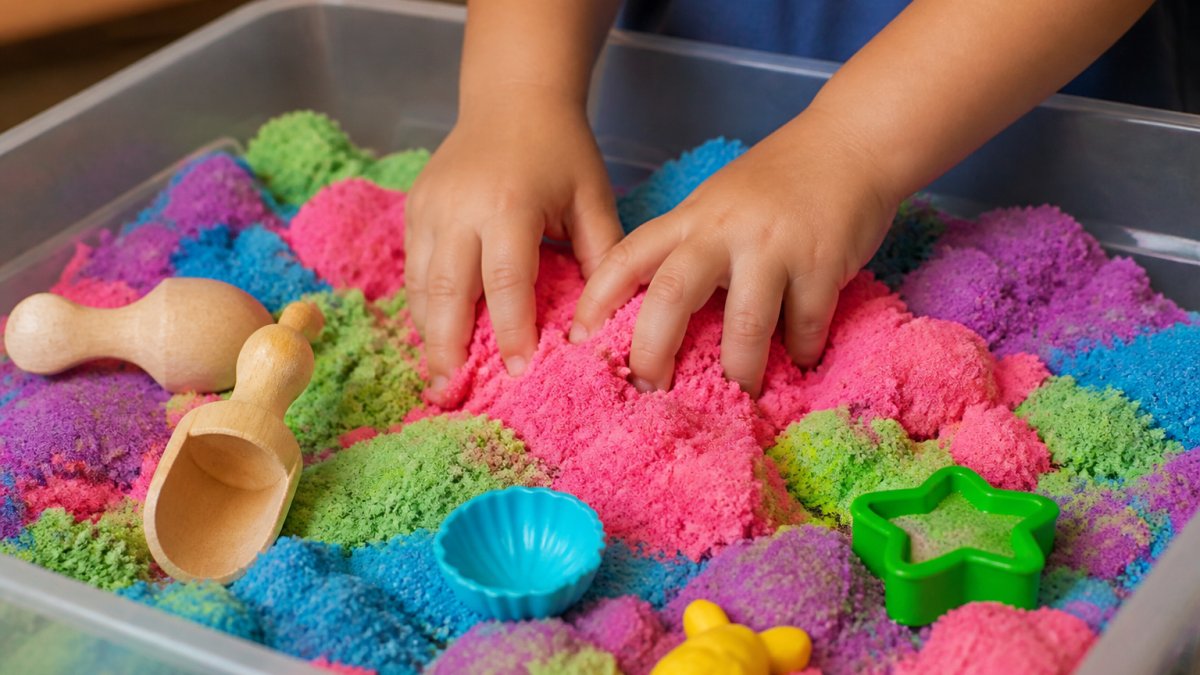
- Kinetic sand (moldable, mess-contained)
- Dried rice or beans
- Pasta in various shapes
- Shredded paper or crinkle fill
- Foam packing peanuts
- Aqua beads or water-absorbing polymer beads
Choose one primary filler per bin. You can always rotate materials to keep play fresh.
Tools and Accessories
Simple tools make sensory play more engaging:
- Wooden spoons or scoops
- Small funnels
- Plastic tweezers
- Measuring cups
- Small containers for pouring
- Shovels or sand scoops
You don't need many tools. Three to five simple options per bin is plenty.
Setup for Small Homes
For low-mess setups, add a sheet or towel underneath the bin to catch spills and protect your floors.
Safe Sensory Bin Fillers for Toddlers: Materials by Age and Developmental Goal
Not all fillers are safe for all toddlers, and not all do the same job.
Age-based safety floors
12-18 months (still mouthing): Assume everything goes in the mouth.
18-24 months (mouthing decreasing, supervision still constant): You can add more variety, but keep small round items out.
2-3 years (most children past mouthing): Options expand to dried rice, beans, lentils, play dough, water with ice, and large aqua beads under close supervision. Magnets and small beads remain off-limits.
Goal-to-material guide
Match the filler to the skill you want to practice:
- Fine motor strength and pincer grasp: kinetic sand, play dough, and slightly resistant materials that require squeezing and pinching. Add tweezers or tongs for pick-up practice.
- Pouring and scooping (hand-eye coordination): larger, free-flowing items like pasta shapes, sand, or water with cups, funnels, and spoons.
- Sensory discrimination (touch, sight, sound): a mix of textures, smooth pebbles, bumpy pasta, soft fabric, crinkly paper, in separate small containers so the child can compare.
- Calming and regulation: warm water, kinetic sand, and repetitive scooping materials. Keep the setup simple and the noise low.
- Language and vocabulary: novel textures and objects give you things to name ("rough," "slippery," "cold"). Narrate what the child is doing rather than quizzing them.
Realistic expectations about the evidence
Adapting for sensory preferences and disabilities
Some children find certain textures aversive.
Keep a simple log, date, filler, goal, and how the child responded. After a few weeks you will see which materials actually hold attention and which ones to retire.
What to avoid at every age
Avoid materials with strong dyes or chemical smells, anything labeled "not for children," magnets, small beads, and broken toy parts.
Choose sensory bin fillers based on your toddler's age and what skill you want to develop.
| Age Group | Safe Materials | Materials to Avoid |
|---|---|---|
| 12-18 months | Large pasta shapes, kinetic sand, large crinkle paper, chunky foam blocks | Dried rice, beans, lentils, aqua beads, magnets, anything smaller than toilet paper roll opening |
| 18-24 months | Dried pasta, kinetic sand, water (supervised), shredded paper | Rice, beans, small round items, aqua beads |
| 2-3 years | Dried rice, beans, lentils, play dough, water with ice, large aqua beads | Small beads, magnets |
| All ages | Non-toxic, large, non-compressible materials | Strong dyes, chemical smells, anything labeled "not for children", broken toy parts |
Sensory Bin Ideas for Toddlers: Themed Activities for Learning and Exploration
Themed sensory bins turn simple play into learning. Practical ideas by theme:
Nature Exploration Bin
Fill a bin with dried beans, small pebbles, and toy insects, plus plastic tweezers for "bug hunting." This teaches textures and encourages imaginative play.
Water Play Bin
Use a shallow bin of water with plastic cups, funnels, and sponges; add food coloring for color exploration.
Alphabet and Learning Bin
Hide plastic letters in kinetic sand.
Sensory Exploration Through Touch, Sight, and Sound
Combine different materials in one bin:
- Crinkly paper (sound)
- Smooth pebbles (touch)
- Colorful pasta (sight)
- Bells or shakers (sound)
This multi-sensory approach engages toddlers more deeply and teaches them that different materials feel, look, and sound different.
Texture Sorting Bin
Fill a bin with items of varying textures: smooth stones, bumpy pasta, soft foam, silky fabric. Toddlers naturally sort by feel, developing sensory discrimination skills.
Child development research on sensory learning benefits
You can explore more screen-free activities by checking out 50+ screen-free activities for young children and screen time alternatives for kids to expand your engagement toolkit beyond sensory bins.
Toddler Safety, Supervision, and Low-Mess Setup for Small Homes
Safety separates a calm activity from an emergency-room visit. Here are the details caregivers actually need before the first scoop.
Choking-hazard mechanics, not just a rule of thumb
The common test is whether an object fits through a toilet paper roll opening (about 1.5 inches). That's a useful screen but not the whole picture: the U.S. Consumer Product Safety Commission and the American Academy of Pediatrics warn that small parts, round foods, and compressible materials can lodge in a young child's airway even when they look too large. For a toddler under 3, treat these as high-risk:
- Dried beans, lentils, and uncooked rice (small, round, and easy to inhale)
- Aqua beads and water-absorbing polymer beads (they swell and can cause intestinal blockage if swallowed, pediatric surgeons have reported these cases) (Water beads: Expanding toy and ‘new’ problem for paediatric surgeons and community)
- Foam packing peanuts and crinkle fill (compressible, can conform to the airway)
- Small toy parts, beads, buttons, and anything that snaps off a tool
- Magnets of any size (two or more can attract across bowel walls)
A practical rule: if you would not feel comfortable letting the toddler mouth it for a second, it does not go in the bin at that age.
Active supervision, defined
"Supervision" isn't the same as being in the same room.
Never leave a toddler alone with water, aqua beads, magnets, or any small-part filler, even for a minute. Drowning risk with water bins is real even at shallow depths, and swallowed magnets or beads can become medical emergencies.
Allergies, skin sensitivity, and sensory preferences
Some toddlers react to dyes, fragrances, or textures.
Low-mess setup for small homes and apartments
Containment is the difference between a sensory bin that gets used daily and one that gets banished to the garage. Practical options:
- Lap bin: a shallow plastic container (roughly 12 by 18 inches, 4 to 6 inches deep) placed on the toddler's lap while seated on the floor. Contains mess and works in apartments.
- Under-bed or boot tray: a rimmed plastic tray under the bin catches spills and can be rinsed.
- Shower curtain or splash mat: a cheap, washable layer under the play area; shake it out or hose it off outside.
- Sealed storage: stackable latching bins keep fillers dry and pests out, and let you store several rotations in a closet.
Cleanup as part of the routine
Give the toddler a small brush and dustpan to help sweep, it builds motor skills and signals that play has an end.
The safest sensory bin is a small one, on the floor, with a caregiver within reach, a mat underneath, and a lid for storage. Those four choices prevent most of the problems caregivers actually report.
Starting Your Child's Sensory Bin Journey
Start small: one container, one filler material, a few simple tools. Observe what your toddler enjoys, water play or dry materials?
Rotate materials regularly to keep play fresh, what worked last month might be boring now, and that's fine.
The real magic isn't in the materials, it's in what happens when you step back and let your toddler explore.
As your child grows, sensory bins grow with them. The activities change. The benefits evolve.
Ready to explore more ways to keep your toddler engaged without screens? Check out screen-free activities while cooking dinner and discover how to foster child imagination daily with proven methods that work alongside sensory play.
Frequently Asked Questions
What age should you start sensory bins for toddlers?
Sensory bins work best for toddlers ages 18 months and up, though older toddlers (2-3 years) tend to engage more independently. Younger toddlers (under 18 months) still explore by mouthing, so supervision must be especially close. By age 3, most toddlers can enjoy structured sensory bins with minimal choking risk if you use age-appropriate fillers and avoid small objects. Always supervise and choose materials that match your child's developmental readiness.
How do sensory bins help toddlers learn?
Sensory bins teach through hands-on exploration. Scooping and pouring build fine motor strength and hand-eye coordination. Touching different textures develops sensory processing and vocabulary as you name what they feel. Watching cause-and-effect (sand falls when you lift the scoop) supports cognitive development. Imaginative play with themed bins encourages creativity and language. The repetitive, self-directed nature helps toddlers focus and process emotions, turning play into learning without pressure.
What can I put in a sensory bin for a toddler?
Safe options include kinetic sand, dried pasta, rice (in sealed bins), water, foam peanuts, and fabric scraps. Avoid small choking hazards like dried beans, beads, or coins for toddlers under 3. Add tools like wooden spoons, funnels, and tweezers to build motor skills. Include a few toys for imaginative play. For messy-averse toddlers, try cloud dough (flour and oil) or moon sand. Always inspect fillers for small pieces and supervise closely to prevent mouthing.
How long should a toddler play with a sensory bin?
Most toddlers engage for 15-30 minutes, depending on age and interest. Younger toddlers (18-24 months) may play for 10-15 minutes before moving on. Older toddlers (2-3 years) often sustain focus for 20-30 minutes, especially with varied tools and materials. Don't force longer play; let your child lead. Sensory bins are most effective when play is self-directed and pressure-free. Rotating materials weekly keeps the activity fresh and maintains engagement.
At Bravo Bear, we believe in the power of hands-on, imaginative play. Our edu-tainment series complements sensory exploration by inspiring children to grow with kindness, confidence, and courage. When you pair meaningful stories with hands-on activities like sensory bins, you create a rich learning environment that nurtures your child's whole development. Explore how Bravo Bear stories can deepen your child's engagement with learning and imagination.


