

Screen-Free Activities for Young Children: 50+ Ideas
Table of Contents
- Why Screen-Free Play Matters for Child Development
- How to Reduce Screen Time for Toddlers: A Parent's Transition Guide
- Sensory Play Activities for Young Children
- Independent Play Strategies for Kids
- Creative Arts, Crafts, and Imaginative Play
- Nature-Based Learning and Outdoor Exploration
- Quiet Time Activities and Screen-Free Alternatives to Bedtime
- Low-Prep and Budget-Friendly Screen-Free Activities
- Frequently Asked Questions
Last Updated: September 3, 2026
Why Screen-Free Play Matters for Child Development
Screen-free activities for young children are the foundation for critical thinking, emotional resilience, and self-directed entertainment. When children engage in screen-free play, they build neural pathways that solve problems independently, navigate social conflicts, and generate creative ideas through boredom rather than constant digital stimulation.
Most parents understand why screen-free time matters but struggle with what to do when their child says "I'm bored." At Bravo Bear, we provide practical, actionable alternatives that work in real homes with real schedules. Small, consistent shifts toward screen-free time create measurable changes in how kids think, play, and grow.

How to Reduce Screen Time for Toddlers: A Parent's Transition Guide
Cutting screen time for toddlers requires deliberate transition, not cold turkey elimination. Kids accustomed to screens experience genuine withdrawal when access suddenly stops.
Start by identifying your current baseline honestly, most parents underestimate by 30-40 minutes (peer-reviewed research). Commit to reducing by 15-20 minutes per week rather than making dramatic cuts. This gradual approach prevents the meltdowns that derail most transitions.
Replace, don't just remove. For every screen activity eliminated, have a specific screen-free alternative ready before your child asks. If your toddler watches videos while you cook, prepare a sensory bin, building blocks, or independent play setup in advance.
Reduce screens during high-energy parts of the day first, mornings and early afternoons, when your child has capacity to engage with alternatives. Keep screen time for late afternoons if needed, when energy is naturally lower.
Your own behavior sets the ceiling for your child's screen habits. Model the behavior you want by putting your phone away during play sessions.
Sensory Play Activities for Young Children
Sensory play is where young children's learning happens. When kids engage their senses, touch, sight, sound, smell, they build neural connections, develop fine motor skills, and process how the world works.
Sensory play doesn't require expensive equipment or elaborate setups, just materials, a contained space, and permission for mess.
Sensory Bins and Tactile Exploration
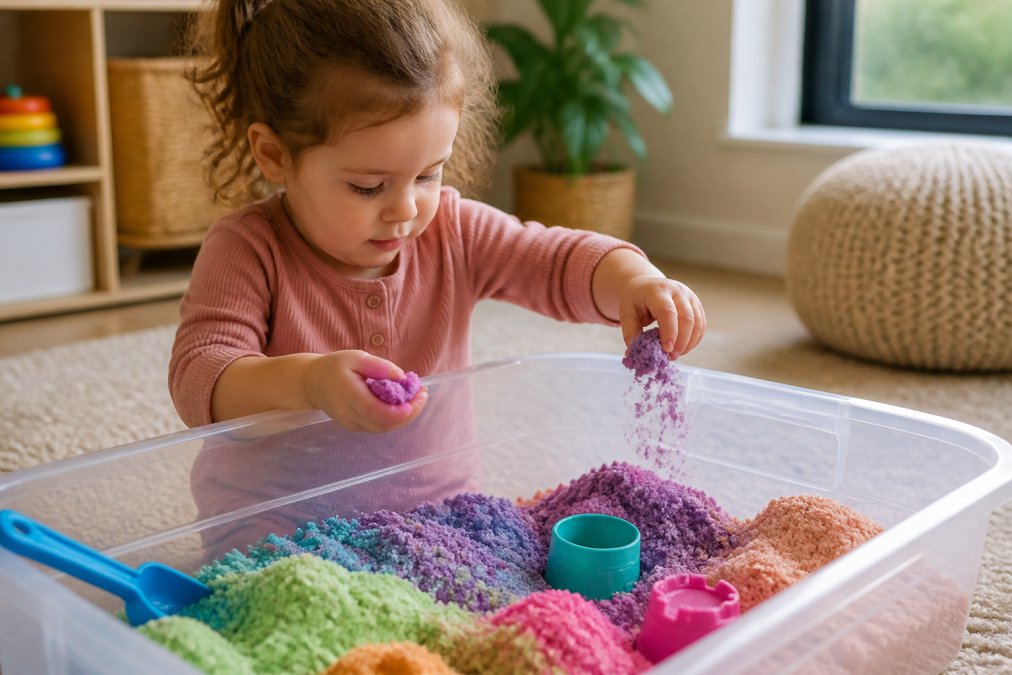
A sensory bin is a container filled with materials inviting touching, pouring, digging, and exploring. Combine multiple textures: kinetic sand, dried beans, water beads, pom-poms, and pasta.
Set up your bin on a low table where your child can access it freely. Include scoops, cups, funnels, and small containers for pouring. Rotate materials every two to three weeks to maintain novelty and sustained interest.
Water and Messy Play
Water play teaches cause and effect, builds fine motor control, and provides sensory satisfaction screens can't replicate. Set up water play in a shallow basin, kiddie pool, or large mixing bowl with cups, funnels, sponges, and floating toys. Let your child pour, splash, and explore without direction.
Messy play extends beyond water. Shaving cream, finger paint, and playdough develop fine motor skills and creative expression. The cognitive and motor development during genuine messy play justifies the cleanup.
Independent Play Strategies for Kids
Independent play, the ability to entertain oneself without constant parental direction or digital stimulation, is a learnable skill. It's worth investing in because it allows parents to accomplish anything while their children are awake.
Open-Ended Play Materials
Open-ended materials are the foundation of independent play. These items have no predetermined outcome: blocks, loose parts, building materials, art supplies, and natural objects like sticks and rocks. Unlike single-function toys, open-ended materials invite imagination to direct play.
Blocks are the classic example. A child can build a tower, house, road, or abstract structure. This flexibility keeps children engaged for extended periods because they're creating something new each time.
Store open-ended materials accessibly on a low shelf where your child can independently select them. Rotation is key: keep some visible, store others away, and swap monthly to maintain novelty without overwhelming choices.
Building Attention Span Through Unstructured Play
Attention span grows through practice, specifically through unstructured play where the child directs activity rather than following adult instructions.
Most toddlers naturally sustain focus for 10-15 minutes with genuinely interesting activities (apa.org). Use that as your baseline. Create environmental conditions supporting sustained play: minimize distractions, reduce background noise, put screens out of sight, and limit visible toys to 5-7 carefully selected items.
Resist the urge to fill silence with direction. When your child plays quietly, let them sit with their own creativity. This is where attention span actually develops.
Creative Arts, Crafts, and Imaginative Play
Imaginative play is where children process emotions, explore identity, and develop creative thinking. When a child becomes a dinosaur, chef, or doctor, they're rehearsing different roles and understanding the world from multiple perspectives.
Set up an art station with basic supplies: paper, crayons, markers, paint, scissors, and glue. Don't expect finished products. The process is the learning. A three-year-old's abstract painting is an exploration of color, movement, and cause and effect.
Pretend play materials don't need to be expensive. Dress-up clothes, simple props, and open space launch hours of imaginative play. A blanket draped over chairs becomes a fort, cave, or house. Pots and pans become a restaurant.
Provide loose materials and let your child's imagination determine play rather than setting up structured scenarios with specific rules.
Nature-Based Learning and Outdoor Exploration
Nature is the original screen-free environment. It's endlessly stimulating, constantly changing, and developmentally rich in ways indoor spaces can't replicate.
Outdoor exploration builds gross motor development, sensory awareness, and genuine curiosity about how the world works. Make outdoor time a non-negotiable part of your weekly routine. A neighborhood walk, park visit, or backyard exploration counts. Consistency matters more than destination.
Create a gentle scavenger hunt framework: collect leaves, rocks, sticks, and flowers. Observe insects and birds. Notice seasonal changes. This structure gives children a framework for exploration without rigid direction.
Quiet Time Activities and Screen-Free Alternatives to Bedtime
Quiet time is essential for parental sanity and children's self-regulation. A designated quiet hour, typically in early afternoon, gives children practice with independent, calm activities while giving parents a genuine break.
Quiet time isn't nap time; it's a period where your child engages in low-stimulation activities independently. Audiobooks, picture books, puzzles, and drawing all work beautifully.
Replace screen-based bedtime routines with genuinely calming alternatives. Read physical books together. Tell stories. Use soft music or white noise. Create a ritual signaling to your child's nervous system that sleep is coming.
Bravo Bear stories are specifically designed for this transition. Our edu-tainment series combines engaging narratives with meaningful life lessons about kindness, confidence, and courage. Stories that resonate emotionally help children process their day while settling into sleep. Unlike passive screen consumption, reading together creates connection and supports sleep rather than undermining it.
Low-Prep and Budget-Friendly Screen-Free Activities
The barrier to consistent screen-free play often isn't knowing what to do, it's the perception that good activities require extensive preparation or significant expense.
Some of the most developmentally rich activities cost nothing and take minutes to set up: blanket fort building, scavenger hunts, cooking together, sorting activities, dance parties, building with household items, nature walks, and obstacle courses using furniture.
Low-cost materials delivering high engagement:
- Dried pasta and beans (sensory play, sorting, building)
- Cardboard boxes (construction, pretend play)
- Old magazines and newspapers (collage, cutting practice)
- Washable markers and paper (drawing, painting)
- Blankets and pillows (fort building, cozy spaces)
The most engaging activities use materials you already have or can source for minimal cost. Expensive toys often sit unused while a cardboard box entertains for hours.
Create a "low-prep activities" list and post it visibly. When tempted to default to screens, you have concrete ideas immediately available.
Reducing screen time and building screen-free habits isn't about perfection, it's about creating consistent opportunities for play that builds the neural pathways kids need for focus, creativity, and emotional resilience. These activities work because they're grounded in how young children actually learn: through hands-on exploration, imaginative play, and unstructured time to follow their own curiosity.
When you're ready to add meaningful stories reinforcing these values, the Bravo Bear Complete Set offers edu-tainment designed specifically for young children. Created by CJ Hainsworth, these stories blend heart and fun with meaningful lessons about kindness, confidence, and courage, perfect for bedtime routines or quiet time reading. At $79.99, it's an investment in content encouraging genuine engagement rather than passive consumption. Alternatively, the Bravo Bear Monthly Book Club at $14.99 per month lets you discover new stories regularly, keeping your child's reading fresh and exciting.

Frequently Asked Questions
How can parents encourage independent play without digital devices?
Start by creating a dedicated play space with open-ended materials like blocks, art supplies, and loose parts. Set a timer for 10-15 minutes of uninterrupted independent play, then gradually extend it. Rotate toys every few weeks to maintain novelty. Resist the urge to direct every moment, children develop problem-solving skills and creative thinking when given space to explore on their own. Bravo Bear books can anchor quiet time routines, helping children transition into independent play with confidence.
What are the benefits of screen-free play for child development?
Screen-free play strengthens fine motor skills, gross motor development, and cognitive abilities. Children develop better attention spans, enhanced creative thinking, and improved social-emotional learning through hands-on activities. Sensory play supports neural development, while imaginative play builds confidence and problem-solving skills. Outdoor exploration fosters curiosity and nature-based learning.
How do I know screen-free activities will actually work for my child who loves screens?
The transition takes time, expect 2-3 weeks for habits to shift. Start by replacing one screen session with an activity your child enjoys, not forcing something unfamiliar. Use sensory play, pretend play, and creative projects since these naturally engage the same reward centers screens activate. Pair screen-free time with meaningful stories that inspire confidence and kindness, like Bravo Bear books, which help children see play and reading as exciting alternatives. Track small wins: longer attention spans, more imaginative play, better sleep.
Are screen-free activities suitable for children with neurodivergent needs?
Yes, with modifications. Sensory play can be calming or stimulating depending on your child's needs, some children thrive with water play and tactile bins, while others need quieter, more structured activities. Independent play with open-ended materials allows neurodivergent children to engage at their own pace. Offer choices rather than rigid schedules. Stories focused on kindness and confidence, like Bravo Bear's series, can help children process emotions and build self-advocacy skills. Consult your child's therapist or educator for activity adjustments specific to their developmental profile.


