

Screen Time Alternatives for Kids: 7 Activities That Stick
Table of Contents
- Why Screen Time Alternatives Matter for Child Development
- Screen-Free Activities for Kids: Seven Proven Options
- How to Reduce Screen Time for Children: A Practical Framework
- Educational Screen Time Alternatives That Build Skills
- Low-Prep Activities vs. High-Prep Options: What Works for Your Family
- Making Screen Time Alternatives Stick: Tips for Success
- Frequently Asked Questions
Last Updated: September 29, 2026
Why Screen Time Alternatives Matter for Child Development
Kids spend more time on screens than ever, creating real problems: reduced attention spans, sleep disruption, and missed hands-on learning (the CDC). The challenge isn't limiting screen time, it's replacing it with activities children genuinely want to do.
Screen time alternatives for kids build foundational skills screens cannot: sensory play strengthens fine motor skills, outdoor exploration develops problem-solving, creative projects foster imagination and confidence. Unstructured play develops critical thinking, social interaction, and emotional regulation.
Most parents ban screens outright, then scramble when kids get bored. Successful families instead build a deliberate rotation of engaging activities that compete with screen time by being genuinely more interesting. This guide covers seven proven screen time alternatives for kids that hold attention, plus a framework to make them stick.
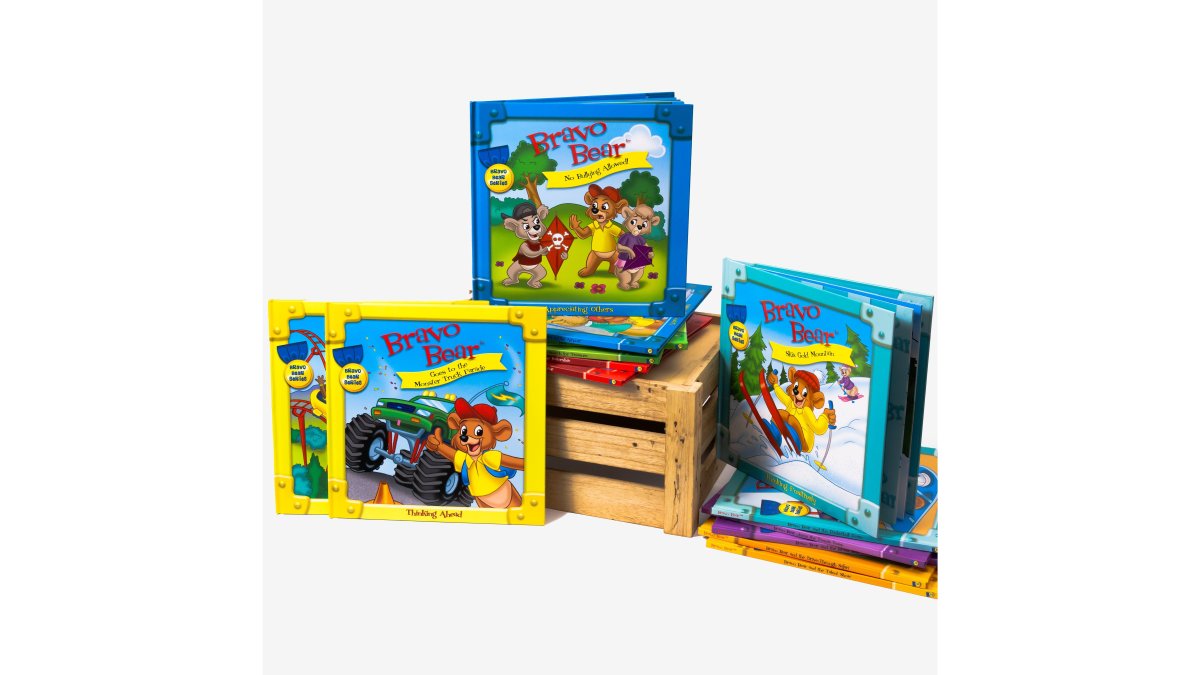
Bravo Bear combines educational content with entertainment, edu-tainment, to help kids develop kindness, confidence, and courage while staying offline.

Screen-Free Activities for Kids: Seven Proven Options
The seven activities that follow represent the most reliable screen time alternatives for kids. These aren't theoretical, they're drawn from what actually holds children's attention across different ages and temperaments.
Outdoor Exploration and Nature Play
Outdoor play develops spatial awareness, physical coordination, and understanding of how the world works.
A scavenger hunt keeps kids engaged for 30-60 minutes: give them a list of items to find (rocks, leaves, insects, colors) and let them explore. Older children can photograph findings or sketch observations. Nature observation builds attention span naturally.
Climbing, digging, and building with natural materials develop gross motor skills and problem-solving. Simple challenges like building the tallest stick tower keep kids focused and physically active.
Creative Arts, Crafts, and Building Projects
Drawing and painting require minimal setup. Let kids create without direction; the process of expressing ideas visually matters more than the finished product.
Building with blocks, LEGO, or cardboard boxes develops spatial reasoning. Simple challenges like building a weight-bearing bridge keep children engaged for 45+ minutes.
Craft projects using household items teach resourcefulness and combine creativity with problem-solving.
Reading and Storytelling
Reading is an underrated screen time alternative for kids; stories capture imagination because children must create mental images themselves.
Picture books for younger children (ages 3-5) with repetitive language patterns develop language skills and prediction abilities. Reading aloud creates family bonding.
Chapter books for older children (ages 6-8) build sustained attention. Audiobooks offer flexibility, letting children listen while drawing, building, or playing outside.
Storytelling without a book develops narrative thinking. Ask open-ended questions to turn reading into dialogue rather than passive consumption.
Sensory Play and Hands-On Learning
Sensory play engages multiple senses and develops fine motor skills and spatial awareness. Water, sand, kinetic sand, or slime keep kids absorbed.
Water play teaches cause-and-effect while calming. Sand play develops fine motor control and imaginative play.
Cooking and baking combine sensory input with learning: measuring teaches math, mixing teaches science, and children take ownership of the final product.
Board Games, Puzzles, and Problem-Solving
Puzzles build spatial reasoning and persistence. Younger children (3-5) benefit from 12-24 piece puzzles; older kids (6-8) handle 50-100 pieces. Completion satisfaction motivates sustained focus.
Board games teach strategy, counting, and social interaction. Simple games suit younger children; Uno or Checkers suit older kids. The real value is family interaction.
Card games, dominoes, and dice games provide quick engagement (15-30 minutes) and develop mathematical thinking and decision-making.
Physical Movement and Active Play
Dance parties require no equipment and build gross motor skills, rhythm, coordination, and physical confidence.
Obstacle courses using household items develop balance, coordination, and problem-solving. Children can design their own courses.
Sports and outdoor games combine physical activity with social interaction and imaginative play, developing endurance and coordination.
Bravo Bear Monthly Book Club →
Kitchen Activities and Baking Together
Simple recipes let younger children (3-5) participate meaningfully: mixing ingredients, pressing buttons, arranging toppings. The process takes 15-30 minutes.
Baking complex recipes suits older children (6-8): measuring teaches fractions, sequential steps develop planning, waiting teaches patience.
Food exploration develops sensory awareness and adventurousness. Growing herbs or vegetables extends the activity.
How to Reduce Screen Time for Children: A Practical Framework
Reducing screen time isn't about going cold turkey. It's about creating a deliberate structure that makes screen-free activities the default rather than the exception.
Start by identifying your current baseline. How much screen time is happening now? When does it happen (mornings, evenings, weekends)? What triggers it (boredom, transitions, parental need for quiet time)? Understanding the pattern shows you where alternatives need to fit.
Replace one screen activity at a time rather than eliminating everything at once. If kids watch TV after school, replace that slot with a specific screen time alternative, a craft project, outdoor play, or reading time. Once that transition feels natural (usually 2-3 weeks), replace the next screen activity.
Create a visual activity menu. List 8-12 screen time alternatives for kids that work in your home, organized by duration (quick 15-minute activities, medium 30-45 minute activities, extended 60+ minute activities). Post this where kids can see it. When boredom strikes, they can choose an activity rather than defaulting to screens.
Set specific screen-free times. Meals, the first hour after school, and 30-60 minutes before bedtime work well. During these times, screens are simply off-limits. Having this boundary removes the negotiation.
Build a transition ritual. Five minutes before screen time ends, give a warning. This prevents the meltdown that often triggers more screen time to calm kids down. Use that transition time to introduce the next activity.
| Strategy | Duration | Best For | Outcome |
|---|---|---|---|
| Activity menu approach | Ongoing | Reducing daily screen time | Kids self-direct to alternatives |
| Time-based replacement | 2-3 weeks per swap | Gradual reduction | Sustainable habit change |
| Screen-free zones | Daily | Protecting specific times | Protected family interaction |
| Transition rituals | Daily | Preventing resistance | Smoother activity changes |
Educational Screen Time Alternatives That Build Skills
Some screen time alternatives do double duty: they keep kids offline while building specific academic or developmental skills.
Reading develops literacy and comprehension. Choose books slightly above your child's current reading level to encourage growth. Read together, then discuss what happened. Ask prediction questions: "What do you think comes next?" This transforms reading into active engagement.
Building projects develop engineering and spatial reasoning. LEGO challenges (build the tallest tower, create a specific structure from instructions) combine creativity with problem-solving. Cardboard box building teaches children to think three-dimensionally.
Cooking develops math skills (measuring, fractions), science understanding (how ingredients transform), and practical life skills. Discuss what's happening: "Why does the dough rise?" or "How does heat change the egg?"
Art projects develop fine motor skills and creative expression. Drawing, painting, sculpting with clay, or creating collages all strengthen hand-eye coordination and artistic thinking.
Nature exploration teaches observation and scientific thinking. Observe insects, plants, and weather patterns. Keep a nature journal where kids sketch or describe what they find. This builds attention to detail and curiosity about the natural world.
Puzzles and games develop logical thinking, patience, and strategic planning. These cognitive skills transfer to academic learning and problem-solving in other contexts.
Low-Prep Activities vs. High-Prep Options: What Works for Your Family
Screen time alternatives fall into two categories: low-prep activities that require minimal setup, and high-prep projects that need planning but deliver deeper engagement.
Low-prep activities work when you need immediate alternatives or when time is tight. Drawing with markers, playing with blocks, reading a book, outdoor exploration, water play, or simple games require no advance planning. These activities are your safety net when boredom strikes suddenly.
Making Screen Time Alternatives Stick: Tips for Success
Set realistic expectations. Some days, screen time will happen. Some weeks, you'll slide back into old patterns. This is normal. What matters is the overall trend, not perfection. A family that reduces screen time by 50% is making a significant improvement.
Frequently Asked Questions
What are the best screen-free activities for toddlers vs. older kids?
Toddlers (ages 3-4) thrive with sensory play, outdoor exploration, and simple building blocks that develop fine motor skills. Older kids (ages 5-8) engage deeper with board games, reading, craft projects, and problem-solving challenges that build critical thinking. Both benefit from family time and unstructured play, but complexity and independence increase with age. Bravo Bear stories work across both ranges, offering age-appropriate themes that grow with your child.
How do I transition my child away from digital devices?
Start by replacing one screen session with an engaging alternative rather than eliminating screens overnight. Create a routine, perhaps a daily reading time with Bravo Bear stories instead of a tablet session. Involve your child in choosing activities so they feel ownership. Gradually expand screen-free time as new habits form. Keep alternatives visible and accessible so children naturally reach for them. Consistency matters more than perfection; most families see meaningful shifts within 2-3 weeks.
Can screen time alternatives actually help build confidence and kindness in children?
Yes. Unstructured play, creative expression, and social interaction through activities like board games, storytelling, and group projects develop social skills, problem-solving, and emotional resilience. Stories that model kindness and courage, like those in Bravo Bear's edu-tainment series, directly reinforce positive values through meaningful narratives. Combined with hands-on learning, these alternatives create multiple touchpoints for confidence-building that passive screen time cannot replicate.
What's the difference between low-prep and high-prep activities, and which should I choose?
Low-prep activities (reading, outdoor play, puzzles, audiobooks) require minimal setup and work on busy days. High-prep activities (craft projects, baking, building challenges) take planning but often create deeper engagement and lasting memories. Balance both: use low-prep options for everyday transitions and high-prep for weekends or special occasions. Bravo Bear Monthly Book Club ($14.99) offers a low-prep solution that arrives ready to enjoy, perfect for families juggling multiple schedules.


