

Teaching Children How to Resolve Conflicts Peacefully
Last Updated: November 4, 2026
Quick Summary
Teach children to resolve conflicts peacefully by coaching them through six simple steps: stop and name the feeling, calm down first, listen to each side, say what happened, brainstorm solutions together, and pick a fair solution and shake on it. Stay close but quiet, and only step in for safety, bullying, or a big power imbalance.
- The six steps work for ages three through eight, with adult coaching, and should be repeated until they become habit.
- A common approach is the thirty-second pause: stay close, stay quiet, and let children try to negotiate.
- Step back for everyday disagreements but step in for safety, bullying, or a big power imbalance.
- Follow up later by asking "Did your plan work?" and revise vague plans into concrete ones.
- Role-play with stuffed animals and let your child be the coach to build real conflict skills.
Table of Contents
- Why Peaceful Conflict Resolution Matters for Kids
- What Conflict Teaches When Adults Step Back
- The 6 Steps to Conflict Resolution Preschool and Early Elementary Kids Can Follow
- Conflict Resolution Scripts for Kids to Use in the Moment
- Conflict Resolution Activities for Kids That Build Real Skills
- Using a Conflict Resolution for Kids Worksheet at Home
- When Adults Should Step In and When to Step Back
- Following Up to See Whether the Solution Worked
- Building Peaceful Problem-Solving Into Story Time
- Frequently Asked Questions
Why Peaceful Conflict Resolution Matters for Kids
Teaching children how to resolve conflicts peacefully is one of the most durable gifts we can give them. Two kids want the same truck. A game ends in tears. These moments feel like interruptions, but they are actually the classroom.
The disagreement itself often matters less than what happens next. When adults coach kids through it, children can build emotional awareness, self-regulation, and empathy.
Bravo Bear builds stories around exactly these lessons: kindness, confidence, and courage.
Below, you will find six concrete steps, sample scripts, and activities you can use today.
What Conflict Teaches When Adults Step Back
The biggest mistake adults make is rushing in too fast. When we solve every spat, kids never practice problem-solving on their own.
Stepping back, even for thirty seconds, lets children try. They learn to name the problem, listen, and negotiate. They also learn that disagreement is not danger.
A common approach is to stay close but quiet. Watch, wait, and only coach when the wheels come off. That small pause is where independent problem-solvers are made.
The 6 Steps to Conflict Resolution Preschool and Early Elementary Kids Can Follow
These six steps work for ages three through eight, with adult coaching. Keep them simple and repeat them often so they become habit.
- Stop and name the feeling. "I feel mad because..."
- Calm down first. Take breaths, count, or hug a stuffed animal.
- Listen to each side. Each child gets a turn to speak without interruption.
- Say what happened. Identify the problem in plain words.
- Brainstorm solutions together. No idea is too silly at first.
- Pick a fair solution and shake on it.
Step-by-Step Walkthrough of a Playground Disagreement
Imagine two kids, ages five and six, both grabbing the same swing.
Step 1:
Step 2: She guides three slow breaths. Shoulders drop.
Step 3: Each child tells their side. She paraphrases: "So you were waiting first, and you feel it's your turn."
Step 4: "The problem is you both want the swing right now."
Step 5: Ideas fly: take turns, count to twenty, find another swing. Step 6: They agree on ten pushes each, then swap. They shake hands and run off.
These six steps work for ages three through eight, with adult coaching, and are meant to be repeated until they become habit.
| Step | What to do |
|---|---|
| 1 | Stop and name the feeling |
| 2 | Calm down first with breaths, counting, or a stuffed animal |
| 3 | Listen to each side without interruption |
| 4 | Say what happened in plain words |
| 5 | Brainstorm solutions together, no idea too silly |
| 6 | Pick a fair solution and shake on it |
Conflict Resolution Scripts for Kids to Use in the Moment
Scripts give kids words when their brains go blank. Practice them at calm times so they're ready under stress.
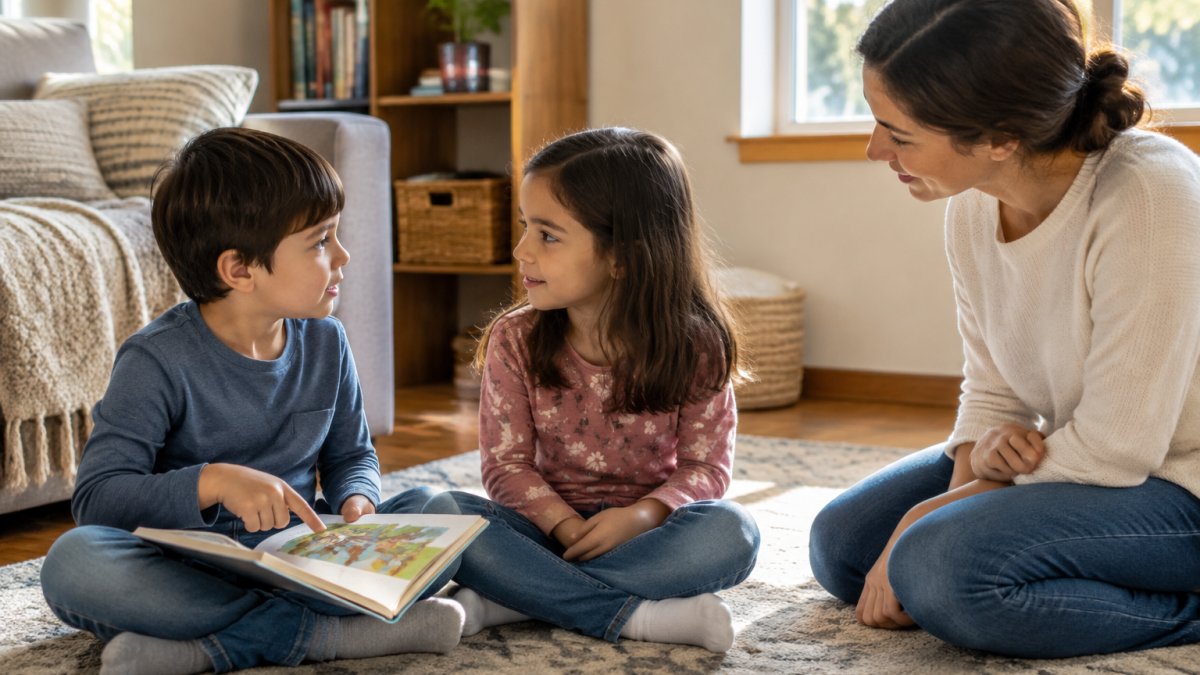
Try these sentence starters:
- "I feel ___ when you ___."
- "I need a turn when you're done."
- "Can we find a way that works for both of us?"
- "I'm sorry I ___. Next time I'll ___."
- "Let's take a breath and try again."
The apology line matters most. Sincere repair, not forced "sorry," keeps relationships strong. For more on helping kids apologize without pressure, see our guide on teaching children to apologize sincerely.
Conflict Resolution Activities for Kids That Build Real Skills
Role-play is the workhorse here. Act out a pretend playground conflict with stuffed animals, then let your child be the coach. Swap roles and repeat.
Games help too:
- Feelings charades: act out an emotion, others guess.
- The calm-down corner: a cozy spot with breathing cards.
- Turn-taking board games: practice waiting and losing gracefully.
- Puppet mediation: puppets argue, kids help them solve it.
These conflict resolution activities for kids build cooperation and communication skills without any lecture. If you want more hands-on ideas, our collection of emotional intelligence activities for 5 year olds pairs well with this work.
Using a Conflict Resolution for Kids Worksheet at Home
A simple worksheet turns the six steps into a routine. Kids draw the problem, circle the feeling, and list two solutions.
Keep it short: one page, big boxes, room to draw. Use it after a real disagreement, not during the heat of it. Later that evening works well.
We've gathered printable options in our roundup of character education worksheets that make the steps easy to practice at home.
When Adults Should Step In and When to Step Back
The general rule sounds simple: step back for everyday disagreements, step in for safety, bullying, or a big power imbalance. In practice, the hard part is telling the difference in the moment. A useful decision rule is to ask three questions in sequence: Is anyone unsafe? Is there a repeated pattern of targeting? Can the children still use words with each other?
Step back when:
- Both children are physically safe and roughly equals in age, size, and social power.
- They are still using words, even clumsy or loud ones.
- The conflict is small and likely to repeat, so the practice has value.
- Neither child has asked for help or shown signs of real distress.
Step in when:
- Someone could get hurt, or property is being destroyed.
- One child is being targeted repeatedly, even if each incident looks minor.
- An age or size gap makes fairness impossible without an adult.
- One child is frozen, shutting down, or unable to speak up.
- The disagreement involves a digital device, a shared account, or content that needs adult review.
A common pattern is the "thirty-second pause." Stay close, stay quiet, and watch. If the children start to negotiate, let them. If the wheels come off, coach rather than command. The goal is to be a sideline coach, not a referee.
Watch out: stepping back too far for too long can teach a louder child that volume wins. If one child consistently dominates, treat that as a power imbalance and step in even when no one is hurt.
Adapting the Approach by Age
Toddlers (ages 1-3) need you close and verbal. They cannot yet take another child's perspective, so name feelings for them: "You're mad. You wanted the truck." Offer two acceptable choices and physically model gentle hands.
Preschoolers (ages 3-5) can try the first three steps with heavy coaching. They can name a feeling, take a breath, and listen for one turn. Expect them to need the same script dozens of times before it sticks. Use visual cue cards with a feeling face and a calm-down icon.
Early elementary (ages 5-8) can run all six steps with a light touch. They still need an adult to paraphrase each side and to keep brainstorming from turning into a contest. By age eight, many children need only a reminder to "use your steps."
Tweens and teens (ages 9-13) often prefer to solve conflicts privately and may resent an audience.
Teens (ages 13+) need practice with negotiation and repair in friendships and group chats. Your role shifts to consultant: ask what outcome they want, what they have already tried, and what they will do if the other person does not respond.
Across all ages, children who need extra processing time, visual supports, or communication assistance benefit from written or drawn options, a quiet space, and more wait time before answering.
Following Up to See Whether the Solution Worked
A solution isn't finished until you check on it.
If yes, celebrate the process, not just the outcome: "You solved that yourselves. You listened and came up with a plan.
If no, treat it as data, not failure. Ask three questions in order: What part of the plan worked? What part didn't? What would you change next time?
Repair matters as much as the plan. If the conflict involved hurt feelings, name the harm and ask what would help: "You yelled at your brother.
Watch out: a follow-up that feels like an interrogation will shut the conversation down. Keep it to one or two questions, and let the child lead.
For recurring sibling conflicts, a short written agreement can help.
For digital conflicts, follow-up has an extra step: check whether the exchange has stopped.
Finally, model the follow-up yourself.
Building Peaceful Problem-Solving Into Story Time
Stories can do quiet work. When a character faces a disagreement, a child can practice perspective-taking while reading.
Pause mid-story and ask: "What would you do here?" Let your child suggest solutions before you turn the page. This turns reading into a conflict-management lesson without any pressure.
At Bravo Bear, our edu-tainment series was built for exactly this. Each story blends heart and fun with meaningful life lessons about kindness and courage. For a steady stream of character-building books, our monthly book club delivers stories to your door. You can also learn more about how storytelling builds emotional intelligence in children.
Frequently Asked Questions
What are the 6 steps of conflict resolution with children?
The six steps are: calm down first, listen to each child's view, name the problem together, brainstorm solutions, agree on a fair one, and check back later to see if it worked. Young children need the steps modeled out loud before they can run them alone. Keep each step short, use the same words every time, and let kids practice on low-stakes disagreements like who holds the marker first so the routine feels familiar when a bigger conflict comes up.
What are some fun conflict resolution activities for kids?
Role-play works well: give two children a pretend scenario like sharing one swing and let them act out both sides. Puppet shows, cooperative games that need teamwork to win, and turn-taking board games all build the same skills. Try a feelings charades game where kids guess emotions from faces and posture, then talk about what to say when a friend looks upset. Fifteen minutes of practice a few times a week does more than one long lecture.
How do you help a child calm down during an argument?
Lower your own voice first, because children borrow your calm. Crouch to eye level, name what you see without judging, and offer a short reset like five slow breaths, a drink of water, or a two-minute break in a quiet spot. Wait until the body settles before talking about the problem. A child who is still crying or shouting cannot hear reasoning, so the conversation about solutions comes after the calm, not during it.
What should children say when they disagree with a friend?
Teach a few short phrases they can repeat word for word: I don't like that, please stop. I feel angry when you take my turn. Can we find a way that works for both of us? Practice them at home during calm moments so they come out automatically when emotions run high. Pair each phrase with a body cue like standing tall and looking at the friend, and praise your child when you catch them using one without prompting.
Every sibling spat and playground standoff is a chance to raise a calmer, kinder kid. With the six steps, simple scripts, and a little patience, you can coach your child into a confident problem-solver. Bravo Bear's stories make that practice feel like adventure, with tales built to grow kindness, confidence, and courage in children ages three to eight. Explore the series and let a story do some of the teaching. Get started with Bravo Bear and turn story time into life-skill time.


