

5 Best Printable Character Education Worksheets
Table of Contents
- What Makes a Printable Character Education Worksheet Actually Work
- Five Criteria That Separate Keepers From Clutter
- Kindness Worksheets for Kids: What to Look For
- Character Education Activities for Preschoolers
- Character Traits Worksheets for Elementary Students
- Printable Social Emotional Learning Worksheets: What Sets Them Apart
- Common Mistakes Parents Make With Character Education Worksheets
- Frequently Asked Questions
Last Updated: October 9, 2026
What Makes a Printable Character Education Worksheet Actually Work
A printable character education worksheet works when it turns an abstract value into one concrete action a child can take today. Kindness, honesty, and courage are hard for young children to hold onto in the abstract, so the best pages give them something to do, not just something to read.
At Bravo Bear, we build stories around the same idea: character sticks when it feels like an adventure rather than a lecture. The 5 best printable character education worksheets share a set of traits that separate the pages worth printing from the ones that end up in the recycling bin. Below, we break down those traits, then show you what to look for across kindness, preschool, elementary, and social emotional learning pages.
Search interest in character education worksheets has grown as more parents look for screen-free ways to teach values at home. The Collaborative for Academic, Social, and Emotional Learning (CASEL) framework outlines five core competencies that good worksheets are built around: self-awareness, self-management, social awareness, relationship skills, and responsible decision-making. That framework is a useful filter for judging any page you find.
Five Criteria That Separate Keepers From Clutter
| Criterion | What to Look For | Why It Matters |
|---|---|---|
| One clear value | Focuses on a single trait per page | Children absorb one idea at a time |
| Action prompt | Ends with a real-world task | Turns talk into behavior |
| Age fit | Matches reading and motor level | Prevents frustration and quitting |
| Low ink, simple layout | Large type, few images | Cheaper to print, easier to follow |
| Conversation starter | Includes a question for adults | Extends learning past the page |
Most worksheets fail on the action prompt. A page that asks a child to circle the "kind" face teaches recognition, not behavior. A page that asks them to write one kind thing they will do for a sibling before dinner teaches both.
The other common failure is overloading. A single sheet covered in ten activities overwhelms a five-year-old and bores an eight-year-old. One value, one task, one question. That's the formula.
Kindness Worksheets for Kids: What to Look For
Kindness worksheets for kids should prompt a specific act, not a general feeling. "Draw a picture of being kind" is vague. "Write the name of one person you will help today, and how" gives a child a target.
Look for pages that name real people in a child's world: a parent, a neighbor, a classmate. Kindness that stays on the page fades fast. Kindness tied to a face tends to stick.
A strong kindness sheet usually includes three parts:
- A short scenario the child can picture
- A place to write or draw their own response
- A follow-up question an adult can ask later
The American Academy of Pediatrics guidance on positive childhood experiences notes that small, repeated acts of helping build empathy over time. That's the logic behind a good kindness worksheet: repetition of small acts, not one big lesson.
Character Education Activities for Preschoolers
Character education activities for preschoolers need to be hands-on, because children this age learn through doing. A worksheet for a three- or four-year-old should be mostly pictures, with a grown-up reading any words aloud.
What works at this age:
- Coloring pages tied to a single value, like sharing or taking turns
- Cut-and-paste activities that build fine motor skills
- Simple "draw a line to match" pages about feelings
- Sticker charts that track one kind act a day
Skip anything with long written instructions. If a preschooler can't complete the page without constant help, it's pitched too high. The goal is a small win they can finish on their own.
Character Traits Worksheets for Elementary Students
Character traits worksheets for elementary students can ask for real reflection, because children at this stage can write, reason, and connect a trait to their own behavior. This is the age where a worksheet can genuinely change what a child does tomorrow.
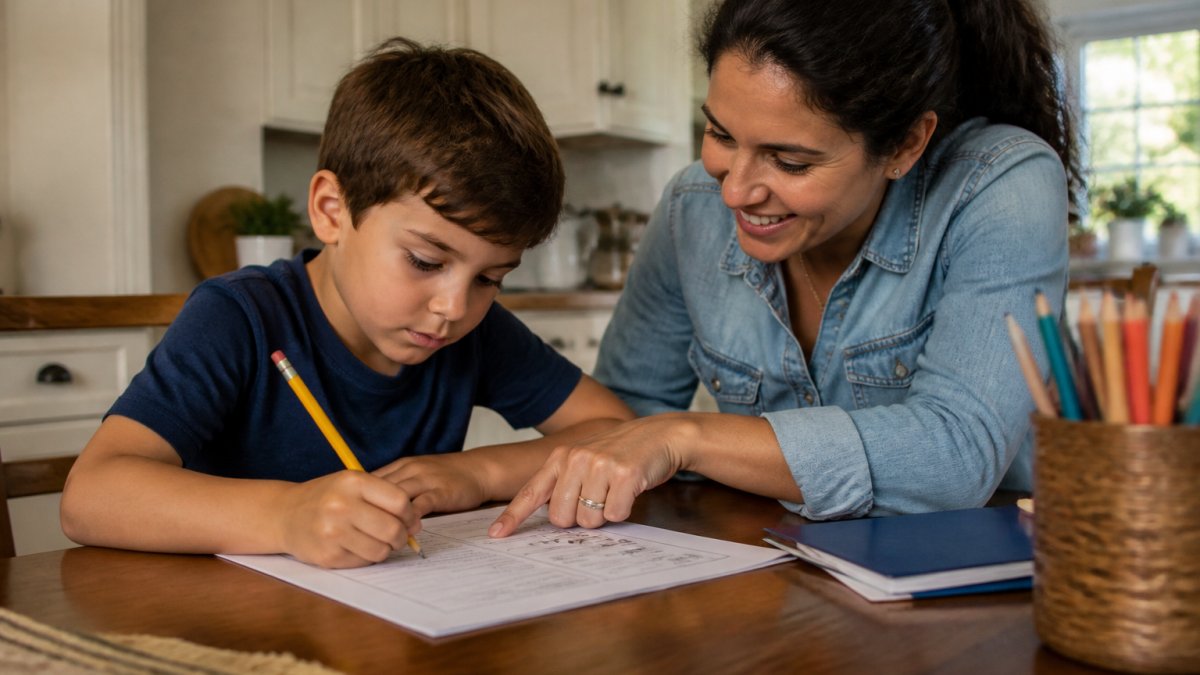
At this level, look for pages that ask the child to apply the trait to a real situation. A courage worksheet might ask: "Name one thing you were scared to try this week. What happened when you tried?" That question does more than a definition ever will.
Strong elementary sheets often include:
- A short story or scenario with a dilemma
- A "what would you do" prompt
- A space to set one goal for the week
Our Bravo Bear stories follow the same pattern. A character faces a choice, makes it, and lives with the result. A worksheet that mirrors that structure gives a child a way to practice the same thinking on paper.
Printable Social Emotional Learning Worksheets: What Sets Them Apart
Printable social emotional learning worksheets differ from general character pages because they focus on the child's inner world: naming feelings, managing frustration, and reading other people's emotions. CASEL's five competencies are the standard here, and a good page maps to at least one of them.
The best SEL sheets help a child put a name to what they feel. A page might show four faces and ask, "Which one looks like you felt today?" That single question builds self-awareness, and it gives a parent a doorway into a conversation a child might not start on their own.
What separates a useful SEL worksheet from a weak one:
- It names emotions with clear, simple words
- It offers a coping step, like taking three slow breaths
- It avoids labeling any feeling as bad
Feelings aren't good or bad. What matters is what a child does with them. A worksheet that treats anger as a problem to hide teaches the wrong lesson.
Common Mistakes Parents Make With Character Education Worksheets
The biggest mistake is treating worksheets as a checklist to finish rather than a conversation to start. A child who races through ten pages learns to race. A child who talks through one page learns to think.
Other mistakes we see often:
- Printing too many pages at once, which turns a fun activity into a chore
- Leaving the child alone with the sheet instead of sitting nearby
- Skipping the follow-up, so the lesson never leaves the page
- Choosing pages by how they look rather than by age fit
A common mistake is picking a beautiful, detailed worksheet that's actually too advanced. If your child needs you to explain every instruction, the page is working against you. Start simpler than you think you need to.
The fix is small. Pick one page, do it together, and talk about it for two minutes after. That's it. That's the whole method, and it works better than a stack of untouched printouts.
Teaching character takes more than a stack of printouts. It takes stories a child wants to return to, and moments where a value comes alive. At Bravo Bear, our edu-tainment series was built for exactly that: stories that blend heart and fun with lessons about kindness, confidence, and courage. Created by CJ Hainsworth, each story gives families a shared world where children can practice the same values a worksheet introduces. If you want a screen-free way to keep the conversation going after the page is done, explore the Bravo Bear collection and find a story your child will ask for again.
Frequently Asked Questions
What are character education worksheets?
Character education worksheets are printable pages that guide children through activities designed to build traits like kindness, honesty, and courage. They typically include scenarios, reflection prompts, or coloring tasks that help kids practice empathy and decision-making. These worksheets are used at home or in classrooms to reinforce positive values in a hands-on way, often complementing stories and discussions about character.
How can I teach kindness with printable worksheets?
Start by choosing kindness worksheets for kids that feature real-life scenarios, like sharing toys or helping a friend. After your child completes the page, talk about what they would do in that situation. Pair the worksheet with a story about kindness to make the lesson stick. Consistency matters more than volume, so a few minutes a few times a week works better than one long session.
Where can I find free printable character education worksheets?
Many educational websites and teacher resource blogs offer free printable character education worksheets. Libraries and school districts sometimes provide access to curated collections. When searching, look for worksheets that match your child's age and include clear instructions. Always preview the content to ensure it aligns with the values you want to teach, and check that the reading level is appropriate.
Are character education worksheets appropriate for kindergarten?
Yes, many character education worksheets are designed specifically for kindergarteners. Look for simple language, large fonts, and pictures that support understanding. Activities like coloring pages with kindness themes or matching emotions to faces work well. For preschoolers, focus on character education activities for preschoolers that involve movement or sensory play alongside the worksheet to keep them engaged.


