

Best Books for Teaching Courage to Kids
Table of Contents
- Why Stories Are the Best Books for Teaching Courage
- How to Teach Courage to a Child Through Reading
- Picture Books That Build Courage in Preschoolers
- Best Bedtime Stories for Ages 3-8 That Model Bravery
- Activities to Teach Courage to Kids After the Last Page
- Courage Looks Different for Every Child
- How to Choose the Best Books for Teaching Courage
- Frequently Asked Questions
Last Updated: September 11, 2026
Why Stories Are the Best Books for Teaching Courage
Story is the safest place a child can practice being brave. This guide from Bravo Bear breaks down how narrative builds courage, which titles work for which ages, and how to turn a read-aloud into a real conversation.

A child who watches a character tremble, try anyway, and survive learns something a lecture can never deliver: fear is not a stop sign. That is why stories remain the most effective tool for teaching courage to young children. The Collaborative for Academic, Social, and Emotional Learning framework identifies social-emotional learning as the foundation for skills like resilience and self-confidence, and narrative is one of the most natural delivery systems for those skills.
Unlike a lecture, a story lets a child feel the fear, then see it resolved, all from the safety of a lap.
How to Teach Courage to a Child Through Reading
Teaching courage through reading works when you name the emotion, connect it to the character's action, and invite your child to see themselves in the moment. A common mistake is rushing to the moral of the story before the feeling lands.
Keep these principles in mind:
- Read slowly enough to let tension build
- Pause where the character hesitates
- Let your child predict what might happen next
- Avoid explaining the lesson until they've felt it
Name the Type of Courage You See
Courage is not one thing. A child who speaks up on the playground is showing a different kind of bravery than one who tries a scary new activity alone. When you name the type out loud, you give your child language for their own experience.
- Physical courage: trying something new despite fear
- Social courage: speaking up or standing apart from the group
- Moral courage: doing what's right when it's hard
- Emotional courage: sitting with a big feeling instead of hiding it
Discussion Questions That Open Real Conversations
A good question does more than check comprehension. It invites your child to think about their own life. Try these after any story:
- "What was the character afraid of?"
- "What helped them be brave?"
- "Have you ever felt that way?"
- "What would you do if you were them?"
Picture Books That Build Courage in Preschoolers
For ages 3 to 5, the best books for teaching courage are short, visual, and emotionally clear. Preschoolers understand bravery through simple actions: a character who hesitates, then takes one small step. At this age, the fear needs to be concrete, the dark, a loud noise, a first day somewhere new, because abstract dangers mean nothing to a child who still thinks in pictures.
Look for these qualities:
- One clear moment of fear and one clear response
- Illustrations that show the character's face and body language
- Repetition and rhythm that make the story easy to follow
- A resolution that feels earned, not preachy
Titles That Earn Their Place on the Shelf
These are the picture books that consistently do the work, sorted by the type of courage they model:
- Physical courage, trying something new despite fear: The Very Hungry Caterpillar by Eric Carle (the caterpillar's transformation is a gentle stand-in for any scary change), and Jabari Tries by Gaia Cornwall, where a boy's failed attempts at a flying machine become the whole point.
- Social courage, speaking up or standing apart: The Invisible Boy by Trudy Ludwig, about a quiet child who finds his voice, and Stand Tall, Molly Lou Melon by Patty Lovell, where a small girl refuses to shrink for a bully.
- Emotional courage, sitting with a big feeling: The Kissing Hand by Audrey Penn, which names separation anxiety directly, and When Sophie Gets Angry, Really, Really Angry by Molly Bang, which lets anger exist without punishing it.
- Moral courage, doing what's right when it's hard: A Chair for My Mother by Vera B. Williams, where a family's small, honest persistence is the bravery.
A practical note: the Caldecott Medal, awarded annually by the Association for Library Service to Children (a division of the American Library Association), is a reliable filter for illustration quality, though it does not specifically reward courage themes. Pair a Caldecott title with a courage-focused one and you cover both craft and content.
Bravo Bear's edu-tainment series was built for exactly this age range, with stories designed to model kindness, confidence, and courage without lecturing. Each book pairs a memorable character moment with a life lesson a child can carry into their own day.

Best Bedtime Stories for Ages 3-8 That Model Bravery
The best bedtime stories for ages 3-8 balance warmth with a real emotional arc. Bedtime is not the moment for high-stakes adventure; it is the moment for a character who faces something small and true, then finds their way through. The reason this window matters is neurological as much as emotional: a calm, close, low-stimulation read-aloud is when a child's nervous system is most receptive to language about feelings, which is why the same book that gets shrugged off at 4 p.m. can land at 8 p.m (zerotothree.org).
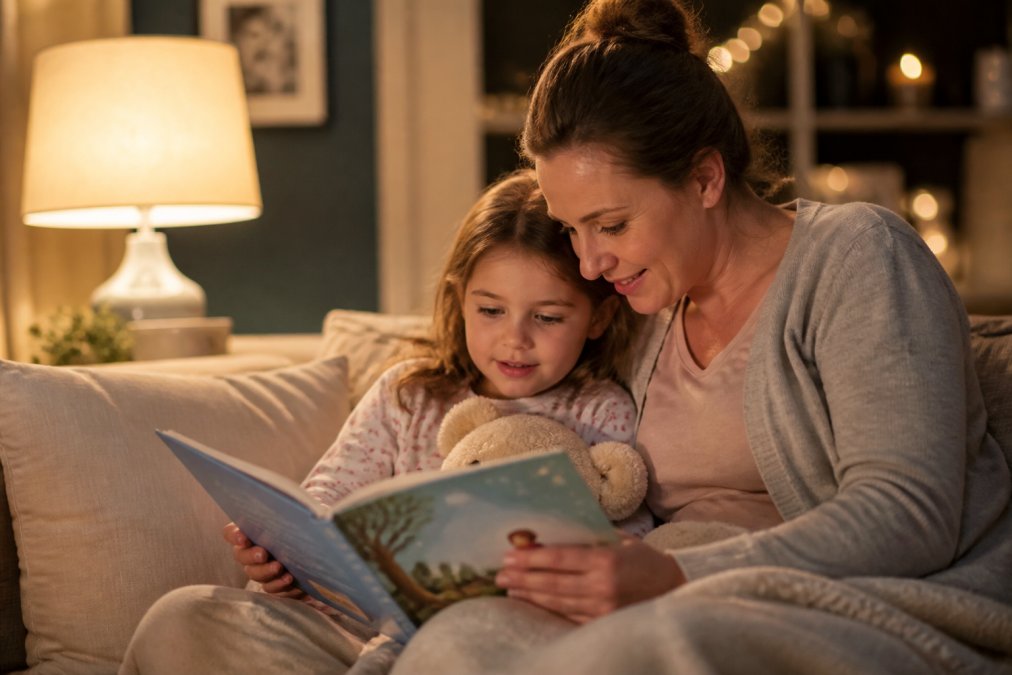
A few things separate a bedtime story that sticks from one that fades by morning:
- The fear is specific and relatable
- The character solves the problem themselves, with support
- The ending is calm enough to invite sleep
- The lesson is shown, not stated
Bedtime Picks by Age and Type of Courage
Ages 3-5 (short, visual, soothing):
- Owl Babies by Martin Waddell, separation fear, resolved by a parent's return; the repetitive "I want my mommy" is the whole emotional engine.
- The Snowy Day by Ezra Jack Keats, quiet physical courage as Peter explores a transformed world alone.
- Little Blue Truck by Alice Schertle, social courage framed as helping a stuck friend.
Ages 6-8 (longer arc, real stakes, still calm):
- The Story of Ferdinand by Munro Leaf, moral courage: a bull who refuses to fight, and is happier for it.
- Amazing Grace by Mary Hoffman, social courage: a girl auditions for a role everyone assumes she can't play.
- Enemy Pie by Derek Munson, emotional and moral courage: befriending someone you were told to dislike.
A Note for Anxious and Neurodivergent Readers
For a child with anxiety, sensory processing differences, or neurodivergence, the standard "brave hero" bedtime book can backfire. A character who seems fearless sets a bar the child can't reach, and a loud, high-stakes plot can dysregulate rather than soothe. The better bedtime picks for these children show a character who is visibly uncomfortable and still takes one small step, Jabari Tries and The Invisible Boy both work here, and end in a calm, predictable resolution. Read at the same time, in the same spot, with the same closing ritual; the predictability is itself part of the courage-building.
Activities to Teach Courage to Kids After the Last Page
The story is the setup. The activity is where courage moves from the page into the child's actual life. A common mistake is closing the book and moving on without connecting the lesson to something real.
Try these after-reading activities:
- Draw the brave moment: ask your child to draw the character being brave, then draw themselves doing the same
- Act it out: let your child play the character and practice the brave choice
- Name a real try: ask your child to name one small brave thing they could try this week
- Celebrate the attempt: praise the trying, not just the outcome
For a structured option, the Zero to Three early childhood development resources offer practical guidance on how young children build emotional regulation and resilience through everyday interactions.
Courage Looks Different for Every Child
Not every child shows courage the same way, and some children need a different entry point entirely. A child with sensory sensitivities, anxiety, or neurodivergence may experience bravery as something quieter: raising a hand, trying a new food, or staying in the room during a loud moment.
For these children, the best books for teaching courage are the ones that show a character who is different, struggling, and still brave. The lesson is not that everyone should be fearless. It is that courage can look like many things, and every version counts.
How to Choose the Best Books for Teaching Courage
Choosing well comes down to matching the book to your child's age, temperament, and current challenge. A book that lands for one child may miss entirely for another, so the selection process matters as much as the reading itself.
Use this simple framework:
| If your child... | Look for... | Avoid... |
|---|---|---|
| Is 3-5 years old | Short stories, clear emotions, big illustrations | Long text, abstract lessons |
| Is 6-8 years old | Chapter books, character growth, real stakes | Overly simple plots |
| Struggles with fear | Characters who hesitate, then try | Fearless heroes with no struggle |
| Needs confidence | Stories where the child solves the problem | Stories where adults rescue the hero |
| Is neurodivergent | Characters who are different and brave | Stories that reward conformity |
For families who want a complete, ready-made library, the Bravo Bear Complete Set brings the full series together. For those who prefer to build gradually, the Bravo Bear Monthly Book Club delivers a new story each month.
Courage is not something you can hand a child in a single conversation. It is built slowly, story by story, night by night, until the child who once hesitated at the edge of the pool steps in on their own. Bravo Bear was created by CJ Hainsworth to make that slow build feel like an adventure, with edu-tainment stories that blend heart and fun with lessons in kindness, confidence, and courage. Start with the Bravo Bear Complete Set or join the Bravo Bear Monthly Book Club and give your child a new brave character to grow alongside.
Frequently Asked Questions
What are some good books to build courage in young children?
Look for stories where the main character faces a specific fear and works through it, rather than books that simply state 'be brave.' Picture books with animal protagonists work well for ages 3-5, while longer chapter stories suit ages 6-8. A series like Bravo Bear builds courage, kindness, and confidence across multiple titles, so children revisit the same characters and lessons. The best books for teaching courage show the struggle, not just the happy ending.
How do I use a story to teach courage to a child without sounding preachy?
Ask questions instead of giving lessons. After reading, try 'What do you think made the bear feel scared?' or 'What would you have done?' Let your child answer first, and resist correcting them. Naming the type of courage you noticed, such as trying something new or standing up for a friend, connects the story to their own life without a lecture. Keep it to two or three questions so it stays a conversation, not a quiz.
Are there books that teach courage through relatable animal characters?
Yes, and animal characters often work better for younger readers because children project their own feelings onto them without feeling judged. A nervous bear, a turtle afraid of the dark, or a small bird learning to fly all let a child practice bravery at a safe distance. Bravo Bear was created by CJ Hainsworth specifically to blend heart and fun with lessons about kindness, confidence, and courage, which makes the stories easy for kids aged 3-8 to return to again and again.
How can picture books help children overcome their fears?
Stories give children a rehearsal space. When a character faces the dark, a new classroom, or a loud noise and comes through it, your child sees that fear is survivable and temporary. This is the basis of bibliotherapy: reading about a challenge lowers anxiety about facing it in real life. Pair the book with a small real-world step, like turning off the hall light for one night, so the lesson connects to action.


