

7 Ways to Teach Kindness to Elementary Students
Table of Contents
- Why Kindness Needs a Plan, Not Just a Pep Talk
- Strategy 1: Define Kindness in Words Kids Understand
- Strategy 2: Model Kindness Every Day
- Strategy 3: Kindness Activities for Kids That Fit Your Schedule
- Strategy 4: Acts of Kindness at School for Students
- Strategy 5: Empathy Activities for Elementary Students
- Strategy 6: Build a Kindness Lesson Plan for Elementary Students
- Strategy 7: Celebrate and Sustain Kindness All Year
- Frequently Asked Questions
Last Updated: October 6, 2026
Why Kindness Needs a Plan, Not Just a Pep Talk
Kindness is the habit of noticing what someone needs and acting on it, and like any habit, the best way to teach kindness is through practice rather than one assembly.
Most teachers and parents already tell children to "be kind." The gap is that children rarely get a clear picture of what kindness looks like minute to minute.
Strategy 1: Define Kindness in Words Kids Understand
Kindness is treating people with care, even when it is not easy or convenient. That definition works for a first grader and a fifth grader alike. The trick is unpacking it with examples your students can picture.
A Simple Classroom Definition
Post this where everyone can see it: "Kindness means noticing, caring, and acting." Then break it apart together.
- Noticing: seeing when someone is left out, sad, or stuck
- Caring: deciding that person matters to you
- Acting: doing one small thing to help
Ask students for one example of each. Write them on the board. You now have a class-owned definition instead of a rule handed down from adults.
Discussion Starters for Different Grade Bands
| Grade Band | Discussion Starter | What You Are Looking For |
|---|---|---|
| K-1 | "Tell me about a time someone helped you." | Simple recall, naming feelings |
| 2-3 | "Is it still kind if you do not feel like it?" | Early reasoning about choices |
| 4-5 | "Can a kind act ever go wrong? How?" | Nuance, empathy for mixed outcomes |
Keep these conversations short, five to ten minutes of honest talk beats a thirty-minute lecture.
CASEL's framework for social-emotional learning outlines how self-awareness and social awareness develop in these years, which is useful background when you plan discussions.
Strategy 2: Model Kindness Every Day
Children copy what they see far more than what they hear. If you want a kind classroom or home, the adults have to go first, the strategy that costs nothing and does the most work.
What Modeling Looks Like in Practice
Modeling is not grand gestures. It is small, visible choices made out loud.
- Thank a student by name for something specific
- Admit a mistake and apologize without excuses
- Say "I noticed you looked frustrated. Do you want to talk?"
Narrate your thinking sometimes: "I was going to interrupt, but I waited because she was still talking." That teaches more than a lecture on respect.
Strategy 3: Kindness Activities for Kids That Fit Your Schedule
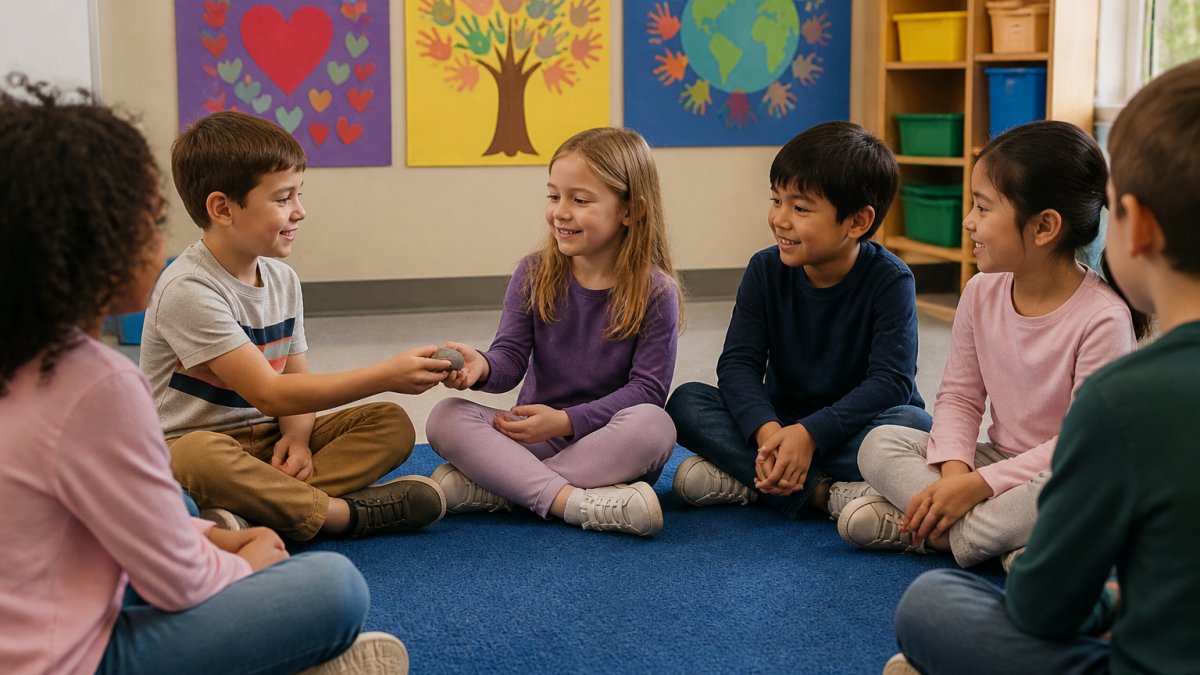
Kindness activities for kids work best when they fit the time you actually have. A busy Tuesday needs a five-minute option; a Friday afternoon can hold a bigger project. Build a menu, not a single plan.
How to Choose an Activity in 30 Seconds
Ask three questions before you pick:
- How much time do I have? Under 10 minutes, 10-20 minutes, or a full block?
- What does this class need right now? Noticing, including, repairing, or appreciating?
- Who might get left out? If the activity depends on reading, writing, fine motor skills, or speaking in front of the group, plan a partner or a nonverbal option.
That third question is the one most activity lists skip. A compliment circle is lovely until a student who is nonverbal, shy, or still learning English is put on the spot. Build the accommodation in from the start.
Five-Minute Activities (No Materials)
Use these during transitions, after recess, or when a lesson finishes early.
- Two-minute tidy. "Everyone pick up five things that are not yours." Time it. Celebrate the finish, not the winner.
- Door greeter. One student stands at the door and greets classmates by name as they enter. Rotate daily.
- Kindness whisper. Students turn to a neighbor and say one true, specific thing they noticed. "You shared your glue stick at the right time."
Grade adaptations: K-1 students do best with the tidy and the greeter.
Inclusive option: For the thank-you pass, allow students to write their thanks on a sticky note and hand it over instead of speaking aloud.
Ten-to-Twenty-Minute Activities (Minimal Materials)
These fit a normal lesson slot and need only paper, markers, and a container.
Compliment circle
- Time: 10-15 minutes
- Materials: none
- Setup: Sit in a circle. Model one compliment first.
Kindness jar
- Time: 5 minutes to set up, 5 minutes to read on Friday
- Materials: a jar or shoebox, slips of paper, a pen
- Steps: Students write kind acts they saw on slips and drop them in. On Friday, read a few aloud without naming who wrote them.
Kind note to a staff member
- Time: 15 minutes
- Materials: paper, markers or pencils, envelopes if you have them
- Steps: Each student writes one short note to a school staff member who helps them, the custodian, the bus driver, the lunch staff, the front office. Deliver them together at the end of the day.
Thirty-Minute-Plus Activities (Crafts, Games, and Hunts)
When you have a full block, these land well with elementary students.
Kindness scavenger hunt
- Time: 30-40 minutes
- Materials: printed checklists, clipboards, pencils
- Setup: Write a checklist of kind acts to spot or do, hold a door, invite someone to join a game, pick up litter, give a genuine compliment, help someone who dropped something.
Friendship bracelets
- Time: 30-45 minutes
- Materials: beads or embroidery floss, scissors
- Steps: Make two. Keep one, give one away before the end of the day. The giving is the lesson, not the bracelet.
Kindness rocks
- Time: 30-45 minutes plus drying time
- Materials: smooth rocks, acrylic paint or paint pens, sealer
- Steps: Paint a rock with a kind message. Once dry, leave it somewhere on campus for someone to find. The point is that they will never know who found it, and that is fine.
Cooperative board games
- Time: 20-30 minutes
- Materials: a cooperative game where the group wins or loses together
- Steps: Play in small groups. Afterward, ask one question: "How did it feel when someone helped the group?"
A Note on Rotating the Menu
A scavenger hunt is the easiest of these to adapt. Change the list by season, or by what your class needs most that month. If exclusion has been a problem, load the checklist with invitations. If gratitude is thin, load it with thank-yous. The menu stays the same; the emphasis shifts.
Strategy 4: Acts of Kindness at School for Students
Acts of kindness at school for students should start small and local, then grow outward. Children understand kindness best when it happens in places they know, to people they can see.
Everyday Acts Inside the Classroom
These daily acts build a kind classroom culture.
- Invite a classmate to join a game at recess
- Share supplies without being asked
- Help a friend clean up a spill
Service Projects That Involve the Whole School Community
Once daily acts feel normal, a service project gives the class something bigger to share.
- Collect litter on the playground and sort it for recycling
- Make cards for a local nursing home or shelter
- Run a food or coat drive with another class
Keep the project short and specific. One clear goal finishes, and finishing matters. A project that drags on for months loses its meaning for young children.
Strategy 5: Empathy Activities for Elementary Students
Empathy activities for elementary students help children practice feeling what someone else might feel. Kindness without empathy is just following rules. Empathy is what makes it stick.
Role-Play and Perspective-Taking
Role-play gives children a safe way to try on someone else's shoes.
- Act out a scene where one child is left out of a game, then switch roles
- Read a short story and ask, "What do you think she is feeling right now?"
- Use puppets or stuffed animals for younger students
The switch is the key part. When a child plays both roles, the lesson lands in the body, not just the head.
Responding to Unkind Behavior and Exclusion
Children need a script for the hard moments, not just the happy ones. Teach three simple moves.
- Notice: "That did not feel kind."
- Speak up: "We do not talk to people that way here."
- Get help: tell an adult when something feels too big to handle alone
Practice these lines out loud, a script a child has said before is one they can use when upset. Exclusion is the most common unkindness at this age, so name it directly and give students a way to invite others back in.
Strategy 6: Build a Kindness Lesson Plan for Elementary Students
A kindness lesson plan for elementary students works best as a short sequence, not a single lesson. Children need repetition across a week to turn a concept into a habit.
A Sample Week-Long Sequence
- Monday: define kindness together and post the class definition
- Tuesday: read a kindness story and discuss the characters' choices
- Wednesday: run a low-prep activity, such as a compliment circle
Each day takes ten to twenty minutes. That is enough.
How to Assess Kindness and Student Learning
You cannot grade kindness with a test, but you can watch for it. Use simple, low-stakes checks.
- Exit slips: "Name one kind thing you did or saw today"
- Observation notes: jot down specific kind acts you notice during the week
- Self-reflection: "How did it feel to help someone?"
Look for growth over time, not perfection. A child who starts noticing kindness is already ahead of where they were.
Strategy 7: Celebrate and Sustain Kindness All Year
Kindness fades fast if it is only a February theme. Sustaining it means building small rituals that keep it visible all year long, a routine that runs without you reinventing it every week.
A Repeatable Weekly Routine
This is the part most activity lists leave out. A routine beats a one-time event because children stop needing to be reminded. Here is a weekly rhythm that fits any elementary classroom.
- Monday, Notice. Two minutes. Ask: "Who did something kind you saw over the weekend?" One or two shares, then move on.
- Tuesday, Practice. Run one activity from the menu in Strategy 3. Ten to twenty minutes.
- Wednesday, Reflect. One sentence in a journal or on an exit slip: "One kind thing I did or saw today."
That is roughly 30-40 minutes of kindness work across a week, enough.
Appreciation Boxes, Shout-Outs, and Reflection
These rituals fill the weekly slots. Rotate them so they stay fresh, a ritual that runs every week for a year gets stale, but one that returns every few weeks keeps its meaning.
- Appreciation box. A shoebox where students drop notes about kind acts they saw. Read a few aloud on Friday without naming the writer.
- Shout-outs. A two-minute Friday ritual where students name a classmate's kind act. Model the format first: "I want to shout out ___ for ___."
- Reflection journal. One sentence a week about kindness. Keep it short so it stays honest.
A caution on shout-outs. Public recognition is not comfortable for every child. Some students, and families, prefer not to be singled out.
Keeping It From Going Stale
Three habits keep a kindness routine alive past the first month.
- Change the surface, not the structure. The Friday shout-out stays; the format changes, sticky notes one month, a talking piece the next, a short video message the next.
- Let students run it. By mid-year, a student can lead the Monday notice and the Friday shout-out. Ownership is what makes it survive a substitute teacher or a busy week.
- Tie it to what the class actually needs. If exclusion has been a problem, spend a month on invitations. If gratitude is thin, spend a month on thank-yous. The routine holds; the emphasis shifts.
Bringing It Home
Kindness that lives only at school is half a habit. The same weekly rhythm works at home, scaled down.
- Monday notice at dinner. "What kind thing did you see today?"
- Wednesday reflection at bedtime. One sentence about a kind choice.
- Friday appreciation. Each family member names one kind act they saw in someone else that week.
Keep the family version short. Two minutes at dinner beats a thirty-minute conversation nobody wants.
A story is the easiest on-ramp for the home version.
Frequently Asked Questions
What are some examples of acts of kindness that students can do at school?
Students can write thank-you notes to cafeteria staff, invite a classmate sitting alone to join a game, pick up litter on the playground, or share supplies without being asked. Older elementary students can organize a recycling drive or make cards for a local nursing home. The key is keeping acts small, specific, and repeatable so kindness becomes a daily habit rather than a one-time event.
What game can help children learn about kindness?
A kindness scavenger hunt works well because it turns kind behavior into a game. Give students a checklist of simple actions, such as giving a compliment or helping someone carry something, and let them mark off each one during the week. Board games that involve cooperation instead of competition also teach sharing, turn-taking, and cheering for classmates.
What activities help elementary students develop empathy?
Role-play and perspective-taking exercises are among the most effective empathy activities for elementary students. Ask a child to act out how a character feels in a story, then discuss what they might need. Reading children's books about kindness and talking through the characters' choices builds the same skill. Community circles and classroom discussions give students a regular space to name feelings and practice listening.
How do you explain kindness to elementary students?
Keep it concrete. Tell students kindness means noticing how someone feels and doing something to help, even when no one asks you to. Use examples they recognize, like sharing a snack or inviting a new classmate to play. Pair the definition with a kindness lesson plan that includes a story, a short discussion, and one action they can try that same day.
Building a kind classroom takes more than one good week, and the hardest part is keeping it going when the calendar gets crowded. That is where Bravo Bear can help. Our edu-tainment series, created by CJ Hainsworth, blends heart and fun with meaningful life lessons about kindness, confidence, and courage, giving you stories that make the conversation easy to start. Shop the Bravo Bear series and give the children in your life a world where making dreams come true starts with being kind.


