

How to Foster Ambition in Young Kids: A Parent's Guide
Last Updated: October 29, 2026
Quick Summary
Learning how to foster ambition in young kids starts with modeling effort yourself, setting one small goal, and naming progress they can see. Ambition at this age means wanting to try new things and keep going when they feel hard.
- Ambition for ages 3 to 8 means trying something new and persisting, not winning trophies or top grades.
- Say out loud what you are working on so kids see effort is normal and worth it.
- Set goals kids can finish in one to two weeks, such as a goal jar, sticker chart, or picture goal board.
- Keep practice sessions to about 10 minutes for 3-to-6-year-olds and 15 minutes for 7-to-8-year-olds.
- Praise effort rather than outcomes, and watch for children who only practice for rewards.
Table of Contents
- What Ambition Looks Like at Ages 3 to 8
- Start by Modeling Ambition Yourself
- How to Explain Ambition to a Child in Simple Words
- Goal Setting Activities for Kids
- Age-Appropriate Goals for Kids
- How to Motivate Kids to Practice Hard Things
- Recognizing Unhealthy Pressure and Burnout
- Building Your Child's Ambition Plan This Week
- Frequently Asked Questions
What Ambition Looks Like at Ages 3 to 8
Ambition in young kids is not about winning trophies or getting top grades. It is a child's drive to try something new, keep going when it feels hard, and feel proud of getting better. Learning how to foster ambition in young kids starts with these early drives.
At ages 3 to 4, ambition looks like a child who wants to "do it myself." At ages 5 to 6, it shows up as wanting to finish a puzzle or build a tower that stays up. By ages 7 to 8, children start comparing themselves to others and set their own small goals.
Keep these age patterns in mind:
- Ages 3-4: Trying new tasks, even messy ones
- Ages 5-6: Sticking with a project for longer stretches
- Ages 7-8: Setting personal goals and tracking progress
Start by Modeling Ambition Yourself
Children copy what they see. When parents talk about their own goals, kids pick up that effort is normal and worth it.
Try these simple habits:
- Say out loud what you are working on, like "I'm learning to bake bread this month."
- Show your effort, even when results are slow.
- Admit when something is hard and explain how you keep going.
Let kids watch the process, not just the finished result.
How to Explain Ambition to a Child in Simple Words
Ambition means wanting to get better at something and working toward it. For a step-by-step guide to building confidence at each stage, see how to build confidence in young children. Use that plain definition with your child as you learn how to foster ambition in young kids.
Try a short script like this: "Ambition means you want to learn something new and keep trying until you get better at it."
Bravo Bear offers stories crafted to be memorable, blending heart and fun with meaningful life lessons.
Goal Setting Activities for Kids
Goal setting works best when it is simple, visual, and fun. Young children do not need long lists. They need one clear target they can see.
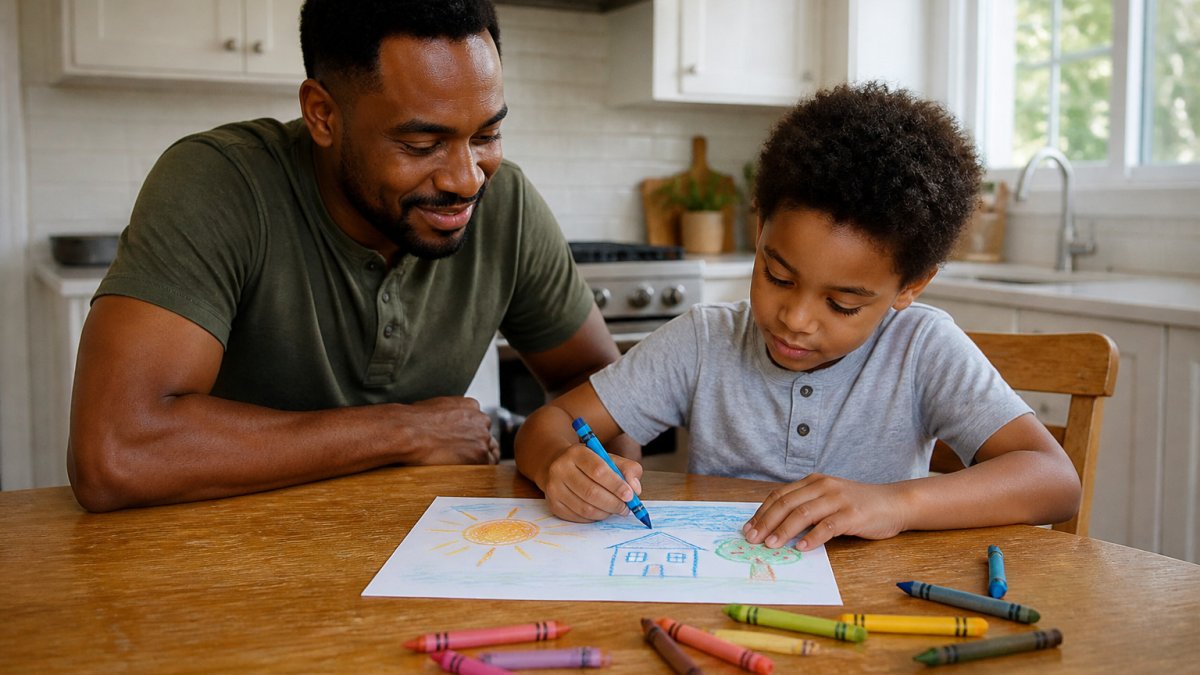
Try these activities:
- Goal jar: Write a small goal on a slip of paper and drop it in a jar. Pull one out each week.
- Sticker chart: Give a sticker for each day of practice toward a goal.
- Picture goal board: Have your child draw the goal and pin it where they can see it.
Keep the goal small enough to finish in one to two weeks.
Age-Appropriate Goals for Kids
Most advice on goal setting for young kids stops at "make it age-appropriate" without explaining what that actually looks like. The gap matters: a goal that fits a 7-year-old can crush a 4-year-old's motivation, and a goal that is too easy teaches a child that effort is optional. Use the developmental guide below, then apply the calibration check to fine-tune it.
Ages 3-4: process goals, not outcome goals. At this stage, the goal should be about doing, not finishing. Children this age are building autonomy, so frame goals as "I can try" rather than "I can do." Examples:
- Put three toys back in the bin after play (not "clean your room").
- Try to zip the jacket once with help nearby.
- Use a fork for five bites at dinner.
- Stack four blocks without knocking them down.
Ages 5-6: short completion goals. Kids this age can hold a goal in mind for a few days and feel real pride in finishing. Keep the horizon to one week or less. Examples:
- Read five pages aloud with a grown-up each night for a week.
- Tie one shoe without help by Friday.
- Water the same plant every morning for five days.
- Finish a 24-piece puzzle without adult hands.
Ages 7-8: goals with a tracking element. By this age, children can set a personal target and monitor progress, which is where ambition starts to feel internal. Examples:
- Practice piano four days out of seven and mark each day on a calendar.
- Learn all the piece names in a simple chess set.
- Complete a short chore list (three items) every day for a week.
- Save allowance toward a small purchase over two to three weeks.
The calibration check. After you set a goal, watch the first two attempts. If your child gives up within 30 seconds or says "I can't" before trying, the goal is too big, cut it in half. If your child finishes easily and loses interest, add one small step.
When to adjust mid-week. If your child is frustrated but still trying, keep the goal and shorten the practice session. If your child has stopped trying altogether, shrink the goal rather than adding pressure. The point of these early goals is to build the identity "I am someone who works at things," not to finish a task on schedule.
The article breaks down suggested goal types by age, which can be scanned at a glance.
| Age | Goal focus | Example goal |
|---|---|---|
| 3-4 | Process goals, not outcome | Put three toys back in the bin |
| 5-6 | Short completion goals, one week or less | Read five pages aloud each night for a week |
| 7-8 | Goals with a tracking element | Practice piano four days out of seven |
How to Motivate Kids to Practice Hard Things
Practice is where ambition either grows roots or dries up. Young children quit not because they are lazy but because the skill feels harder than their current ability, and they do not yet have the language to say "this is frustrating." Your job is to make the frustration survivable and the progress visible. For a step-by-step guide to building persistence, see how to build resilience in young children.
Why practice feels hard for young kids. Between roughly ages 3 and 8, children are still developing the executive-function skills that let them tolerate frustration, delay rewards, and hold a goal in mind. A 5-year-old who melts down over a tricky puzzle is not being dramatic, the task is genuinely exceeding their regulation capacity in that moment. Knowing this changes your response: you are not fixing a discipline problem, you are scaffolding a developing skill.
The four-step practice loop.
- Shrink the skill. Break it into a piece your child can do in one sitting. If they are learning to write their name, start with one letter, not the whole word.
- Time-box it. Ten minutes is the practical ceiling for most 3-to-6-year-olds; 15 minutes for 7-to-8-year-olds. Set a visible timer so the end is predictable, unpredictability is what makes practice feel endless.
- Name the effort, not the outcome. Say "You kept going when the puzzle got tricky" rather than "You're so smart." Effort praise builds the belief that ability grows with work; outcome praise can make children avoid challenges that might threaten their "smart" label.
- Close with a win. End each session on something your child can already do, so the last memory of practice is competence rather than struggle.
Scripts for the frustration moment. When your child says "I can't do it," try one of these instead of "Yes you can":
- "You can't do it yet. Let's figure out the next tiny step."
- "This part is hard. What would make it a little easier?"
- "Want to watch me try it once, then you try?"
The word "yet" does quiet work here, it reframes the struggle as temporary without dismissing the feeling.
Intrinsic versus extrinsic motivation. Sticker charts and small rewards can get practice started, but they work best as a short-term on-ramp, not a permanent system. A common pattern is that external rewards crowd out internal ones: a child who practices piano only for stickers may stop entirely when the stickers do.
Making progress visible. Children this age cannot easily feel incremental improvement, so show it. Keep a simple practice log with stickers or tally marks, record a short video of the skill on day one and again on day ten, or line up finished work where your child can see the stack grow. Visible evidence of "I am getting better" is the most durable motivator you can build at this age, it teaches your child to look for their own progress rather than waiting for your approval.
Recognizing Unhealthy Pressure and Burnout
Ambition should feel exciting, not stressful. Some warning signs that a child is under too much pressure include:
- Crying or saying "I can't" before trying
- Losing interest in activities they once enjoyed
- Trouble sleeping or frequent stomachaches before practice
- Saying they are only trying to make you happy
If you see these signs, lower the expectations and spend more time on play. Talk with your pediatrician if the stress continues for several weeks.
Building Your Child's Ambition Plan This Week
Pick one goal, one daily practice time, and one way to celebrate progress. For a daily-routine guide to fostering imagination and self-directed effort at home, see how to foster child imagination daily. Keep the plan short so it is easy to follow.
Here is a simple weekly plan:
- Monday: Choose one small goal together.
- Tuesday to Friday: Practice for 10 minutes a day and mark progress on a chart.
- Saturday: Talk about what went well and what felt hard.
- Sunday: Rest, play, and pick the next small step.
Ambition grows one small win at a time. Start with one goal this week and build from there. Explore the Bravo Bear collection.
Frequently Asked Questions
How do you explain ambition to a child?
Keep it concrete. Tell your child that ambition means wanting to get better at something and being willing to keep trying. Connect it to something they already love, like learning to ride a bike or mastering a favorite game. Use everyday words such as try, practice and improve rather than abstract terms. Ask them what they would like to be good at, then talk about one small step they could take this week. Children at this age understand effort far better than long-term outcomes, so focus on the process.
What are age-appropriate goals for young kids?
For toddlers and preschoolers, goals should be physical or routine-based, such as putting on shoes alone or finishing one puzzle. Children aged 5 to 8 can handle goals that take a few weeks, like reading five library books or learning to tie shoelaces. Keep each goal small enough to finish in a short time, and make progress visible with a sticker chart or checklist. Adjust the difficulty if a child feels frustrated, since a goal that is too hard can reduce motivation rather than build it.
How can parents encourage ambition without putting pressure on kids?
Focus on the child's own interests rather than your expectations. Ask open questions about what they want to try, and let them choose the goal. Praise effort, strategy and persistence instead of only results, such as saying you noticed how many times they tried the puzzle. If a child loses interest, check whether the goal still matters to them before pushing harder. Pressure tends to create anxiety, while encouragement and genuine curiosity keep motivation healthy.
How do you motivate a child to keep trying when something is hard?
Break the difficult skill into smaller pieces and celebrate each one. Model persistence by describing your own struggles out loud, such as saying this recipe is tricky, but I will try it again. Use phrases like not yet instead of I can't. Schedule short practice sessions of 10 to 15 minutes, which are less overwhelming than long sessions. When progress is slow, remind your child of what they could not do a month ago to show how far they have come.


