

Tips for Homeschooling Emotional Development
Table of Contents
- Why Emotional Development Matters in Homeschooling
- Social Emotional Learning Activities for Kids at Home
- Emotional Regulation Strategies for Parents
- Building a Homeschool SEL Curriculum That Works
- Creating Safe Spaces for Emotional Expression
- Teaching Conflict Resolution and Empathy
- Using Stories to Develop Emotional Intelligence
- Frequently Asked Questions
Last Updated: September 27, 2026
Why Emotional Development Matters in Homeschooling
Homeschooling emotional development isn't just about teaching feelings, it's about building the foundation for how your child navigates their entire life. When you homeschool, you have a unique advantage: you shape not only what your child learns, but how they learn to handle challenges, connect with others, and understand themselves.
Emotional development in homeschooling means teaching children to recognize their emotions, manage them effectively, and use that awareness to make better decisions, from handling frustration during math lessons to resolving conflicts with siblings.
Children who develop strong emotional skills early perform better academically, maintain healthier relationships, and show greater resilience (pubmed.ncbi.nlm.nih.gov). Without intentional focus on homeschooling emotional development, kids can miss critical learning moments that shape their emotional intelligence for years to come.
Social Emotional Learning Activities for Kids at Home
Social emotional learning (SEL) activities teach children to recognize emotions, build empathy, and interact positively with others. Choose activities that feel natural to your routine, not forced.
Start with self-awareness activities: have your child name emotions throughout the day, use a feelings chart, and ask "How does your body feel right now?" This builds emotional vocabulary early.
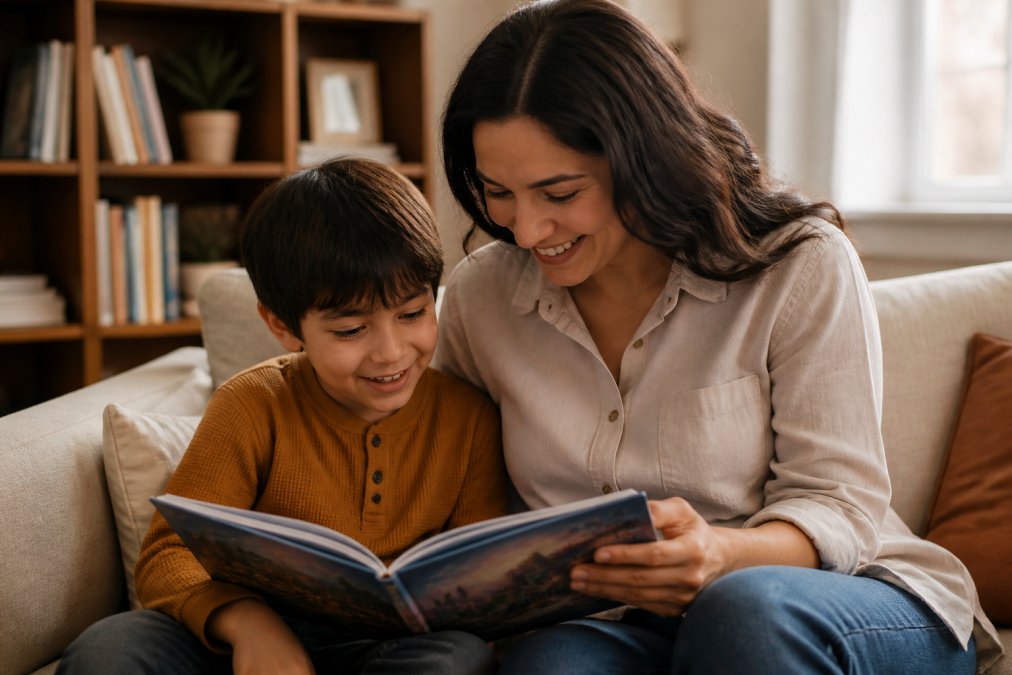
Storytelling is a powerful SEL tool. Stories let children experience emotions safely and see how characters handle challenges. When you read together, pause and ask: "How do you think that character felt?" This teaches children to recognize emotions in others and builds empathy.
Hands-on projects build emotional resilience. Let your child fail, baking cookies that burn, art projects that don't turn out, then work through it together. The process matters more than the result.
Role-playing scenarios helps children practice real-life situations. Act out conflicts, problem-solving moments, or social situations they find challenging. This gives them a safe space to try new responses before they need them in real life.
Emotional Regulation Strategies for Parents
Before you can teach emotional regulation to your child, you need to practice it yourself. If you are dysregulated, your child cannot regulate, no matter what strategies you teach them. Your nervous system directly influences theirs through co-regulation (Checking your browser). When you are calm, your child's body learns calm is possible. When you are reactive, their nervous system mirrors that reactivity.
This is not about being perfect. It's about recognizing when you're dysregulated and having a plan to recover.
Recognize your dysregulation signals. Before you can regulate, know what dysregulation looks like in your body, tight chest, racing thoughts, hot face, clenched jaw, or urge to yell. Write down your early warning signs. This awareness is your first tool.
Create a parent regulation protocol. When dysregulation comes, use this two-minute framework:
- Pause. Say: "I need a moment. I'm going to take a break."
- Move your body. Walk away, do jumping jacks, or splash cold water on your face.
- Reset. Use box breathing (in for four, hold for four, out for four, hold for four) or the 5-4-3-2-1 grounding technique.
- Return when regulated. Say: "I was frustrated and needed to calm down. Now I'm ready to help." This teaches the most powerful emotional lesson.
Know your triggers and plan ahead. Identify your top three triggers and decide in advance what you'll do differently. If mornings trigger you, start school 15 minutes earlier. If sibling conflict dysregulates you, handle conflicts only when calm. If academic frustration is your trigger, build in breaks before meltdown.
Repair when you lose it. Within a few hours, when calm, go to your child and say: "I yelled at you earlier, and I'm sorry. You didn't deserve that. I'm working on handling my feelings better, and I need your help." This models accountability and teaches that repair is possible. Research shows children who experience parental repair develop better emotional resilience, they learn that mistakes happen, repair is real, and relationships survive conflict.
Build a support system for parental burnout. Identify one person you can call when at your limit. Join a homeschool co-op to trade childcare. Schedule one hour per week completely for yourself. If you have a partner, establish a "tag out" system. Your emotional regulation is not selfish, it is the foundation of your child's emotional development.
Building a Homeschool SEL Curriculum That Works
A homeschool SEL curriculum requires intention and consistency, not expensive programs. Identify which emotional skills your child needs most, frustration management, sibling conflict, or friendship-building, and start there.
Build emotional learning into existing subjects: literature teaches empathy, history shows conflict resolution, science teaches problem-solving, math teaches perseverance. You're not adding more, just teaching with emotional awareness.
Set a regular check-in rhythm with weekly family meetings. Ask: "What was hard this week? What felt good? What do you need help with?" This normalizes talking about emotions.
Use books intentionally. Choose stories where characters face emotional challenges and work through them. After reading, discuss what the character felt and what they did.
Creating Safe Spaces for Emotional Expression
Children need to know their emotions are welcome. A safe space means they can cry, get angry, feel scared, or feel confused without fear of punishment. Separate emotion from behavior: "Your anger is okay. Hitting is not okay. Let's find another way." This teaches that feelings are acceptable, but actions need limits.
Create rituals that invite emotional sharing: a "feelings dinner" where everyone shares struggles, or a "feelings jar" where kids write or draw. Consistency matters more than the ritual itself.
Listen without trying to fix immediately. Sometimes children just need to be heard. "That sounds really hard. I'm glad you told me" is often enough.
Validate emotions while maintaining boundaries: "I understand you're upset. I also need you to speak respectfully." This teaches emotional honesty without chaos.
Teaching Conflict Resolution and Empathy
Sibling conflict is inevitable and the best classroom for teaching conflict resolution and empathy. Use guided conflict resolution: stay present but let your children do the work.
The four-step conflict resolution framework:
-
Separate and regulate first. Say: "You both need a break. [Child A], go to your room for five minutes. [Child B], you come with me." This gives nervous systems time to calm down.
-
Bring them back and name the problem. Listen to each child, then say the problem back in neutral language: "So you both wanted the same toy at the same time."
-
Teach them to listen to each other's perspective. Say: "Tell me what you think your brother was feeling when you took the toy." This forces them to imagine the other person's experience.
-
Brainstorm solutions together. Say: "What could you both do differently next time?" Write down ideas, then ask: "Which one do you want to try?"
Concrete language scripts for common sibling conflicts.
Scenario: One child took the other's toy without asking.
Parent: "I see [Child A] has the toy and [Child B] is upset. [Child A], did you ask before you took it?" [Child A says no.] "What should you have done?" [Child A says ask.] "Go ask your brother if you can use it." [Child A asks.] "[Child B], what do you want to say?" [Child B might say yes or no.] "Okay, you both figured that out.
Scenario: One child is being excluded or left out.
Scenario: One child is being mean or name-calling.
Using Stories to Develop Emotional Intelligence
Stories teach children about emotions and relationships. Choose books where characters face emotional challenges and work through them. Read together and pause for conversation: "Why did the character do that?" "How do you think they felt?" Stories teach resilience, when characters face setbacks and keep trying, children learn that failure isn't permanent (Checking your browser). When characters ask for help or apologize, children learn about support and repair.
Frequently Asked Questions
How can I integrate social-emotional learning into my daily homeschool routine?
Start by dedicating 10-15 minutes each day to SEL activities before academic work. Use storytelling to teach emotional vocabulary and self-awareness. Practice mindful breathing exercises together, discuss feelings during family meals, and model healthy emotional regulation yourself. Create a feelings chart where your child can identify and name emotions throughout the day. Stories like those in the Bravo Bear series naturally weave emotional lessons into engaging narratives, making SEL feel like part of the adventure rather than a separate lesson.
What are the best ways to teach emotional regulation at home?
Teach specific techniques like deep breathing, progressive muscle relaxation, and positive self-talk that your child can use when upset. Practice these skills during calm moments so they're available when emotions run high. Label your own emotions as you experience them so your child sees co-regulation in action. Create a calm-down corner with books, fidget tools, or soft textures. Validate their feelings before redirecting behavior. Consistency matters more than perfection, children develop emotional regulation through repeated, patient practice over time.
Can homeschooling improve a child's self-confidence and resilience?
Yes. Homeschooling allows you to tailor learning to your child's pace, reducing frustration and building confidence through achievable successes. You can celebrate effort over perfection, normalize mistakes as learning opportunities, and provide immediate emotional support during challenges. Real-life experiences, cooking, gardening, problem-solving, build competence and resilience. Stories about characters overcoming obstacles help children see setbacks as temporary. The consistent, nurturing environment you create at home provides the emotional safety children need to take risks and grow.
What role does storytelling play in emotional development?
Storytelling teaches emotional literacy by showing characters experiencing and managing feelings. Children see themselves reflected in characters' struggles and victories, learning that big emotions are normal. Stories model conflict resolution, empathy, and courage in memorable ways that stick with children. Through stories, you can introduce emotional vocabulary and discuss how characters might feel in different situations. Quality stories like Bravo Bear's edu-tainment series blend heart and fun, making emotional lessons feel natural and engaging rather than preachy.


