

Which Classic Children's Books Make Lasting Keepsakes?
Last Updated: October 26, 2026
Quick Summary
Classic children's books that make lasting keepsakes are ones built to survive years of handling, which depends on the binding, paper, and illustrations as much as the story. Sewn bindings, heavier acid-free paper, and sharp original art mark a book meant to be handed down. Stories that teach kindness, confidence, and courage add lasting value.
- Sewn signatures show as stitches at the spine fold and open flat.
- Glued spines are the first to fail on books meant to be passed down.
- Look for acid-free or archival paper, since acidic paper yellows and becomes brittle.
- Store books upright on a shelf in a stable, cool, dry room away from direct sunlight.
- Write inscriptions in archival pen or pencil on the front endpaper, with the date.
Table of Contents
- What Makes a Classic Children's Book a Real Keepsake
- Keepsake Criteria: Binding, Paper, and Illustration Quality
- Picture Books and Bedtime Stories Worth Keeping for Life
- Early Readers and Chapter Books From Your Own Childhood
- Budget Reprints Versus Heirloom Editions: How to Choose
- Tips for Preserving Vintage Books for Future Generations
- Choosing Educational Gifts That Encourage Kindness and Confidence
- Booking Your Next Keepsake Gift: Where to Find Bravo Bear Stories
- Frequently Asked Questions
What Makes a Classic Children's Book a Real Keepsake
A keepsake is a book a child keeps, rereads, and eventually hands to their own kids. That depends on the physical object as much as the story inside it.
Bravo Bear is built around stories that teach kindness, confidence, and courage.
A keepsake usually shares three traits. The binding survives repeated opening. The paper resists yellowing and tearing. The illustrations still look sharp after the tenth read. Story matters, but a beautiful story in a flimsy paperback often gets worn out before a child reaches their second birthday.
Keepsake Criteria: Binding, Paper, and Illustration Quality
The physical object has to survive repeated opening, sticky fingers, and a few moves. Here is what to actually check, in the order that matters.
Binding: sewn signatures vs. glued spines
Open the book to the middle and look at the inside of the spine. If you see a row of small stitches running through the fold of each section, the book is sewn, the sections (called signatures) are stitched together and then glued into the cover.
A middle category is side-sewn or Smyth-sewn hardcovers, which combine sewn signatures with a hollow back that lets the cover swing open without cracking. When a listing says "Smyth-sewn" or "sewn signatures," that is the signal to look for. When it says only "hardcover," assume glued until you check.
Paper: weight, coating, and acid content
Paper is described by basis weight (in pounds per ream in the U.S. book trade) and by whether it is coated or uncoated. Mass-market children's paperbacks often use thin, uncoated stock in the 40-50 lb range that tears at the corners and shows every crease. Trade hardcovers and gift editions typically use heavier uncoated stock, and picture books often use coated (matte or gloss) paper so full-color art prints without bleed-through.
Two practical checks:
- Hold and fan the pages. If the paper feels flimsy and the corners curl as you turn, it will not survive a toddler. Heavier stock feels substantial and lies flat.
- Look for "acid-free" or "archival" in the specification (Care, Handling and Storage of Works on Paper). Acidic paper yellows and becomes brittle over decades; acid-free paper is the baseline for anything meant to last. Publishers of gift and collector's editions usually state this; mass-market reprints usually do not.
Illustration: registration, ink coverage, and reproduction
Art quality in a keepsake is a printing question as much as an artistic one. Registration is the alignment of the color plates, if the linework looks fuzzy or colors sit slightly off the outlines, registration is poor and the book will look muddy for its whole life. Ink coverage should be rich and even, with no banding or washed-out gradients under light. For older classics, check whether the edition reproduces the original illustrations from the first printing or uses redrawn or recolored art; the original plates are usually the ones adults remember and the ones worth passing down.
The 60-second in-store test
- Open to the center and check for visible stitching at the spine fold.
- Fan the pages and feel the weight; reject anything that curls easily.
- Look at a full-color spread under light for fuzzy linework or off-register color.
- Check the copyright page for "acid-free" paper and for a note on whether illustrations are reproduced from the original edition.
- Confirm the edition is complete and unabridged, abridged gift editions are common and cut the text a child will later want to read in full.
Story still matters. But a beautiful story in a glued, thin-paper reprint often wears out before a child reaches their second birthday, and the keepsake never happens.
The article breaks down the three physical traits to check before buying a keepsake book.
| Trait | What to check | Why it matters |
|---|---|---|
| Binding | Stitches at spine fold | Sewn books open flat and last longer |
| Binding | Flat glue strip only | Glued spines fail first on heirloom books |
| Paper | Fans and feels substantial | Heavier stock lies flat and resists tearing |
| Paper | Says "acid-free" or "archival" | Acidic paper yellows and becomes brittle |
| Illustration | Fuzzy linework or off-color | Poor registration makes art look muddy |
| Illustration | Original first-printing art | Original plates are the ones worth passing down |
Picture Books and Bedtime Stories Worth Keeping for Life
A good bedtime story has a clear rhythm, repeats key phrases, and ends on a warm note.
For toddlers, prioritize sturdy board pages or thick, coated paper. For children in the 3 to 8 range, which is the age group where bedtime stories shape imagination most, hardcover picture books with full-color spreads tend to hold up well. Stories that carry a clear lesson about kindness or courage give parents something to talk about after the last page.
Bravo Bear stories are designed around heart, fun, and meaningful life lessons.
Early Readers and Chapter Books From Your Own Childhood
Early readers and chapter books carry a different kind of nostalgia. Many adults remember a specific series they read between ages 6 and 10, and buying that series for a child creates a connection across generations.
When choosing these titles, check reading level against the child's current ability. A book that is too hard becomes a source of frustration, and a book that is too easy gets set aside quickly.
Budget Reprints Versus Heirloom Editions: How to Choose
Choose a reprint if the book is for everyday reading, a gift the child will outgrow, or a title you want the child to try before committing. Choose an heirloom edition if the book is meant to be passed down, if it marks a milestone such as a first birthday or a new baby, or if you plan to write an inscription in it.
Tips for Preserving Vintage Books for Future Generations
No competitor guide explains how to keep a children's book intact long enough to become an heirloom. This is the part most buyers learn too late. The good news: preservation is mostly about a few cheap materials and a few habits, and the difference shows up decades later.
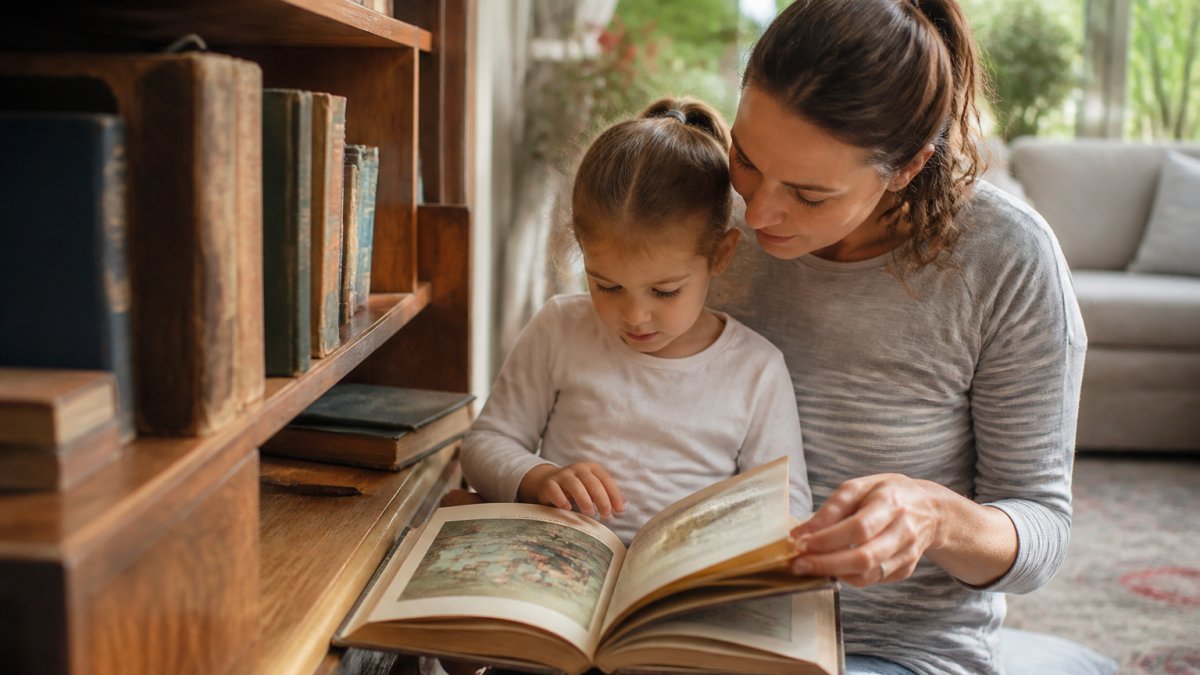
Storage: shelve it like a library, not a basement
- Upright, not stacked. Stand books vertically on a shelf, supported by bookends so they do not lean. Stacking heavy books flat crushes spines and warps covers over time.
- Stable temperature and humidity. Paper and glue expand and contract with moisture. A conditioned room is better than an attic (heat) or a basement (damp). A common target among collectors is a stable relative humidity in the 40-50% range with modest temperature swings; a cheap hygrometer is enough to check.
- Away from light and heat sources. Direct sun fades cover art and yellows paper. Keep shelves off exterior walls with strong sun and away from radiators, vents, and fireplaces.
- Not too tight. Packing books tightly rubs covers and strains spines when you pull one out. Leave a little air between volumes.
Materials: what actually protects paper
- Acid-free sleeves and boxes. For a single sentimental book, a fitted acid-free sleeve or a clamshell box protects the cover from dust, light, and handling. Look for "acid-free" and "lignin-free" on the label; ordinary cardboard and PVC sleeves can off-gas and damage paper.
- Archival-safe tape and repair. Never use household tape on a torn page, the adhesive stains and fails. Bookbinders use reversible, acid-free repair tape and wheat-starch paste. For a valuable book, a conservator is worth the cost; for a sentimental one, at least use archival repair tape.
- No plastic wrap on stored books. Sealed plastic can trap moisture. Breathable archival enclosures are safer.
Handling habits that matter
Clean, dry hands before reading aloud. No food or drinks over an open book. Turn pages from the top corner rather than licking a finger. Do not dog-ear; use a bookmark. And when a book comes out of storage, let it acclimate in its enclosure for a day before opening it, so the paper adjusts gradually.
Inscriptions: how to write a note that lasts
An inscription is what turns a book into a family record, and the ink matters as much as the words.
- Use an archival-safe pen or pencil. Pencil is the safest and is reversible; archival pigment pens are the standard for permanent notes. Avoid ballpoint, which can bleed and smear over decades, and avoid felt-tip markers, which fade and strike through.
- Write on the front endpaper or the half-title page, not on the title page art. The endpaper is the traditional place and the least likely to damage the illustrated pages.
- Include the date and the occasion. "For Maya, first birthday, October 2026" gives future readers a fixed point in family history.
- Keep it short and legible. A sentence or two in clear handwriting outlasts a long note that fades or smudges.
- Let the child add to it. A second inscription years later, "read again at age seven", turns the book into a record of the child's own reading life.
Choosing Educational Gifts That Encourage Kindness and Confidence
Books that teach kindness and confidence are a strong choice for children.
If your child struggles with trying new things, read the book together and pause at key moments to ask what the character might do next. Look for stories where the lesson is clear without being preachy.
Booking Your Next Keepsake Gift: Where to Find Bravo Bear Stories
Bravo Bear offers an edu-tainment series designed to inspire children to grow with kindness, confidence, and courage. Visit the Bravo Bear website to shop.
Check the Bravo Bear website for current pricing before you order.
Frequently Asked Questions
Are vintage children's books worth anything?
Some are, but value depends mostly on condition, edition, and demand. First editions and books with original dust jackets in good shape tend to command the highest prices, while common reprints from the 1970s and later usually sell for modest amounts. Check the copyright page for printing details, look for tears, foxing, and water damage, and compare recent sold listings rather than asking prices. For most families, the sentimental value of a book a child reads over and over outweighs its resale value, so decide what matters most before you price anything.
What makes a children's book a good keepsake?
A keepsake book usually has sturdy binding, such as sewn signatures or a hardcover with reinforced spine, thick paper that resists tearing, and illustrations that still look fresh after many readings. The story should hold up to repeated reads by both adults and children. Inscriptions and personalized dedications add lasting meaning, so a book with space for a handwritten note from a grandparent or parent becomes more valuable to the family over time.
How should I store and preserve vintage children's books?
Keep books upright on a shelf away from direct sunlight, which fades covers and yellows paper. Store them in a room with stable humidity, ideally between 40 and 50 percent, to prevent mold and warping. Handle books with clean, dry hands, support the spine when opening, and avoid taping torn pages with modern tape, which can stain. Acid-free archival sleeves or boxes offer extra protection for especially fragile or valuable titles.
How can I personalize a classic book as a gift?
Write a short dedication on the front endpaper or title page with the child's name, the date, and a line about why the book matters to you. Use a pen with archival-safe ink rather than a marker that can bleed through the paper. Pairing the book with a bookplate or a handwritten letter gives the gift a sentimental layer that stays with the book for decades.


