

Top 10 Stories for Teaching Confidence to Kids
Table of Contents
- What Makes a Story Actually Build Confidence in Kids
- How to Choose Children's Books About Self-Confidence by Age and Reading Level
-
The Top 10 Stories for Teaching Confidence to Kids
- 1. Bravo Bear: The Confidence-Building Series That Grows With Your Child
- 2. The Dot by Peter H. Reynolds
- 3. Ish by Peter H. Reynolds
- 4. Giraffes Can't Dance by Giles Andreae
- 5. Stand Tall, Molly Lou Melon by Patty Lovell
- 6. The Invisible Boy by Trudy Ludwig
- 7. After the Fall by Dan Santat
- 8. Jabari Jumps by Gaia Cornwall
- 9. I Am Enough by Grace Byers
- 10. Be Kind by Pat Zietlow Miller
- Kids' Books About Self-Esteem: Matching Stories to Your Child's Specific Challenge
- Short Motivational Stories for Kids: Why Read-Aloud Time Works
- Books That Teach Resilience to Kids: Turning Setbacks Into Growth
- Frequently Asked Questions
Last Updated: October 13, 2026
What Makes a Story Actually Build Confidence in Kids
The stories that build real confidence in children share one trait: a character who struggles, fails, and keeps going. According to Zero to Three, a national nonprofit focused on early childhood development, children build self-assurance through repeated experiences of effort and mastery, not through being told they are special.
At Bravo Bear, we build our edu-tainment series around that same idea. Confidence isn't a compliment you hand a child. It's a skill they practice.
The Difference Between Empty Praise and Real Encouragement
Empty praise sounds like "You're so smart." Real encouragement sounds like "You kept trying even when the tower fell down." One teaches a child to chase approval. The other teaches them to trust their own effort.
Stories do this work quietly. When a character fails on page three and succeeds on page twenty, your child lives through that arc.
How to Choose Children's Books About Self-Confidence by Age and Reading Level
Match the book to your child's age and reading stage, not just the theme. A story about perseverance lands differently with a three-year-old than with a seven-year-old.
Use this quick guide to the reading stages:
| Age Range | Reading Stage | What Works Best | Read-Aloud Length |
|---|---|---|---|
| 3-4 years | Pre-reader | Simple text, bold pictures, one clear feeling | 5-8 minutes |
| 5-6 years | Emerging reader | Repetitive phrases, relatable fears, humor | 8-12 minutes |
| 7-8 years | Early independent | Longer arcs, layered characters, real stakes | 12-20 minutes |
A common mistake is buying a book that's emotionally right but developmentally wrong. A seven-year-old may find a toddler-style picture book too babyish, no matter how good the message is.
Where Each of the Ten Titles Fits
Use this map to pick a book that matches your child's stage today. Ages are publisher-typical ranges; your child may flex up or down by a year.
| Title | Typical Age Range | Reading Stage | Read-Aloud Fit |
|---|---|---|---|
| Bravo Bear series | 3-8 | Pre-reader to early independent | Strong across ages; scales with the child |
| The Dot | 5-8 | Emerging to early independent | Good for one-on-one; short enough for bedtime |
| Ish | 5-8 | Emerging to early independent | Pairs naturally with The Dot in one sitting |
| Giraffes Can't Dance | 3-6 | Pre-reader to emerging | Rhyming text rewards repeated read-alouds |
| Stand Tall, Molly Lou Melon | 4-8 | Emerging reader | Best for a child processing teasing |
| The Invisible Boy | 6-8 | Early independent | Longer text; better for a settled reader |
| After the Fall | 5-8 | Emerging to early independent | Richer illustrations reward a slower read |
| Jabari Jumps | 4-8 | Emerging reader | Short, calm pacing suits anxious kids |
| I Am Enough | 4-8 | Pre-reader to emerging | Rhyme works as a read-aloud; older kids can discuss |
| Be Kind | 4-8 | Emerging reader | Good classroom read-aloud; discussion-heavy |
Read-Aloud vs. Independent Reading
Some of these titles are written to be read to a child; others reward a child reading alone. A few practical rules:
- Pre-readers (3-4): Read aloud. Let the child turn pages and finish repeated lines. The confidence lesson comes from the shared moment, not the words.
- Emerging readers (5-6): Alternate. You read a page, they read a page. This builds fluency without turning story time into a test.
- Early independent readers (7-8): Let them read alone first, then ask one question afterward. Reading alone gives them ownership; the question gives you the conversation.
A final note on format: board-book editions of titles like Giraffes Can't Dance and I Am Enough survive toddler handling, while picture-book editions of The Invisible Boy and After the Fall are better for kids who can turn pages gently. If you're choosing for a classroom or library, hardcover picture-book editions hold up to repeated group reads.
The Top 10 Stories for Teaching Confidence to Kids
These ten titles cover the core confidence challenges: shyness, fear of failure, speaking up, and learning from mistakes. Each entry includes the age range and a way to talk about it after you close the book.
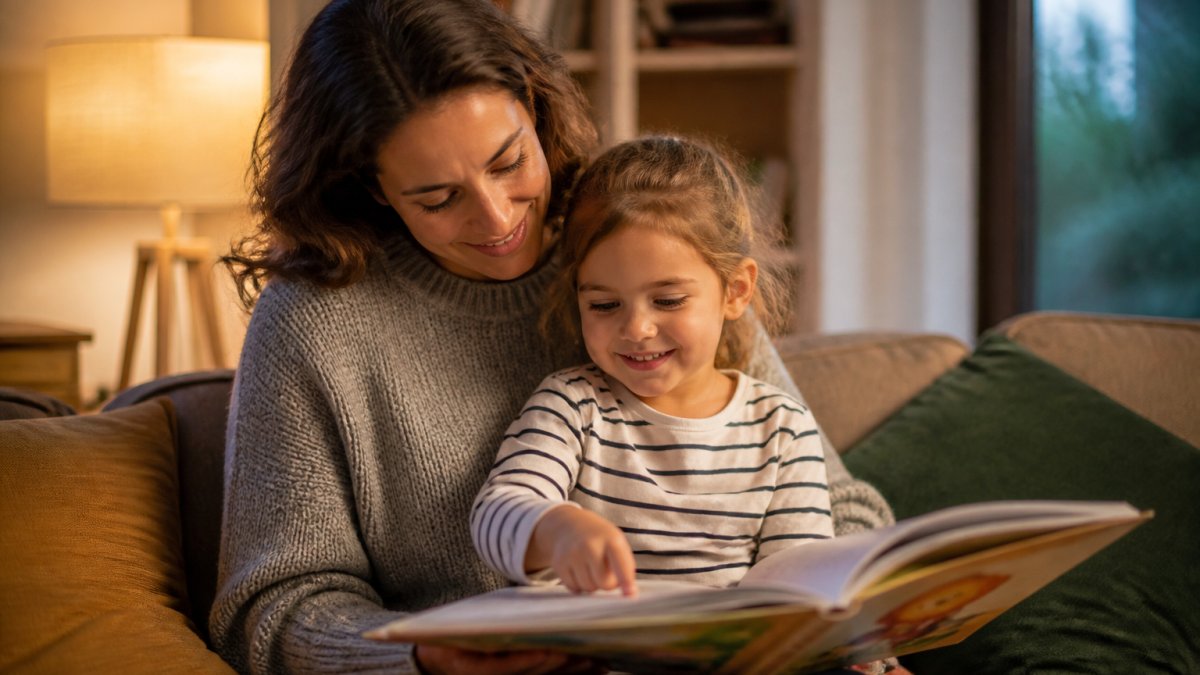
1. Bravo Bear: The Confidence-Building Series That Grows With Your Child
Our own series is built for exactly this job. Created by CJ Hainsworth, Bravo Bear stories blend heart and fun with lessons about kindness, confidence, and courage.
Families tell us the stories stick. One reviewer called it "a shining top quality edu-tainment series." For parents who want screen-free time that still feels like an adventure, this is where we'd start.
2. The Dot by Peter H. Reynolds
A girl named Vashti insists she can't draw. Her teacher simply says, "Make a mark and see where it takes you." That single line unlocks everything. This is the best book for a child who says "I can't" before they've even tried. Ages 5-8.
3. Ish by Peter H. Reynolds
The follow-up to The Dot tackles perfectionism. Ramon stops drawing when his work isn't "right," until his sister shows him that "ish" is good enough. Ideal for kids who crumple their own paper. Ages 5-8.
4. Giraffes Can't Dance by Giles Andreae
Gerald the giraffe has crooked knees and thin legs. The other animals laugh. Then he finds music that fits him. This one teaches that being different isn't a defect. Ages 3-6.
5. Stand Tall, Molly Lou Melon by Patty Lovell
Molly Lou is short, buck-toothed, and clumsy, and her grandmother tells her to walk proud anyway. When a bully targets her, she doesn't shrink. A strong pick for kids facing teasing. Ages 4-8.
6. The Invisible Boy by Trudy Ludwig
Brian feels unseen until a new friend notices him. This story handles shyness and social exclusion with unusual gentleness. Best for quiet kids who struggle to speak up in groups. Ages 6-8.
7. After the Fall by Dan Santat
Humpty Dumpty survived the fall but hasn't left the wall since. His slow climb back up is a masterclass in overcoming fear after failure. Ages 5-8.
8. Jabari Jumps by Gaia Cornwall
Jabari is ready to jump off the diving board. Almost. His father waits with him instead of pushing. This is the best book for a child working up to something scary. Ages 4-8.
9. I Am Enough by Grace Byers
A rhyming affirmation book about self-acceptance and individuality. It works well as a read-aloud for younger kids and a discussion starter for older ones. Ages 4-8.
10. Be Kind by Pat Zietlow Miller
When Tanisha spills grape juice, one girl wonders what kindness actually looks like. The story connects kindness to confidence: standing up for others takes courage. Ages 4-8.
Kids' Books About Self-Esteem: Matching Stories to Your Child's Specific Challenge
Generic confidence advice rarely helps. Match the story to the actual problem your child is facing.
- Fear of failure: After the Fall, Ish
- Shyness or feeling invisible: The Invisible Boy, Be Kind
- Fear of trying new things: Jabari Jumps, Giraffes Can't Dance
- Teasing or standing out: Stand Tall, Molly Lou Melon, I Am Enough
- Saying "I can't": The Dot, Bravo Bear
Short Motivational Stories for Kids: Why Read-Aloud Time Works
Short stories work because they fit real life. A ten-minute read-aloud before bed builds vocabulary, emotional range, and a habit of reflection, according to reading guidance from the American Academy of Pediatrics. The confidence lesson lands because it arrives inside a story, not a lecture.
But a story alone doesn't teach confidence. The learning happens in the two minutes after you close the book.
Story-Specific Prompts and Activities
**1.
2. The Dot. Prompt: "Vashti said she couldn't draw.
3. Ish. Prompt: "Ramon wanted his drawing to be perfect.
4. Giraffes Can't Dance. Prompt: "The other animals laughed at Gerald.
**5.
6. The Invisible Boy. Prompt: "Brian felt invisible.
**7.
**8.
**9.
10. Be Kind. Prompt: "The girl wondered what kindness looks like.
Four Questions That Work With Any Story
If you don't have the book in front of you, these four questions work with almost any confidence story:
- "What did [character] do when things got hard?"
- "Have you ever felt like that?"
- "What would you tell that character if they were your friend?"
- "What's something you tried today, even if it didn't work?"
Books That Teach Resilience to Kids: Turning Setbacks Into Growth
Resilience is the habit of treating a setback as information, not a verdict.
Research from the Center on the Developing Child at Harvard University describes resilience as a skill built through supportive relationships and repeated practice, not something a child either has or doesn't.
Keep a few resilient-character books in rotation and revisit them. Repetition is where the lesson sinks in.
Frequently Asked Questions
How can stories help build a child's self-confidence?
Stories let children watch a character face a challenge, feel doubt, and keep going. That arc gives kids a safe way to practice courage before they meet it in real life. When a parent reads aloud and pauses to ask, "What would you do here?", the child connects the character's choice to their own. Repeated over many books, this builds the belief that effort matters and mistakes are part of learning, which is the foundation of real self-confidence.
At what age can children understand stories about self-esteem?
Most children start grasping simple self-esteem themes between ages 3 and 5, when they can follow a character's feelings and link them to their own. Ages 5 to 8 handle more layered plots about failure, friendship, and standing up for yourself. For toddlers, focus on picture books with clear emotions and repetition. For early elementary kids, choose stories where the character solves a problem, then talk about it afterward to reinforce the lesson.
What should parents discuss after reading a confidence-building story?
Ask open questions instead of quizzing. Try: "How do you think the character felt when that happened?", "Have you ever felt that way?", or "What would you tell a friend in that situation?" Let your child lead. Avoid turning it into a lecture or piling on praise like "You're so brave." Instead, name the specific action: "You kept trying even when it got hard." That kind of feedback helps kids build self-esteem from their own effort, not from approval.
What are the best short motivational stories for kids who struggle with trying new things?
Look for short stories where the main character hesitates, feels nervous, and tries anyway, like Jabari Jumps or The Dot. The key is that the character's courage comes from within, not from being rescued. Read the story, then connect it to something small your child can try this week. Pairing a short motivational story with one low-stakes new activity, like a new food or a new game, helps the lesson stick without pressure.
Confidence doesn't arrive in a single bedtime story. It builds over dozens of small moments where a child tries, stumbles, and gets back up. Bravo Bear was made for exactly those moments, with stories that grow with your child, teach kindness, confidence, and courage, and turn read-aloud time into real character building. Shop the Bravo Bear series and give your child a world where big dreams feel possible.


