

Meaningful Gifts for Grandchildren Ages 3 to 8
Table of Contents
- Why Meaningful Gifts Beat Toy Piles
- How to Choose Developmental Toys for Ages 3-8
- Educational Gifts That Encourage Kindness and Confidence
- Experience Gifts for Grandchildren: Making Memories Together
- Personalized Keepsakes and Legacy-Building Gifts
- Non-Toy Alternatives: Subscription Boxes and Creative Tools
- Gifts for Neurodivergent Grandchildren and Long-Distance Bonds
- Conclusion
- Frequently Asked Questions
Last Updated: September 17, 2026
Why Meaningful Gifts Beat Toy Piles
Meaningful gifts for grandchildren ages 3 to 8 are the ones a child still talks about months later, not the ones that end up at the bottom of the toy bin by February. At Bravo Bear, we hear the same story from grandparents again and again: they want to give something that actually sticks, and the toy aisle rarely delivers it.

The problem isn't generosity. It's volume. A child who receives twenty toys in a single birthday haul can't form a real attachment to any of them. A single well-chosen gift that matches a child's interests and developmental stage tends to get used, remembered, and asked for again. That's the difference between a gift and a keepsake.
Below, we'll walk through eight categories of gifts that actually land, from experience-based gifts to legacy-building keepsakes, plus how to pick the right one for a specific grandchild.
How to Choose Developmental Toys for Ages 3-8
Match the gift to the child's developmental stage first, then to their interests. A gift that's too advanced frustrates a child; one that's too simple bores them within a week.
For ages 3 to 5, look for open-ended play materials: blocks, art supplies, dress-up items, and simple puzzles that build fine motor skills and imaginative development. A common mistake is buying an electronic toy with one fixed outcome. It entertains for a day, then sits unused because there's nothing left to discover.
For ages 6 to 8, shift toward skill-building and creative expression: chapter books, beginner science kits, building sets with real instructions, and tools for a specific hobby. Children in this range want to feel competent. A gift that lets them finish something and show it off beats a flashier toy every time.
| Age Range | Best Gift Type | Why It Works |
|---|---|---|
| 3-5 | Open-ended play materials | Builds imagination, no single "right" way to use |
| 3-5 | Sensory play items | Supports fine motor development |
| 6-8 | Skill-building kits | Rewards effort with a finished result |
| 6-8 | Chapter books and series | Builds reading stamina and anticipation |
| 6-8 | Hobby starter tools | Matches growing personal interests |
Educational Gifts That Encourage Kindness and Confidence
Educational gifts that encourage kindness work best when the lesson is embedded in a story or activity, not stated outright. Kids this age absorb values through characters they care about, not through lectures.
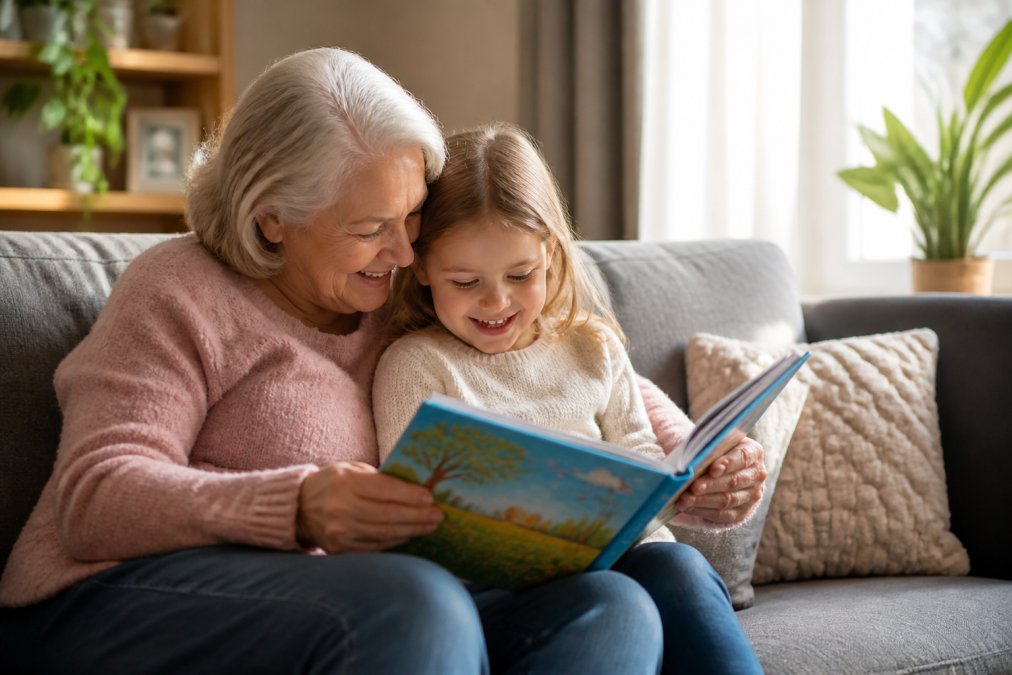
This is where a curated story series earns its place. Bravo Bear's edu-tainment series, created by CJ Hainsworth, is built around kindness, confidence, and courage, and it's designed to be read more than once. A customer review calls it "a shining top quality edu-tainment series," which matters if you're a grandparent worried about whether a book will get a second read or collect dust.

Pair a story series with a small related activity, like acting out a scene together or drawing the character's next adventure. That combination turns a book into an intergenerational bonding ritual rather than a one-time gift.
Experience Gifts for Grandchildren: Making Memories Together
Experience gifts for grandchildren trade a wrapped box for a shared memory, and they tend to be remembered longer than any toy. A museum membership, a cooking afternoon, a fishing trip, or a season pass to a local nature center all qualify.
The real advantage is that the experience includes you. A child who spends a Saturday building a birdhouse with a grandparent isn't just receiving a gift, they're forming a family tradition. For grandparents who live nearby, this is often the highest-impact option available.
Keep a simple record of each outing, a photo, a ticket stub, a short note, and you've quietly built a keepsake collection without spending extra.
Personalized Keepsakes and Legacy-Building Gifts
Legacy-building gifts are items designed to be kept and passed down, not outgrown. A personalized keepsake, a photo book, an engraved item, or a handwritten letter tucked inside a book cover all fall into this category.
Non-Toy Alternatives: Subscription Boxes and Creative Tools
Subscription boxes and creative tools solve the "what do I buy next" problem for years, not just one birthday. A monthly book club or activity box arrives as a recurring reminder that someone is thinking about them, and it replaces the annual scramble with a single decision.
-
Ages on the label vs. ages in the box. A box marketed as "ages 3-8" usually skews toward one end. Check the sample photos: if the projects require reading instructions independently, it's a 6-8 box. If they require heavy adult setup, it's a 3-5 box.
-
Consumable vs. collectible. Consumable boxes (art supplies, science experiments) get used up and don't add clutter. Collectible boxes (figurines, trading items) accumulate. For grandparents worried about toy-bin overflow, consumable wins.
-
Cost per use, not cost per month. A $20 monthly box that yields one 30-minute activity costs more per engaged hour than a $15 book that gets read 20 times. Divide the price by the number of times you expect the child to return to it.
-
Cancellation terms. Month-to-month with a clear cancel button beats a discounted annual plan that auto-renews. Parents inherit the burden of a subscription that's hard to stop.
-
A good set of washable tempera or watercolor paints (not the 12-color starter tray, the 24-color set with real brushes). Kids this age care about color range more than brand.
-
A beginner hand-sewing or lacing kit with plastic needles and pre-punched felt. Builds fine motor skills and produces a finished object they can show off.
-
A real set of child-sized garden tools paired with seed packets. The activity spans a whole season, not an afternoon.
The best non-toy gift is one the child can use up, finish, or grow out of, not one that piles up. If you can't picture the child using it three separate times, it's not a non-toy alternative; it's a toy in a different box.
Gifts for Neurodivergent Grandchildren and Long-Distance Bonds
Most gift guides treat "ages 3-8" as a single developmental block. It isn't. A child with autism, ADHD, or sensory processing differences may be years ahead in one area and years behind in another, and a gift that's perfect for a neurotypical 6-year-old can be actively distressing for a neurodivergent one. This is the gap most guides skip, and it's where a little extra thought pays off the most.
-
Sensory-seeking kids (often ADHD or sensory-seeking autism) do well with heavy work and movement: a weighted lap pad, a mini trampoline, a set of resistance bands, or a chew-safe necklace. These regulate rather than overstimulate.
-
Sensory-avoidant kids (often sound- or texture-sensitive) do better with low-input gifts: a quiet story series read one-on-one, a soft blanket with a familiar character, or a set of headphones-sized earmuffs for loud family gatherings.
-
Kids who need predictability often attach to a single character or series and want it repeated. A subscription that delivers the same characters in new stories hits the sweet spot, familiar enough to feel safe, novel enough to stay interesting. This is one reason a recurring book series tends to outperform a one-off toy for this group.
-
The read-along call. You read one page, they read the next (or point to pictures). Same book, two copies, weekly call. The book becomes a shared object even when you're apart.
-
The mail-and-reply loop. You send a postcard with one question ("What's your favorite animal this week?"). They send one back. Kids this age love getting mail addressed to them personally.
-
The countdown subscription. A monthly box gives a child something to anticipate on a predictable schedule, which is especially grounding for kids who struggle with the unpredictability of visits ending.
Conclusion
Choosing well gets harder as the toy aisle gets louder. The gifts that last are the ones tied to a shared experience, a specific interest, or a story a child wants to hear again.
Frequently Asked Questions
What is a unique and special gift I can give to my grandchild?
A meaningful gift for grandchildren ages 3 to 8 often combines experience with keepsake. Consider a monthly book club subscription paired with a handwritten note, or a personalized photo album of your time together. Experience gifts like museum memberships or cooking classes create shared memories. The most special gifts reflect your grandchild's interests and give you something to enjoy together, turning a present into an ongoing bond.
How can I choose gifts that promote kindness and development?
Look for educational gifts that encourage kindness through stories, role-play, or cooperative play. For ages 3 to 8, choose items that match developmental milestones: picture books about empathy for younger kids, chapter stories about courage for older ones. Avoid passive toys that do all the work. Instead, pick open-ended play materials, nature exploration kits, or curated book sets that spark conversation and creative expression.
What are some non-toy gift ideas for young children?
Non-toy alternatives include experience gifts for grandchildren like zoo passes, art classes, or a day baking together. Subscription boxes deliver ongoing surprise and learning. Personalized keepsakes such as custom photo books or engraved jewelry build emotional connection. Homemade coupons for quality time, a family recipe book, or a story subscription also work well. These gifts reduce clutter and create lasting impact through shared activities and memories.
How do I make my grandchild feel special through gift-giving?
Pair the gift with your presence. A meaningful gift for grandchildren ages 3 to 8 lands better when you deliver it in person, explain why you chose it, and follow up with a call or visit to hear how they used it. Post-gift engagement, like asking about the story they read or planning the next adventure, shows you care about them, not just the item. Thoughtful gestures and quality time turn a present into a relationship.


