

How to Make Reading Fun: 7 Proven Strategies
Table of Contents
- Why Making Reading Fun Matters for Your Child's Development
- Step 1: How to Create a Cozy Reading Nook That Invites Exploration
- Step 2: Let Your Child Choose Books and Lead the Reading Experience
- Step 3: Interactive Reading Activities for Kids That Build Engagement
- Step 4: How to Encourage Reluctant Readers Without Pressure
- Step 5: Connect Stories to Real-World Adventures
- Step 6: Balance Fiction and Non-Fiction to Spark Curiosity
- Step 7: Read Aloud and Use Storytelling to Build Literacy Habits
- Frequently Asked Questions
Last Updated: September 28, 2026
Why Making Reading Fun Matters for Your Child's Development
Reading shapes how children think, feel, and grow. When kids discover that reading can be enjoyable, they build literacy skills that stick with them for life. The challenge most parents face is simple: how to make reading fun instead of feeling like a chore.
The real problem isn't finding books, it's creating conditions where reading becomes something kids choose to do. Instead of pushing reading, you invite it. Instead of forcing stories, you let children lead.
Children who associate reading with positive emotions develop stronger reading habits and become lifelong learners. This requires intentional choices about environment, choice, engagement, and pressure.
Below, we'll walk through seven proven strategies to make reading fun for your child, strategies that work whether your child loves stories already or resists them completely.
Step 1: How to Create a Cozy Reading Nook That Invites Exploration
A cozy reading nook is essential infrastructure for building reading habits. When a space feels inviting, children naturally gravitate toward it and associate reading with comfort and safety.
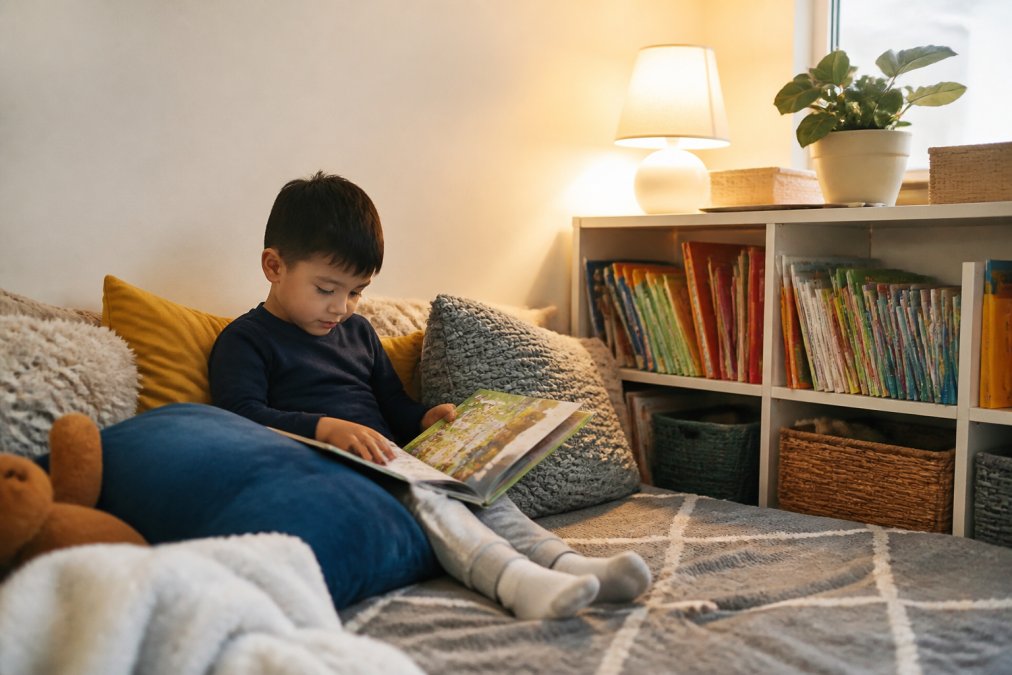
Start with the basics:
- Location matters. Choose a quiet corner away from screens and distractions. A bedroom, living room nook, or even a closet works. The goal is separation from chaos.
- Add comfort. Cushions, blankets, and a small chair make the space feel safe. Kids won't sit in an uncomfortable spot, no matter how pretty it looks.
- Lighting is crucial. Soft, warm light from a lamp invites reading. Harsh overhead lights feel institutional and cold.
- Make books accessible. Low shelves or baskets let children reach books independently. High shelves send the message: these aren't for you yet.
- Keep it clutter-free. Remove toys and distractions. The focus should be on books and comfort.
The reading nook becomes a physical signal that reading is meant for them.
Step 2: Let Your Child Choose Books and Lead the Reading Experience
When parents pick every book, children feel like reading is something done to them, not something they choose. Handing over selection power shifts everything.
Offer guidance without control:
- Ask what interests them: dinosaurs, princesses, adventure, animals, friendship problems
- Let them browse and pick
- Accept their choices, even if they seem unconventional
- Never shame a choice ("That's too babyish" or "That's too hard")
Step 3: Interactive Reading Activities for Kids That Build Engagement
Interactive activities transform reading from a solitary activity into an experience. The most engaged readers do something with the story.
Act Out Stories Together
Acting out scenes from books builds comprehension and makes reading memorable through kinesthetic learning.
After reading a story, try simple dramatization:
- Assign characters and re-read dialogue with different voices
- Act out key scenes without the book
- Create simple props from household items
- Invite stuffed animals or siblings to join
Create Discussion Moments Without Pressure
Create natural conversation moments with open-ended questions that invite thinking, not right-or-wrong answers.
Step 4: How to Encourage Reluctant Readers Without Pressure
Reluctant readers often carry shame around reading due to negative experiences and pressure to perform. The fix is removing pressure and addressing underlying barriers that make reading feel difficult.
For Children: Eliminating Extrinsic Pressure
Eliminate rewards and punishments tied to reading. Extrinsic rewards actually decrease intrinsic motivation over time; children read for the reward, not the story.
Instead, focus on removing barriers:
- Never force a child to finish a book they hate
- Offer audiobooks as a legitimate form of reading
- Read aloud to them, even if they can read independently
- Let them choose books about topics they're genuinely interested in
- Accept that some children need shorter books or graphic novels
For Neurodivergent Readers: Matching Format to Learning Style
Many reluctant readers have undiagnosed learning differences. Children with ADHD, dyslexia, or sensory processing differences often struggle because traditional reading formats don't match how their brains work.
Bravo Bear Monthly Book Club →
Consider alternative formats:
- Audiobooks and text-to-speech tools reduce the cognitive load of decoding. For readers with dyslexia, listening while following along (dual-coding) strengthens comprehension without the frustration of slow decoding speed.
- Graphic novels and illustrated books leverage visual processing strength. Many neurodivergent readers process images faster and more deeply than text alone.
- Shorter reading sessions with frequent breaks work better for readers with ADHD. A 10-minute chapter read twice daily builds stamina without triggering avoidance.
- High-interest topics are non-negotiable. Neurodivergent readers often hyperfocus on specific interests; matching books to those interests bypasses motivation barriers entirely.
- Fonts and spacing matter. Dyslexia-friendly fonts (like OpenDyslexic, available free online) and increased line spacing reduce visual stress. E-readers allow customization that physical books don't.
For Adults: Recovering from Reading Slumps
Adults often stop reading due to time pressure, burnout, or guilt about "not reading the right books." Recovery requires a different approach than childhood reluctance.
Restart with permission, not pressure:
- Give yourself explicit permission to read "easy" books. Literary fiction can wait. A page-turner, a comfort re-read, or a genre you love counts as real reading.
- Set a micro-goal: 15 minutes daily, not a chapter count or page number. Consistency matters more than volume.
- Track reading time, not books finished. This reframes reading as a practice, not a performance metric.
- Revisit books you loved as a teenager or young adult. Nostalgia is a powerful re-engagement tool.
Identify the actual barrier:
- If you're too tired to focus, try audiobooks during commutes or household tasks.
- If you feel guilty about "wasting time," reframe reading as mental health maintenance, not luxury.
- If you're overwhelmed by choice, use a reading service or ask for recommendations instead of browsing endlessly.
- If you're stuck on a book that isn't working, abandon it guilt-free. Life is too short for books you're not enjoying.
Step 5: Connect Stories to Real-World Adventures
Stories become more meaningful when children see themselves in them. A story about friendship matters more if your child is navigating friendship challenges; a story about courage resonates if your child is trying something new.
Create intentional connections:
- Before reading, mention how the story relates to something your child is experiencing
- After reading, talk about how characters solved problems your child faces
- Visit places mentioned in stories (parks, libraries, neighborhoods)
- Try activities characters do in books (baking, building, exploring)
- Find real people who embody character traits from stories
Step 6: Balance Fiction and Non-Fiction to Spark Curiosity
Fiction builds imagination and narrative comprehension; non-fiction builds knowledge and critical thinking. Children need both. Many parents overlook non-fiction's power to spark genuine curiosity.
Matching Non-Fiction to Genuine Interest
Non-fiction works best when it connects to a child's actual interests: dinosaurs, space, animals, or answers to "how" and "why" questions.
Using Format Strategically to Prevent Fatigue
Strategic format rotation prevents screen fatigue while maintaining engagement. A child who reads fiction on a screen all day benefits from a physical non-fiction book, and vice versa.
The digital-to-analog rhythm:
- Use e-readers or tablets for fiction when reading on-the-go (car rides, waiting rooms). E-ink devices like Kindle Paperwhite reduce blue light compared to backlit tablets, minimizing eye strain during longer sessions.
- Choose physical non-fiction books for deep dives into topics. Tactile engagement with diagrams, photographs, and text layout strengthens comprehension and memory retention.
- Leverage audiobooks for non-fiction during passive activities (meals, chores, walks). Hearing expert narration of factual content builds knowledge without screen time.
- Reserve interactive digital tools (educational apps, documentaries, interactive websites) for supplementing, not replacing, reading. A child reads a non-fiction book about marine life, then watches a short documentary to deepen understanding.
Alternating Content to Keep Reading Fresh
Alternating between fiction and non-fiction keeps reading fresh and teaches children that reading serves different purposes: entertainment, learning, inspiration, and understanding.
Building a Balanced Home Library
Your physical and digital collection should reflect both fiction and non-fiction. A balanced library signals to children that both matter equally. Aim for roughly equal shelf space (or digital library space) for each:
- Fiction: Picture books, chapter books, novels, graphic novels, fantasy, realistic fiction
- Non-fiction: Biography, history, science, nature, how-to, memoir, essays
Step 7: Read Aloud and Use Storytelling to Build Literacy Habits
Reading aloud builds vocabulary, strengthens comprehension, and creates shared experience. Yet many parents stop once children can read independently, which is a mistake.
Reading aloud works at every age:
- Young children (3-5): Picture books with rhythm and repetition
- Early readers (5-7): Chapter books that build reading stamina
- Older children (7+): Novels that are slightly above their independent reading level
Frequently Asked Questions
How do I make reading less boring for my reluctant child?
Start by removing pressure and letting your child choose what to read. Pair books with interactive activities like acting out scenes or connecting stories to real-world experiences. Short, engaging stories with vivid illustrations work better than long books. Read aloud together to model enthusiasm, and celebrate small wins without using external rewards. When reading feels like play rather than a task, reluctance fades naturally.
What are some interactive reading activities for kids that actually work?
Act out scenes from the story, create voices for different characters, pause to ask prediction questions, draw pictures of favorite moments, and connect the narrative to your child's life. Book discussions over snacks, building craft projects inspired by stories, and visiting places mentioned in books all build engagement. The Bravo Bear Monthly Book Club at $14.99 pairs stories with activity ideas to make these moments easier to execute.
How do I know if my child is building real reading stamina?
Look for signs of intrinsic motivation: your child asks for books, returns to favorites, or wants to hear stories multiple times. They sit longer without fidgeting, remember details from previous readings, and show curiosity about what happens next. These milestones develop gradually over weeks and months, not days. Avoid comparing your child's pace to others, literacy development varies widely.
Can edu-tainment stories like Bravo Bear actually work as part of a homeschool curriculum?
Yes. Stories that blend meaningful life lessons with engaging narratives support character development and emotional learning. The Bravo Bear Complete Set ($79.99) covers themes of kindness, confidence, and courage that complement traditional academics. Use them for read-aloud time, discussion prompts, and character-building exercises. Pair them with the interactive activities mentioned above to create a well-rounded literacy experience.


