

How to Build Confidence in Shy Children
Table of Contents
- Understanding Shyness vs. Social Anxiety
- How to Help a Shy Child Make Friends
- Positive Reinforcement for Shy Children
- Activities for Shy Children to Build Confidence
- Modeling Confident Behavior and Avoiding Labels
- The Role of Stories in Building Confidence
- Conclusion: A Journey of Brave Steps
- Frequently Asked Questions
Last Updated: September 7, 2026
Watching a child hesitate at the edge of a playground, unwilling to join the game, tugs at any parent's heart. Building confidence in shy children is a gradual process rooted in patience, empathy, and consistent encouragement rather than forced bravery. At Bravo Bear, we believe every child holds quiet courage inside, waiting for the right moment and support to let it out. This guide walks you through practical, age-appropriate strategies to help your child feel secure enough to take those brave steps into social interaction.

Here is the most important thing to remember: your goal is not to change your child's temperament but to give them the tools to navigate the world comfortably. Shyness is a personality trait, not a flaw. The journey involves creating a supportive environment where your child feels safe to stretch beyond their comfort zone, one small victory at a time. Below, we'll show you exactly how to distinguish normal shyness from deeper anxiety, help your child build friendships, and use positive reinforcement to nurture lasting self-confidence.
Understanding Shyness vs. Social Anxiety
Shyness is a common temperament trait characterized by feeling cautious or reserved in new social situations, while social anxiety is a more intense, persistent fear of judgment that interferes with daily life (nimh.nih.gov). Most children experience shyness as a passing phase, particularly when they are "slow to warm up" to unfamiliar people or settings. This is a normal part of child development and not a cause for concern.
A child with social anxiety, however, might experience physical symptoms like stomachaches, panic, or extreme distress at the mere thought of social interaction (adaa.org). They may avoid school, refuse to speak, or have difficulty functioning. If your child's shyness seems to paralyze them or prevents them from enjoying activities they love, it may be worth consulting a pediatrician or a clinical social worker who specializes in childhood anxiety. Early support can make a significant difference in how a child learns to manage these feelings.
How to Help a Shy Child Make Friends
Helping a shy child make friends starts with small, structured interactions rather than throwing them into a crowded birthday party and hoping for the best. Arrange one-on-one playdates where the environment feels manageable. Invite a single classmate over to your home, a space where your child feels most secure and acts as the "host," which gives them a sense of control and confidence.
Before the playdate, talk through what might happen and role-play a few opening lines, such as "Do you want to see my room?" or "Want to play with the blocks?" Practicing these social scripts helps your child feel prepared. During the play, stay nearby as a "safe base" but resist the urge to direct every moment. Allow them to navigate minor disagreements or awkward pauses themselves. This builds essential social skills like reading social cues and assertiveness. The goal is repeated, positive social interaction that slowly expands their comfort zone.
Positive Reinforcement for Shy Children
Praise the effort, not the outcome. When your child says "hello" to a neighbor or raises their hand in class, offer specific and immediate positive reinforcement. Instead of a generic "good job," say, "I noticed you said hello to Mrs. Jones even though you felt nervous. That was very brave." This connects your praise directly to the courageous action they took.
This form of encouragement teaches children that their efforts to overcome fear are valued. It builds intrinsic motivation and self-confidence. Focus on the moments they push through discomfort, no matter how small. Over time, this consistent recognition helps them internalize a positive self-image and builds resilience for tackling future uncomfortable situations.
Activities for Shy Children to Build Confidence
Activities that involve parallel play or structured roles are excellent starting points for shy children, as they provide a framework for interaction without demanding constant conversation. Building with blocks next to a peer, doing a puzzle together, or engaging in a simple arts and crafts project allows for social connection without the pressure of constant eye contact or small talk.
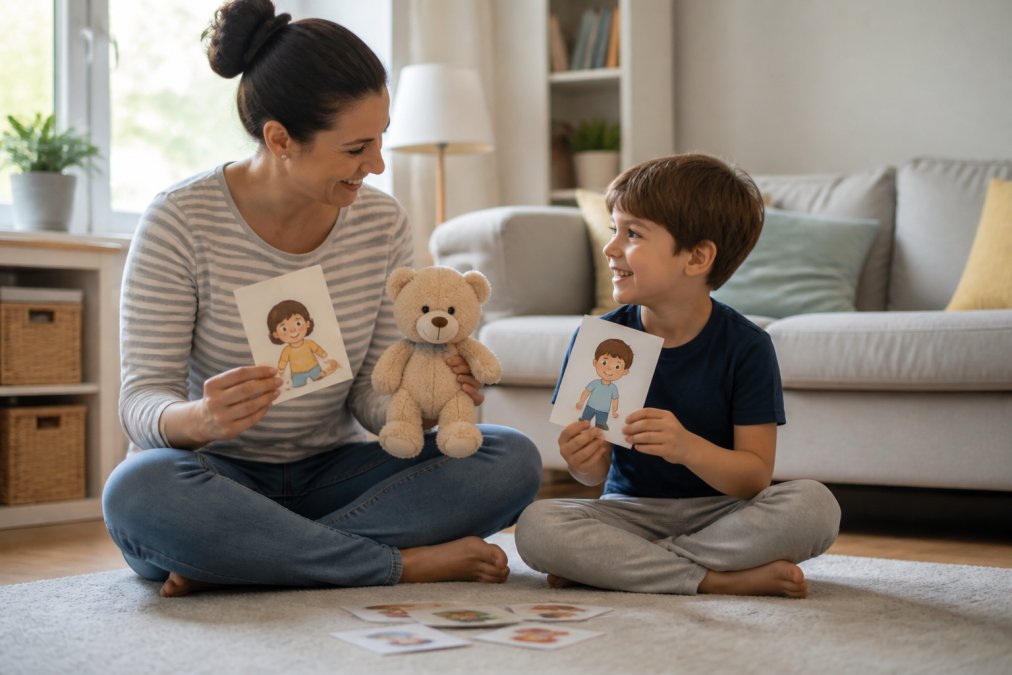
Consider these confidence-building activities you can do at home:
- Role-play scenarios: Practice ordering at a restaurant, asking a librarian for a book, or introducing themselves to a new teammate. Repetition builds familiarity.
- Enroll in a class with a clear structure: Activities like martial arts, swimming, or theater offer predictable routines and skill-building that naturally foster confidence.
- Give them a "job": Asking your child to help set the table or water the plants gives them a sense of responsibility and independence, showing you trust them.
- Use story-based learning: Reading stories about characters who overcome their fears provides a safe, indirect way to discuss challenges. The [Bravo Bear(/products/bravo-bear-complete-set) series | bravobear.com] is designed specifically for this, using heartwarming tales to teach children about kindness, confidence, and courage.
Modeling Confident Behavior and Avoiding Labels
Children learn social behavior by watching the adults in their lives. Modeling confident behavior is one of the most effective ways to teach it, as children often mirror the emotional regulation and social skills they observe in their parents. Let your child see you introduce yourself to new people, make a phone call, or handle a mistake with grace. Narrate your own feelings: "I felt a little nervous asking for directions, but I did it anyway." This demonstrates that feeling shy is normal, but it doesn't have to stop you.
Equally important is what you don't say. As mentioned, avoid the "shy" label. When others describe your child that way in their presence, gently correct them: "She takes a moment to warm up." By modeling empathy and reframing their temperament as a positive trait, you teach your child to accept themselves. This supportive environment is the foundation for building their assertiveness and sense of security in the world.
The Role of Stories in Building Confidence
Stories are a powerful tool for social and emotional learning because they allow children to explore complex feelings from a safe distance. When a child hears about a character who is scared to try something new and eventually succeeds, they learn about coping mechanisms and resilience. They see that fear is a universal emotion and that it can be overcome with brave steps.
This is where Bravo Bear shines. Our edu-tainment series, created by CJ Hainsworth, blends heart and fun to deliver meaningful life lessons. When your child connects with a character who embodies kindness and courage, they are more likely to internalize those traits themselves. For a consistent stream of these positive messages, the Bravo Bear Monthly Book Club delivers a new adventure each month, giving you a regular tool to spark conversations about confidence and empathy. Alternatively, the Bravo Bear Complete Set provides a full library of these uplifting tales, perfect for bedtime routines that nurture a growth mindset.
Conclusion: A Journey of Brave Steps
Building confidence in shy children is not a race; it is a steady journey of small, brave steps. There will be good days and challenging days, setbacks, and breakthroughs. Your consistent love, patience, and belief in their abilities create the secure foundation they need to explore the world. Every time you offer empathy instead of pressure, you teach them that their feelings are valid.
The strategies you've learned here, from role-playing to positive reinforcement, are tools to guide your child toward social development and self-confidence. Remember to celebrate the small victories and trust the process. For more support on this journey, Bravo Bear offers stories designed to inspire your child to grow with kindness, confidence, and courage. These tales are more than just entertainment; they are memorable adventures that help children discover their own inner strength. Get started with Bravo Bear and help your child take their next brave step
Frequently Asked Questions
What causes extreme shyness in kids?
Extreme shyness often stems from a combination of temperament and environment. Some children are naturally slow to warm up, a trait that is part of their personality. However, environment also plays a role. If a child is criticized for being quiet or feels pressure to perform, they may become more withdrawn. It is important to remember that shyness is not a flaw. By providing a supportive environment and using positive reinforcement, you can help a shy child feel secure enough to step out of their comfort zone at their own pace.
How can I help my shy child make friends at school?
Start by arranging one-on-one playdates outside of school rather than expecting them to socialize in a large group. Invite a single classmate over for a structured activity, like building with blocks or a simple craft. This reduces the pressure of a crowded setting. Before the playdate, role-play simple greetings and sharing with your child. You can also talk to the teacher to request a buddy system for your child in the classroom. These small steps build social skills gradually, making the process of making friends feel safer and more manageable for a shy child.
At what age should I be concerned about my child's shyness?
Shyness is a normal part of child development, especially in unfamiliar situations. You should consider seeking professional guidance if the shyness interferes with daily functioning. This could include refusing to speak at school, an inability to participate in activities they enjoy, or showing signs of extreme distress like panic attacks. If your child struggles to make any friends or if their social anxiety seems to worsen over time, consulting a clinical social worker or child psychologist can provide valuable strategies. Early intervention helps children develop coping mechanisms before social anxiety becomes deeply ingrained.
What is the difference between being introverted and having social anxiety?
An introverted child may simply prefer solitary activities and need quiet time to recharge. They often have good social skills but choose to use them less frequently. Social anxiety, however, involves a fear of judgment and negative evaluation in social situations. A child with social anxiety may desperately want to join a group but feel physically ill at the thought of it. While shyness and introversion are personality traits, social anxiety is a mental health condition that causes significant distress. Understanding this difference helps you decide whether your child needs gentle encouragement or professional support to build their self-confidence.


