

Best Books for Teaching Kindness to Kids: 12 Picks
Table of Contents
- Why Kindness Books Matter More Than Ever
- Our Selection Criteria for Teaching Kindness Books
- Books About Empathy for Preschoolers (Ages 3-5)
- Best Books for Teaching Kindness to Elementary Kids (Ages 6-8)
- Children's Books About Social Emotional Learning
- Activities to Teach Kindness to Kids Alongside Reading
- How to Discuss Kindness and Empathy With Your Child
- Conclusion: Start Your Kindness Library Today
- Frequently Asked Questions
Last Updated: September 5, 2026
Why Kindness Books Matter More Than Ever
Children's literature is one of the most effective tools parents have for nurturing emotional intelligence, yet the best books for teaching kindness to kids do far more than deliver a simple moral. They plant seeds for empathy, conflict resolution, and positive behavior that children carry into their friendships and classrooms.
The need for this kind of character development is pressing. Social-emotional learning has become a core part of how parents approach early education, and reading together offers a structured, calming way to model kind behavior while giving children a safe space to ask questions about fairness, sharing, and difference (casel.org).
Below, we'll walk through our top picks across age groups, pairing each recommendation with discussion prompts and simple activities to teach kindness beyond the page.
Our Selection Criteria for Teaching Kindness Books
A good kindness book never feels preachy. The most effective titles weave their message into an engaging plot where characters earn their growth rather than delivering a lecture.
The narrative must feature relatable characters facing realistic social challenges; illustrations should depict body language and facial expressions children can read; and language should be accessible while introducing new vocabulary for feelings like "frustrated" or "considerate."
We also prioritize books that model positive behavior without simplifying real feelings. A child who sees a character navigate disappointment with kindness learns that empathy is a skill, not just an innate trait.
Books About Empathy for Preschoolers (Ages 3-5)
For preschoolers, empathy begins with recognizing emotions in others. Books should focus on clear visual cues of feelings and simple cause-and-effect relationships, since children this age are just learning that their actions affect others.
Look for rhythmic text and bright illustrations that name emotions explicitly. Repetition is key; children learn through hearing the same story and noticing new details each time. Books that ask direct questions, like "How do you think she feels now?", are particularly effective.
Avoid abstract moral lessons a three-year-old cannot grasp. Stick to concrete scenarios like taking turns or helping a friend pick up spilled toys.
A Developmental Map for Ages 2-4
A child at age 2 has vastly different emotional capabilities than a child at age 4 (the CDC). Understanding these milestones helps you choose books that resonate rather than frustrate.
- Ages 2-3: Emotional Labeling. At this stage, children are just beginning to attach words to feelings (zerotothree.org). They can typically identify "happy," "sad," and "mad" in others, but they struggle with more complex emotions like jealousy or embarrassment. The best books for this age use exaggerated, clear facial expressions and repetitive phrasing. Look for stories where a character cries and another character offers a hug or a blanket. The lesson is simple: when someone is sad, we comfort them.
- Ages 3-4: Cause and Effect. Children now begin to understand that their actions have consequences for others' feelings. This is the prime age for books about sharing and taking turns. A story about two characters fighting over a toy, and then resolving it by taking turns, gives a child a concrete script to follow. At this stage, avoid books where the moral is implied; choose ones where the character explicitly says, "I am sorry I made you sad."
- Ages 4-5: Perspective Taking. This is a major cognitive leap. A child can now begin to imagine how someone else feels in a situation they have not personally experienced. Books about welcoming a new student, or being kind to someone who is different, become accessible now. However, the scenarios must still be concrete. A story about a child in a wheelchair being excluded from a game is more effective than a story about global poverty.
Why Concrete Scenarios Beat Abstract Morals
A frequent error is selecting award-winning books with poetic but abstract themes. A three-year-old cannot grasp "being kind to the earth" or "showing gratitude"; these require reasoning skills that develop later. Instead, choose books depicting a single observable act, picking up a dropped crayon or saying "please" and "thank you." These micro-behaviors form the foundation of a kind character.
Recommended Read-Aloud Strategies for This Age
Reading a kindness book to a preschooler requires a different approach than reading to an older child. The goal is to build a feeling vocabulary, not extract a moral.
- Name the Emotion First: Before you even open the book, say, "This story is about a time when the bear felt left out. Have you ever felt left out?" This primes the child to look for that specific emotion.
- Pause on the Face: When a character is sad or angry, stop reading. Point to the character's face and ask, "How does he feel? How can you tell?" Look at the eyebrows, the mouth, and the posture.
- Connect to Their World: After the story, make one direct connection. Say, "Remember when your friend Noah was crying at the park? What did you do to help him?" This bridges the fictional world to their lived experience.
- Keep It Short: A preschooler's attention span is limited. If you lose them, put the book down. A five-minute engaged reading is far more valuable than a fifteen-minute forced one.
By mapping your book choices to these developmental stages, you ensure that the lesson is not just heard, but actually understood and internalized.
Best Books for Teaching Kindness to Elementary Kids (Ages 6-8)
Elementary-aged children are ready for more nuanced plots exploring moral dilemmas and consequences of unkind behavior. The best books introduce characters who make difficult choices, sometimes fail, and repair the damage, tackling complex topics like peer pressure, exclusion, and standing up for others.
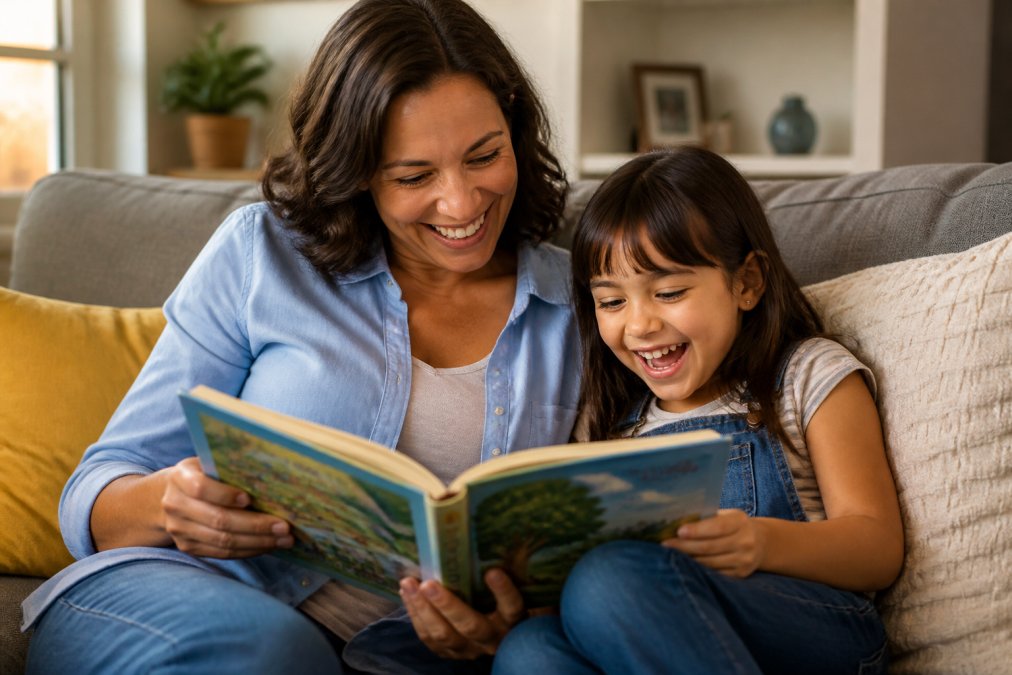
Chapter books and longer picture books allow for character growth over time. Stories featuring a protagonist who acts unkindly but learns a better way show that kindness is a choice available to everyone. Look for diverse characters and settings, as exposure to different perspectives builds empathy.
This is also the age where children face real social hierarchies. A story about a character who befriends the new kid despite social pressure gives your child a script to follow, showing how courage and kindness often work together.
| Age Group | Core Focus | Best Story Types | Discussion Goal |
|---|---|---|---|
| Ages 3-5 | Recognizing emotions | Sharing, comfort, inclusion | "How do they feel?" |
| Ages 6-8 | Moral dilemmas | Repair, standing up, diversity | "What should they do?" |
| Ages 6-8 (advanced) | Complex consequences | Multi-chapter growth arcs | "What did they learn?" |
Children's Books About Social Emotional Learning
Children's books about social emotional learning go beyond simple kindness to address managing frustration, expressing needs, and practicing mindfulness. A child who can name their own feelings is far better equipped to extend compassion to others.
This category includes stories about gratitude, selflessness, and conflict resolution. Many are designed for classroom use but translate perfectly to bedtime reading, helping a child understand their own "big feelings" and how those feelings drive behavior.
The Bravo Bear series fits squarely into this category. Created by CJ Hainsworth, the stories blend heart and fun with meaningful life lessons that help children grow with kindness, confidence, and courage. Designed to be read repeatedly, each reading reveals new layers of emotional depth. For families building a home library, the Bravo Bear Complete Set offers a full collection at $79.99, while the Bravo Bear Monthly Book Club delivers a new story each month for $14.99.


Activities to Teach Kindness to Kids Alongside Reading
Reading a book is only the first step. To truly embed the lesson, pair each story with a simple, immediate activity that connects the fictional scenario to real life.
After a story about sharing, ask your child to choose one toy to share that afternoon. If the book was about welcoming a new student, role-play a greeting. For stories about gratitude, start a "kindness jar" where family members drop notes about kind acts they witnessed or received.
A practical approach is to create a kindness checklist for the week. This turns abstract concepts into trackable actions that build positive behavior habits.
- Say one kind thing to a family member each morning
- Help with one chore without being asked
-
- Draw a picture for a neighbor or grandparent
- Let a friend choose the game during playtime
- Say "thank you" to a community helper like a bus driver or librarian
These activities reinforce the moral development started by the story, transforming passive listening into active learning. Kindness is not a grand gesture but a series of small, daily decisions.
How to Discuss Kindness and Empathy With Your Child
Talking about kindness does not require a formal lesson plan. The most effective discussions happen organically, right after finishing a book, while the emotions of the story are still fresh. Ask open-ended questions.
Instead of "Did you like that book?", try "What could the character have done differently?" or "Has anything like that ever happened to you?" These prompts connect the story to personal experience. For younger children, keep questions concrete and tied to illustrations; for older kids, explore abstract concepts like intention versus impact.
The "After-Reading" Question Framework
Most parents stop at "Did you like it?" The most effective discussions use a structured progression from the story to the child's own life. Use this three-tier framework.
Tier 1: Comprehension (What happened?) These questions ensure the child understood the plot and the emotional arc. They are the foundation for deeper discussion.
- "What was the problem in the story?"
- "How did the character feel when that happened?"
- "What did the character do to make things better?"
Tier 2: Connection (Have you felt this way?) These questions bridge the story to the child's personal experiences. This is where empathy is built, by recognizing a shared feeling.
- "When have you felt left out like that?"
- "Has a friend ever been unkind to you? What did you do?"
- "What is something kind someone has done for you recently?"
Tier 3: Application (What will you do?) These questions turn the lesson into a future action plan. They help a child internalize the moral and prepare for real-world scenarios.
- "If you saw a new kid sitting alone at lunch, what could you say?"
- "What is one kind thing you could do for your brother tomorrow?"
- "If you accidentally hurt a friend's feelings, what could you do to say sorry?"
Handling Resistance: When Your Child Shuts Down
If your child deflects or changes the subject, do not push. Simply model the behavior by narrating your own kind actions, such as "I am going to bring your grandmother soup because she is not feeling well." This demonstrates that kindness is a family practice, not just a book theme.
For children who resist direct questioning, try the third-person prompt. Instead of "What would you do?" ask "What should the character have done differently?" This creates psychological distance, making it safer to explore moral dilemmas. Puppets or stuffed animals also work well for children aged 4-7 who process emotions through play.
The "Kindness Jar" as a Conversation Starter
A powerful way to extend discussion beyond storytime is a family kindness jar. Place a jar in a central location with slips of paper and a pen. Whenever anyone witnesses or performs a kind act, they write it down and drop it in. At week's end, read the slips together during dinner. This gives concrete examples for future discussions, reinforces positive behavior, and creates a natural weekly opportunity to talk about kindness.
For a steady stream of new stories, a curated book subscription for kids can keep momentum going. The key is consistency, not perfection. A five-minute conversation after a bedtime story, repeated nightly, builds character more than a single hour-long lecture.
Conclusion: Start Your Kindness Library Today
Building a library of kindness books is one of the most impactful investments you can make in your child's character. The stories and conversations will shape how your child navigates friendship, handles conflict, and understands their own emotions. The results are not always immediate, but the cumulative effect is profound.
Bravo Bear exists to support families on this journey. Our stories are designed to be read and reread, providing a reliable tool for parents who want to nurture caring, confident children without relying on screens.
Get started with Bravo Bear and watch your child grow in kindness, one story at a time. Explore the Bravo Bear Complete Set to build a foundation of character-building literature today.
Frequently Asked Questions
What is a good way to teach kindness to a child?
Pairing books with conversation and action is highly effective. Read a story that models kindness, then ask your child how a character felt and what they might have done differently. Follow up with a simple activity, like drawing a thank-you card for a neighbor. This reinforces the lesson from the story, turning passive listening into active learning. Regular practice helps kindness become a habit rather than just a concept.
How do picture books help develop emotional intelligence in children?
Picture books act as a safe mirror for emotions. When a child sees a character experience frustration, joy, or sadness, they learn to name and understand those feelings. This process builds vocabulary for emotions, which is the first step in managing them. Stories also show consequences of actions in a low-stakes setting, letting children practice empathy and conflict resolution from a safe distance before they face similar situations themselves.
What should I look for in children's books about social emotional learning?
Look for stories that show, rather than tell, the lesson. A good social-emotional book will have a compelling plot where a character faces a realistic challenge and grows from it. Avoid books that feel preachy or have a heavy-handed moral. Choose stories with diverse characters and situations that your child can relate to, as this makes the emotional lesson more concrete and memorable for their own development.
Are there kindness books that work well for both a 3-year-old and a 7-year-old?
Yes, but you will need to adjust how you read them. For a 3-year-old, focus on naming the emotions in the illustrations and asking simple questions like, "How does that bear feel?" For a 7-year-old, shift the conversation to the characters' motivations and ask, "Why did she make that choice, and what happened next?" The Bravo Bear series is designed this way, offering layered stories that grow with your child, so one set of books can serve both ages.


