

7 Ways to Teach Honesty to 6 Year Olds
Table of Contents
- Why 6-Year-Olds Lie and What Honesty Actually Looks Like at This Age
- 1. Model Truthfulness Daily: How Parents Teach Honesty by Example
- 2. Use Examples of Honesty for Children They Can Actually Picture
- 3. Try Honesty Activities for Kids: Games, Role-Play, and Stories
- 4. How to Respond When a Child Lies: Calm Scripts That Work
- 5. Praise Truth-Telling and Build a Family Culture of Honest Conversations
- 6. A 7-Day Plan to Teach Honesty to 6 Year Olds
- 7. Measure Progress, Handle Setbacks, and Know When to Seek Support
- Frequently Asked Questions
Last Updated: October 14, 2026
Why 6-Year-Olds Lie and What Honesty Actually Looks Like at This Age
Most six-year-olds lie sometimes. That surprises parents, but it shouldn't. At six, a child's brain is still learning the difference between what happened, what they wish happened, and what they're afraid will happen if they tell the truth.
This guide breaks down 7 ways to teach honesty to 6 year olds, with scripts you can use tonight.
Honesty is the habit of telling the truth even when a lie would be easier. At six, that habit is still forming. So the goal isn't punishment. It's practice.
Here's what most guides get wrong: they treat every lie the same. The American Academy of Child and Adolescent Psychiatry guide to children's honesty notes that lying is a normal part of child development, not a sign of bad character.
Imagination, Mistakes, and Deliberate Lies: How to Tell the Difference
Three kinds of untruths show up at age six, and each needs a different response.
- Imagination: "A dinosaur ate my shoe." Your child is playing with stories, not deceiving you.
- Mistakes: "I didn't spill it." Your child may genuinely not remember, or is confused about what happened.
- Deliberate lies: "I didn't hit him." Your child knows the truth and is avoiding blame or shame.
Here's the key: only the third kind is lying in the moral sense. Treat imagination with play, mistakes with patience, and deliberate lies with calm teaching.
1. Model Truthfulness Daily: How Parents Teach Honesty by Example
Children copy what they see, not what they hear. If you say "Tell Grandma we're busy" when you're not, your six-year-old files that away.
So watch the small lies first. The skipped nap you blame on traffic. The "I already sent that email" when you haven't. Kids this age are sharp observers.
Try these habits:
- Admit small mistakes out loud: "I forgot the keys. That was my mistake."
- Keep promises you make, even small ones
- Say "I don't know" when you don't know
Lead by example and your child learns that truth-telling is normal, not scary.
2. Use Examples of Honesty for Children They Can Actually Picture
Abstract lessons slide right off a six-year-old. Concrete stories stick.
So skip the lectures. Use characters and situations your child can picture. A story about a bear who breaks a vase and admits it lands far better than a talk about "integrity."
Great sources of examples of honesty for children include:
- Picture books where a character confesses a mistake
- Family stories: "When I was six, I broke a window and told my mom."
- Simple what-if questions: "What would you do if you found a wallet?"
At Bravo Bear, our edu-tainment stories are built around kindness, confidence, and courage, so honesty shows up as something a character chooses, not something a parent demands.
3. Try Honesty Activities for Kids: Games, Role-Play, and Stories
Practice beats preaching. Honesty activities for kids let your six-year-old try telling the truth in a safe, low-stakes way.
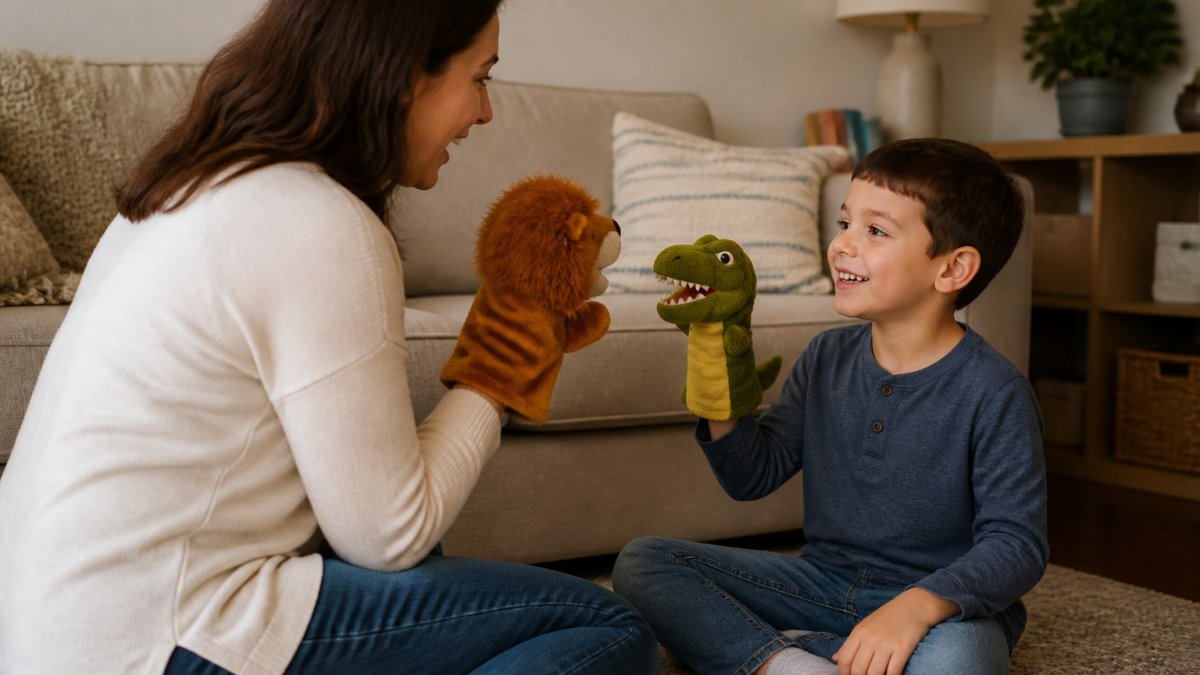
Try these:
- Puppet role-play: Act out a scene where a puppet breaks a toy and must decide whether to admit it.
- True-or-false game: Say silly statements and let your child guess which are true.
- Story swap: Read a story, then ask, "What would you have done?"
- Feelings check: Ask how the character felt after telling the truth.
Keep it light. The goal is repetition, not perfection.
4. How to Respond When a Child Lies: Calm Scripts That Work
Your reaction teaches more than your words. A six-year-old is watching your face, your tone, and your volume to decide whether the truth is safe. So here's how to respond when a child lies without triggering more of them.
First, stay calm. A big reaction teaches your child to lie better next time. Second, name the behavior, not the child.
Scripts by Situation
When your child tells an imaginative tall tale:
- "That's a fun story. Tell me what really happened with the shoe."
- "I love your imagination. Let's save the dragon for playtime and talk about the real thing."
When your child denies something you both know happened (a broken object, a spilled drink):
- "I'm not asking to get you in trouble. I'm asking because I want to help you fix it."
- "I think you're worried about getting in trouble. Let's try again, what happened?"
- "You're safe. Tell me the truth and we'll figure out the next step together."
When your child blames someone else:
- "I hear you saying it was your brother. I need to hear what really happened from you."
- "Let's slow down. Take a breath and tell me your part."
When your child finally tells the truth, even a hard truth:
- "Thank you for telling me the truth. That took courage."
- "I know that was scary to say. I'm proud of you for saying it."
- "The truth matters more to me than the mistake."
When your child lies about unfinished homework or a chore:
- "I'd rather hear 'I didn't do it' than 'I did.' Let's talk about what got in the way."
- "What would help you finish it tonight?"
What Not to Say
- Avoid "You're a liar." Label the behavior, not the child.
- Avoid "I knew it." A gotcha moment teaches your child to hide better next time.
- Avoid a long lecture. Six-year-olds tune out after about 30 seconds. Keep it short and warm.
- Avoid promising a punishment before you know the truth. If telling the truth always leads to a consequence, your child learns to lie.
Focus on Repair, Not Shame
After the truth comes out, shift to fixing what broke. Ask, "What can we do to fix this?" A six-year-old can help tape a torn book, wipe a spill, or write a short apology note. Repair builds the habit that honesty leads to solutions, not just trouble.
5. Praise Truth-Telling and Build a Family Culture of Honest Conversations
What gets noticed gets repeated. So when your six-year-old tells the truth, especially a hard truth, say so.
Praise the honesty, not just the outcome. "You told me the truth even though it was scary. I'm proud of you."
Build this into daily life:
- Hold short family check-ins
- Share your own honest moments
- Set simple family rules like "We tell the truth, even when it's hard"
Open communication grows trust. And trust makes the next truth easier to tell.
6. A 7-Day Plan to Teach Honesty to 6 Year Olds
Here's a simple week you can start today. Ten minutes a day is enough.
| Day | Focus | Activity |
|---|---|---|
| 1 | Notice | Talk about what honesty means |
| 2 | Model | Share a small mistake you made |
| 3 | Story | Read a book about telling the truth |
| 4 | Play | Run a puppet role-play |
| 5 | Practice | Use a calm script when a lie appears |
| 6 | Praise | Catch and praise one honest moment |
| 7 | Review | Ask what your child learned |
Keep it warm. This is practice, not a test.
7. Measure Progress, Handle Setbacks, and Know When to Seek Support
Progress is quiet. Your six-year-old won't stop lying overnight, and that's normal. Most parents see meaningful change over weeks, not days, when they stay consistent with modeling, calm scripts, and praise for truth-telling.
What Real Progress Looks Like at Six
Watch for small wins rather than dramatic turnarounds:
- Shorter pauses before the truth. Your child still hesitates, but the gap between the lie and the confession shrinks.
- More unprompted confessions. Your child volunteers the truth before you ask.
- Fewer defensive lies. The reflexive "I didn't do it" starts to fade.
- Repair without prompting. Your child offers to fix the mistake on their own.
These are the signals that the habit is forming. Celebrate them out loud.
When Your Child Lies Again
Setbacks are part of the process, not a sign that your teaching failed. A six-year-old may lie again the same day after a great conversation. That is development, not defiance.
When it happens:
- Stay calm and repeat the same scripts. Consistency matters more than any single moment.
- Do not bring up past lies. "You always do this" teaches shame, not honesty.
- Reconnect before you correct. A hug or a calm voice first, then the conversation.
- Check your own stress. If you're exhausted or frustrated, a short pause before responding helps more than a perfect script.
When to Seek Additional Support
Most lying at age six is ordinary development. But some patterns are worth raising with a professional:
- Lying that is frequent, intense, and continues for months despite consistent, calm parenting
- Lying paired with aggression, stealing, or harm to others
- Lying that seems to come from deep fear of you or another adult
- Lying alongside signs of anxiety, depression, or trouble at school
If you notice these, start with your child's pediatrician. The American Academy of Pediatrics guidance on child behavior recommends raising persistent concerns early rather than waiting. A school counselor or child mental-health professional can also help. Reaching out is not a sign that you failed, it's the same instinct that makes you teach honesty in the first place.
Frequently Asked Questions
How do you teach honesty to a 6-year-old?
Start by modeling truthfulness yourself and naming honest behavior when you see it. Use simple scripts like 'I told the truth even though it was hard.' Play games that practice true and false statements, read stories about honesty, and praise your child specifically when they tell the truth. Keep consequences calm and focused on repair, not shame. At age 6, children understand fairness and rules, so connect honesty to trust: 'When you tell the truth, I know I can believe you.'
Why might a 6-year-old lie?
Six-year-olds usually lie to avoid punishment, gain attention, or protect a friend. Some lies are developmentally normal imagination or wishful thinking. Others are mistakes they don't want to admit. A child who feels shamed or harshly punished may lie more often to escape consequences. Understanding the reason behind the lie helps you respond in a way that teaches honesty rather than fear. Look for patterns: does your child lie when they're tired, hungry, or worried about disappointing you?
What are some honesty activities for kids?
Try a 'true or false' game where your child makes statements and you guess which are true. Use puppets to act out common situations like breaking a toy or forgetting homework, then practice honest responses. Create a family honesty jar where each family member writes down a time they told the truth. Read books with characters who face honesty dilemmas and ask, 'What would you do?' These activities make honesty concrete and give your child a safe way to practice.
How should you respond when a child lies?
Stay calm and avoid shaming. Say, 'I need to know what really happened. You won't be in trouble for telling the truth.' If they admit it, thank them for their honesty and focus on repairing any harm. If they keep lying, give a simple consequence without anger, like losing a privilege, and revisit the conversation later. The goal is to make truth-telling feel safer than lying. Scripts like 'I believe you can tell me the truth' work better than accusations.
Teaching honesty to a six-year-old takes patience, repetition, and the right stories. At Bravo Bear, we make that easier with an edu-tainment series built to grow kindness, confidence, and courage in young children. Our memorable stories turn big lessons into adventures kids want to hear again. Get started with Bravo Bear and give your child stories that make honesty feel like courage, not a rule.


